Home Blog Page 448

The Invention of the Telephone: A Revolutionary Breakthrough

0
The Invention of the Telephone

The invention of the telephone was one of the most significant technological advancements in human history. It transformed the way people communicate, connecting individuals across vast distances in real-time. This blog explores the journey of the invention of the telephone, its impact on society, and how it has evolved over time.

The Need for a New Communication Device

Before the invention of the telephone, communication over long distances was primarily dependent on letters and the telegraph. Letters took days or even weeks to reach their destination, making urgent communication nearly impossible.

The telegraph, although faster, required trained operators and was limited to transmitting simple messages using Morse code. These limitations created a strong demand for a more efficient, real-time communication method. The invention of the telephone addressed this need, offering a faster and more direct way for people to interact.

The Invention of the Telephone

The idea of transmitting sound over electrical wires was already being explored by several inventors in the 19th century. Scientists and engineers sought ways to convert sound waves into electrical signals and then back into sound at the receiver’s end. This quest led to the eventual invention of the telephone, which revolutionized personal and business communication worldwide.

Alexander Graham Bell: The Man Behind the Invention

The invention of the telephone is often credited to Alexander Graham Bell, a Scottish-born scientist, and inventor. Bell had a deep interest in sound and speech due to his family’s work with the deaf. His research into sound transmission played a crucial role in the development of the telephone.

On March 10, 1876, Bell successfully demonstrated the first working telephone when he spoke to his assistant, Thomas Watson, saying the famous words, “Mr. Watson, come here, I want to see you.” This marked the birth of modern telecommunication.

However, Bell was not the only one working on voice transmission technology. Another inventor, Elisha Gray, had also developed a similar device, leading to a famous legal battle over the patent for the invention of the telephone.

Despite controversies, Bell’s telephone became a commercial success, laying the foundation for the global telecommunications industry.

The Patent Wars: Who Invented the Telephone First?

The invention of the telephone sparked a major patent dispute, as multiple inventors were working on similar concepts at the same time. Elisha Gray, an American electrical engineer, filed a patent caveat for a voice communication device on February 14, 1876, just a few hours after Bell had submitted his patent application. This led to a heated legal battle over who had truly invented the telephone first.

Although Gray’s design was innovative, Bell’s patent was granted first, giving him legal rights over the invention. Some historians argue that Bell may have had access to Gray’s work, but the court ultimately ruled in Bell’s favor. This legal victory ensured that Alexander Graham Bell became widely recognized as the father of the invention of the telephone.

The First Telephone Call and Its Significance

The first-ever telephone call was a groundbreaking moment in history. Bell’s words to Watson, transmitted through an electrical wire, proved that voice communication over long distances was possible. This single event marked the practical realization of the invention of the telephone.

This achievement revolutionized business and personal communication. For the first time, people could have real-time conversations regardless of distance, paving the way for a new era of connectivity. Governments, businesses, and households quickly realized the immense potential of this invention, leading to rapid adoption worldwide.

The Early Development and Commercialization of Telephones

After the invention of the telephone, Bell and his investors established the Bell Telephone Company in 1877. The company played a crucial role in developing telephone networks and making telephones accessible to the general public.

The Invention of the Telephone

Initially, telephone lines were limited, and only the wealthy could afford them. However, as technology improved and costs decreased, telephones became more widespread. The first telephone exchanges were established, allowing users to connect with different numbers through operators. This period marked the beginning of a communication revolution driven by the invention of the telephone.

Impact of the Telephone on Society and Business

The invention of the telephone dramatically changed society and the business world. Businesses could now communicate instantly, leading to increased efficiency and economic growth. The telephone also strengthened personal relationships by allowing people to stay connected across long distances.

With the expansion of telephone networks, industries such as banking, media, and customer service evolved significantly. The invention of the telephone contributed to globalization by making international communication possible, fostering economic and social connections across the world.

Technological Advancements in Telephony

Since the invention of the telephone, technology has continued to evolve. The transition from manual switchboards to automatic dialing, rotary phones, and push-button telephones made communication faster and more convenient.

The late 20th century saw the emergence of digital telephony, mobile phones, and eventually, smartphones. The invention of the telephone laid the foundation for these advancements, transforming communication from a simple wired connection to a wireless global network.

The Role of the Telephone in Modern Communication

Today, the invention of the telephone has led to a world where instant communication is taken for granted. Mobile phones, VoIP services, and internet-based communication platforms have changed the way people interact. Businesses, governments, and individuals rely on telecommunication for daily operations, making the telephone one of the most crucial inventions of all time.

Despite the rise of internet-based messaging and video calls, traditional voice communication remains relevant, proving that the invention of the telephone continues to shape modern communication.

Challenges and Controversies in the Telephone Industry

The invention of the telephone also brought challenges and controversies. Issues such as monopolies, privacy concerns, and government regulations have shaped the industry. Bell’s company dominated the early telephone market, leading to antitrust lawsuits and the eventual breakup of AT&T’s monopoly in the United States.

Additionally, concerns over data security and surveillance in modern telecommunications continue to spark debates. Despite these challenges, the invention of the telephone remains a key driver of technological and social progress.

The Future of Telecommunication

The Invention of the Telephone

The invention of the telephone set the stage for future innovations in communication. Emerging technologies such as 5G, artificial intelligence, and quantum communication promise to redefine how people connect. The integration of smart devices, virtual reality, and voice-controlled assistants demonstrates how far telephony has come since its inception.

As technology advances, the core principles behind the invention of the telephone—instantaneous and reliable communication—will continue to shape human interactions in ways we can only imagine.

Conclusion: A Legacy That Continues to Evolve

The invention of the telephone was a turning point in human history. It bridged distances, transformed societies, and paved the way for modern telecommunications. From Alexander Graham Bell’s first words to today’s global communication networks, the telephone remains one of the most influential inventions ever created.

Even in the age of digital communication, the fundamental concept behind the invention of the telephone endures, reminding us of the power of innovation and human connectivity.

For Amazing Updates Keep Visiting ImaginaryHistory.

The Strangest Historical Events Ever Recorded

0
The Strangest Historical Events Ever Recorded

The strangest historical events ever recorded have fascinated historians, scientists, and conspiracy theorists alike. Let’s take a deep dive into 11 of the most peculiar events in history.History is filled with mysterious, bizarre, and almost unbelievable events.

Some of them challenge logic, others make us question reality, and a few leave us with more questions than answers. From strange occurrences in ancient times to inexplicable incidents in the modern world,

The Dancing Plague of 1518

One of The strangest historical events ever recorded took place in Strasbourg, France, in July 1518, when hundreds of people started dancing uncontrollably for days, seemingly unable to stop. It all started with a woman named Frau Troffea, who began dancing in the streets for no apparent reason. Within a week, dozens had joined her, and eventually, the number reached over 400.

Many danced until they collapsed from exhaustion or even died due to heart attacks or strokes. Physicians at the time believed it was caused by “hot blood,” a medical condition, and prescribed—strangely enough—more dancing as the cure.

Music was played, and stages were built to accommodate the dancers, but the phenomenon continued for months before it mysteriously vanished. To this day, no one knows exactly what caused it.

The Strangest Historical Events Ever Recorded

The Tunguska Event – A Mysterious Explosion

On June 30, 1908, a massive explosion flattened around 800 square miles of forest in Siberia. The event, known as the Tunguska Explosion, released energy equivalent to 1,000 Hiroshima bombs. Yet, no crater was found, and no clear explanation emerged for decades.

Some theories suggest a meteor exploded in mid-air, while others propose more bizarre ideas, such as an alien spacecraft crash. What makes it one of The strangest historical events ever recorded is that, despite the incredible destruction, no direct impact site has ever been found, and no human casualties were reported.

The Great Emu War – Australia’s Fight Against Birds

In 1932, Australian soldiers were sent to Western Australia to fight… emus. Yes, actual birds. The emu population had grown uncontrollably and was destroying crops. The army brought machine guns to control them, but the emus proved too fast and resilient.

Despite firing thousands of rounds, the military was unsuccessful, and the emus simply ran away in all directions. The government eventually withdrew its troops, and the emus won the war. This unusual battle is still remembered as one of The strangest historical events ever recorded.

The Missing Crew of the Mary Celeste

In December 1872, the merchant ship Mary Celeste was found drifting in the Atlantic Ocean, completely intact but without a single crew member aboard. The ship’s cargo and personal belongings were untouched, and there was no sign of struggle or foul play.

To this day, the fate of the crew remains unknown, making it one of The strangest historical events ever recorded. Some theories suggest pirates, sea monsters, or even alien abduction, but no definitive answer has ever been found.

The London Beer Flood of 1814

On October 17, 1814, in London, a massive vat of beer at the Meux and Company Brewery exploded, releasing over 320,000 gallons of beer into the streets. The powerful flood destroyed homes and even killed eight people.

This bizarre event remains one of The strangest historical events ever recorded, as it was both tragic and strangely comedic. The streets were filled with beer, and some people reportedly tried to drink as much as they could before it all washed away.

The Ghost Army of World War II

During World War II, the U.S. military created a secret division known as the “Ghost Army.” This unit was composed of artists, actors, and engineers who used deception tactics to confuse the enemy. They created fake tanks, planes, and even radio transmissions to mislead German forces.

Their success in deceiving the Nazis made it one of The strangest historical events ever recorded. The Ghost Army remained classified for decades, and many of its members later became famous artists and designers.

The Strangest Historical Events Ever Recorded

The Exploding Whale of 1970

In 1970, the Oregon Highway Division decided to remove the rotting carcass of a beached whale by blowing it up with dynamite. The idea was to scatter the remains so scavengers could eat them. However, the explosion sent massive chunks of whale meat flying in all directions, damaging cars and nearly injuring spectators.

The bizarre nature of the event and its hilarious failure make it one of The strangest historical events ever recorded. To this day, it remains a lesson in how not to dispose of a dead whale.

The Great Molasses Flood of 1919

In Boston, a giant storage tank holding molasses burst, unleashing a 25-foot wave of sticky syrup that traveled at 35 mph. The disaster killed 21 people and injured 150 others.

The thick molasses trapped victims and made rescue efforts difficult. The event is now a legendary example of one of The strangest historical events ever recorded, and to this day, locals say they can still smell molasses on warm days.

The Black Knight Satellite Mystery

For decades, astronomers and conspiracy theorists have been fascinated by the Black Knight Satellite—an alleged extraterrestrial object orbiting Earth. Some claim it has been circling our planet for over 13,000 years.

NASA has dismissed it as space debris, but mystery lovers still believe it could be an ancient alien artifact. Its unexplained origin and persistence in myths make it one of The strangest historical events ever recorded.

The Man Who Survived Two Atomic Bombs

Tsutomu Yamaguchi, a Japanese engineer, survived both the Hiroshima and Nagasaki atomic bombings in 1945. He was in Hiroshima when the first bomb dropped, suffering burns and injuries. He then traveled to Nagasaki—just in time for the second explosion.

Despite experiencing two nuclear blasts, he lived to be 93 years old. His incredible story makes him part of The strangest historical events ever recorded.

The Day the Sun Disappeared in 536 AD

The Strangest Historical Events Ever Recorded

In the year 536 AD, something strange happened—multiple ancient civilizations recorded that the sun disappeared for over a year, causing global cooling, crop failures, and widespread famine. Scientists believe a massive volcanic eruption filled the sky with ash, blocking sunlight.

This mysterious “dark year” remains one of The strangest historical events ever recorded, as its exact cause and extent are still debated today.

Conclusion

From dancing plagues to beer floods and unexplained disappearances, The strangest historical events ever recorded continue to fascinate us. These events remind us that history is full of surprises, and sometimes, truth is stranger than fiction. Which of these bizarre events surprised you the most? Let us know!

For Amazing Updates Keep Visiting ImaginaryHistory.

Ancient History Timeline: A Journey Through the Ages

0
Ancient History

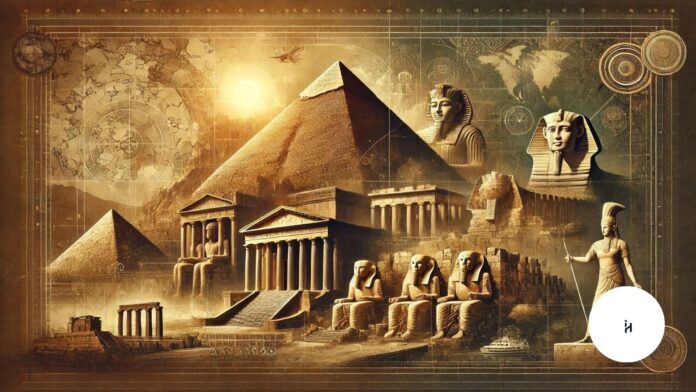
The ancient history timeline spans thousands of years, covering the rise and fall of great civilizations, groundbreaking innovations, and significant cultural transformations. From the first human settlements to the collapse of mighty empires, ancient history shapes our understanding of the modern world. In this blog, we will explore the ancient history timeline in detail, focusing on key events and their lasting impact.

The Dawn of Civilization: Early Human Societies

The ancient history timeline begins with early human societies, dating back to approximately 10,000 BCE. During this period, hunter-gatherers transitioned to settled life, marking the start of agriculture. The domestication of plants and animals led to the first permanent settlements, allowing communities to grow and thrive.

One of the earliest known settlements is Çatalhöyük, located in present-day Turkey, which existed around 7500 BCE. Similarly, the Fertile Crescent, encompassing Mesopotamia and parts of the Levant, became a hotspot for early human activity. Innovations like irrigation and pottery significantly advanced these societies, laying the groundwork for future civilizations.

As agriculture improved, humans developed new social structures, religious practices, and trade networks. This period marks the foundation of the ancient history timeline, as human societies started evolving into more complex communities.

Ancient History

Mesopotamia: The Cradle of Civilization

Mesopotamia, located between the Tigris and Euphrates rivers, is often called the “Cradle of Civilization.” By 3100 BCE, the Sumerians had established one of the first-known urban cultures. They invented cuneiform writing, which allowed them to keep records, create literature, and develop laws.

The Sumerians were followed by the Akkadian Empire, led by Sargon of Akkad around 2334 BCE. The Babylonians later rose to power, with Hammurabi’s Code (circa 1754 BCE) being one of the earliest recorded legal systems. Mesopotamia also saw advancements in mathematics, astronomy, and architecture, making it a key milestone in the ancient history timeline.

Ancient Egypt: The Age of Pharaohs

Ancient Egypt, emerging around 3100 BCE, was one of the most influential civilizations in the ancient history timeline. The unification of Upper and Lower Egypt under King Narmer led to a centralized government and the construction of monumental structures like the pyramids of Giza.

Egyptian civilization was defined by its religious beliefs, hieroglyphic writing, and advances in medicine and engineering. The rule of powerful pharaohs such as Ramses II and Cleopatra VII left a lasting legacy. The civilization flourished for thousands of years before falling to the Romans in 30 BCE.

The Indus Valley Civilization: A Forgotten Empire

The Indus Valley Civilization (3300–1300 BCE) was one of the largest early urban cultures in the world, thriving in what is now Pakistan and northwest India. Cities like Harappa and Mohenjo-Daro featured advanced urban planning, sewage systems, and impressive architecture.

Despite their achievements, much about this civilization remains unknown because its script has yet to be fully deciphered. However, its role in trade and early governance secures its place in the ancient history timeline. The decline of the civilization around 1300 BCE remains a mystery, with theories ranging from climate change to invasion.

Ancient China: The Birth of Dynastic Rule

China’s ancient history timeline dates back to the Xia Dynasty (c. 2070 BCE), followed by the Shang and Zhou Dynasties. The Shang Dynasty (1600–1046 BCE) introduced bronze casting, oracle bone script, and a centralized monarchy. The Zhou Dynasty (1046–256 BCE) later developed the concept of the Mandate of Heaven, which justified the rule of emperors.

Confucianism and Daoism emerged during this time, shaping Chinese philosophy and governance. The Great Wall of China began construction during the Qin Dynasty (221–206 BCE), marking one of the greatest engineering feats in the ancient history timeline.

The Greek Civilization: Foundations of Western Thought

Ancient History

Ancient Greece (c. 800 BCE–146 BCE) played a pivotal role in shaping philosophy, democracy, and art. The city-states of Athens and Sparta became dominant powers, with Athens pioneering democracy under leaders like Pericles.

Greek thinkers such as Socrates, Plato, and Aristotle laid the foundation for modern philosophy. The conquests of Alexander the Great (336–323 BCE) spread Greek culture across Asia and North Africa, significantly influencing the ancient history timeline.

The Roman Empire: The Rise and Fall of a Superpower

The Roman Empire (27 BCE–476 CE) marked one of the most powerful civilizations in history. Initially a republic, Rome expanded through military conquests and infrastructure advancements, such as aqueducts and roads.

Julius Caesar’s assassination in 44 BCE led to the rise of Augustus, the first emperor of Rome. The empire reached its peak under Trajan, covering vast territories across Europe, North Africa, and the Middle East. However, internal corruption, economic troubles, and invasions led to its decline, marking a major shift in the ancient history timeline.

The Persian Empire: A Legacy of Tolerance and Conquest

Founded by Cyrus the Great (c. 550 BCE), the Persian Empire became one of the largest empires in history. The empire’s governance system allowed for religious and cultural diversity, making it unique in the ancient history timeline.

The Royal Road, a vast network of highways, facilitated trade and communication. The Persian Wars against Greece (499–449 BCE) significantly shaped both Persian and Greek histories. The empire eventually fell to Alexander the Great in 330 BCE.

The Maurya and Gupta Empires: Ancient India’s Golden Age

The Maurya Empire (321–185 BCE), led by Chandragupta Maurya and later Ashoka the Great, unified most of the Indian subcontinent. Ashoka’s conversion to Buddhism promoted peace and cultural development.

The Gupta Empire (c. 320–550 CE) is considered India’s Golden Age, excelling in mathematics, science, and literature. The concept of zero and advances in astronomy emerged during this era, leaving a lasting impact on the ancient history timeline.

The Fall of Ancient Civilizations: A New Era Begins

Ancient History

By the 5th century CE, many ancient civilizations had fallen due to invasions, economic struggles, and political instability. The Western Roman Empire collapsed in 476 CE, marking the end of antiquity and the beginning of the Middle Ages.

Other civilizations, such as the Byzantine Empire and early Islamic Caliphates, carried forward knowledge from the ancient history timeline, influencing future generations.

The Legacy of the Ancient World in Modern Society

The ancient history timeline continues to shape modern culture, governance, and science. Concepts like democracy, law, engineering, and philosophy originated in ancient civilizations and remain relevant today.

By studying the ancient history timeline, we gain insight into human resilience, innovation, and cultural evolution. The past serves as a guide, helping us build a better future while remembering the lessons of history.

Q&A Section: Exploring the Ancient History Timeline

Q1: What is the ancient history timeline?

The ancient history timeline refers to the chronological record of human civilizations from the earliest settlements to the fall of great empires, covering periods like Mesopotamia, Egypt, Greece, Rome, and more.

Q2: Why is ancient history important?

Ancient history helps us understand the origins of modern societies, including governance, culture, technology, and philosophy. It also provides lessons from past civilizations that shape our present and future.

Q3: Which civilization is considered the oldest?

The Sumerians of Mesopotamia (c. 3100 BCE) are often considered the first known civilization due to their advancements in writing, agriculture, and governance.

Q4: What caused the fall of ancient civilizations?

Factors such as wars, economic collapse, climate change, and political corruption contributed to the decline of ancient civilizations like Rome, the Indus Valley, and Mesopotamia.

Q5: How did ancient civilizations influence modern society?

Many aspects of modern life, such as democracy (from Greece), legal systems (from Rome), mathematics (from India), and engineering (from Egypt and Rome), have roots in the ancient history timeline.

Conclusion: The Enduring Impact of the Ancient History Timeline

The ancient history timeline is a testament to human innovation, resilience, and cultural evolution. From the earliest settlements to the mighty empires of Rome and Persia, ancient civilizations have left an indelible mark on modern society. Their contributions in governance, science, literature, and architecture continue to shape our world today.

By understanding the ancient history timeline, we can appreciate the struggles and triumphs of our ancestors while learning valuable lessons for the future. The past is not just a record of events but a foundation upon which modern civilization stands.

For Amazing Updates Keep Visiting ImaginaryHistory.

The Lost City of Atlantis: Myth or Reality?

0
The Lost City of Atlantis

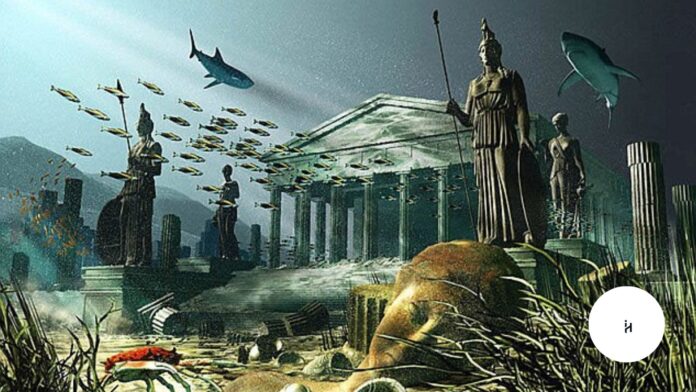
The story of Atlantis has captivated minds for centuries, igniting debates among historians, archaeologists, and conspiracy theorists. Is Atlantis a real lost civilization buried beneath the ocean, or is it merely a mythological tale crafted by the ancient Greek philosopher Plato? This blog will delve into every aspect of this intriguing legend, exploring its origins, theories, and possible evidence of its existence.

The Origin of Atlantis: Plato’s Mysterious Account

The legend of Atlantis originates from the works of the Greek philosopher Plato, who wrote about it in his dialogues Timaeus and Critias around 360 BCE. According to Plato, Atlantis was a powerful and technologically advanced civilization that existed about 9,000 years before his time. It was described as a utopian society with magnificent architecture, vast riches, and a highly sophisticated culture.

Plato claimed that Atlantis was located beyond the “Pillars of Hercules” (modern-day Strait of Gibraltar) and that it eventually sank into the ocean due to divine punishment for its moral corruption. While many believe that Plato’s account was purely allegorical, designed to warn against the dangers of arrogance and imperial ambition, others argue that there may be historical truths hidden within the myth.

The Lost City of Atlantis

The Description of Atlantis: A Utopian Paradise

Plato provided a highly detailed description of Atlantis, portraying it as a grand civilization far ahead of its time. He described the city as a circular island with concentric rings of land and water, featuring impressive canals, bridges, and an advanced irrigation system.

Atlantis was said to be a wealthy empire, abundant in natural resources such as gold, silver, and precious stones. Its people were supposedly blessed with great intelligence, strong moral values, and remarkable engineering skills. However, as the civilization grew more powerful, its leaders became greedy and corrupt, leading to its downfall.

Many researchers speculate that Plato’s description could have been influenced by real-life ancient civilizations like the Minoans or the Egyptians. Some even argue that Atlantis could have been a metaphor for Athens itself.

Theories on the Location of Atlantis

Numerous theories have emerged over the centuries regarding the possible location of Atlantis. Some researchers believe it may have been a real city that existed before being submerged due to natural disasters, while others argue that it is purely fictional.

Possible Locations:

  • Santorini (Thera): Some scholars suggest that the volcanic eruption on the Greek island of Santorini around 1600 BCE might have inspired Plato’s story.
  • The Caribbean: Some theories propose that Atlantis could be somewhere in the Bahamas or the Bermuda Triangle.
  • Antarctica: A controversial theory suggests that Atlantis lies beneath the ice of Antarctica, having been frozen over due to a sudden climate shift.
  • The Mediterranean: Others speculate that Atlantis could have been an ancient Mediterranean city, such as Troy or Tartessos.

While no definitive evidence has been found, these theories keep the debate alive.

The Scientific Approach: Could Atlantis Have Existed?

From a scientific standpoint, there is little concrete evidence to support the existence of Atlantis. While geological studies have uncovered ancient submerged cities, none fit Plato’s description precisely.

Modern oceanography and satellite imaging have mapped much of the ocean floor, yet no remnants of Atlantis have been discovered. However, some scientists argue that ancient civilizations could have been lost due to rising sea levels, earthquakes, or tsunamis.

Although Atlantis remains elusive, advances in technology, such as underwater archaeology and sonar mapping, may one day provide new insights.

Atlantis in Popular Culture: A Lasting Influence

The lost city of Atlantis: Myth or reality? has inspired countless books, movies, and television shows. From Disney’s Atlantis: The Lost Empire to comic books like Aquaman, the legend has become a cornerstone of modern mythology.

Atlantis has also influenced New Age spirituality, with some believing that its people were highly evolved beings with access to advanced knowledge and psychic abilities. The idea of Atlantis as a lost utopia continues to spark fascination and speculation.

The Lost City of Atlantis

The Role of Ancient Civilizations in the Atlantis Debate

Some researchers believe that Atlantis may have been an advanced civilization that once thrived but was lost due to catastrophic events. The Minoan civilization on Crete, which was devastated by a volcanic eruption and tsunami, is often linked to Atlantis.

Similarly, the lost Egyptian city of Heracleion, which was submerged for over a thousand years, proves that ancient civilizations can disappear beneath the sea. Could Atlantis have suffered a similar fate?

Theories of Advanced Technology in Atlantis

One of the most intriguing aspects of the Atlantis legend is the claim that its people possessed advanced technology. Some theories suggest that Atlantis had flying machines, energy crystals, or even extraterrestrial connections.

While these ideas are highly speculative, they fuel the imagination and add to the mystery of whether Atlantis was real or just a philosophical metaphor.

The Connection Between Atlantis and the Bermuda Triangle

Some believe that the Bermuda Triangle may hold the key to Atlantis. Mysterious disappearances of ships and planes in this region have led to speculation that remnants of Atlantis’ technology could be interfering with modern navigation systems.

While there is no scientific proof to support this claim, it remains a popular theory in alternative history circles.

Atlantis and the Great Flood Myth

Many ancient cultures, including the Sumerians, Hebrews, and Native Americans, have myths of a great flood that wiped out entire civilizations. Some researchers believe that these stories could be linked to Atlantis, suggesting that a massive flood may have caused its destruction.

The search for historical evidence of a global catastrophe that could have submerged Atlantis continues to be a topic of interest for archaeologists.

The Search for Atlantis: Ongoing Expeditions and Discoveries

The Lost City of Atlantis

Despite the lack of definitive proof, expeditions continue in search of the lost city of Atlantis: Myth or reality? Some recent discoveries of submerged structures off the coasts of Cuba and Japan have sparked renewed interest.

Modern explorers, equipped with advanced technology, are determined to uncover whether Atlantis was ever real. While the mystery remains unsolved, the search itself keeps the legend alive.

Conclusion: Will We Ever Know the Truth?

The lost city of Atlantis: Myth or reality? remains one of history’s greatest enigmas. Whether it was a real civilization swallowed by the sea or simply a moral lesson created by Plato, its legacy endures.

As technology advances and new discoveries emerge, perhaps one day we will uncover the truth about Atlantis. Until then, the mystery continues to inspire and fascinate, leaving us to wonder—was Atlantis real, or is it destined to remain a legend forever?

For Amazing Updates Keep Visiting ImaginaryHistory.