Home Blog Page 447

How Did Nikola Tesla Die? The Tragic End of a Brilliant Mind

0
How Did Nikola Tesla Die

Nikola Tesla, one of history’s greatest inventors, was a visionary whose contributions to electrical engineering, radio waves, and wireless energy changed the world. However, despite his genius, Tesla’s final years were filled with loneliness, financial struggles, and declining health. This blog explores how did Nikola Tesla die, his hardships, and the circumstances that led to his passing.

Nikola Tesla’s Early Life and Rise to Fame

Nikola Tesla was born on July 10, 1856, in Smiljan, which was part of the Austrian Empire (now Croatia). From an early age, he showed an extraordinary aptitude for science and mathematics. He later moved to the United States, where he worked under Thomas Edison before developing his own revolutionary ideas.

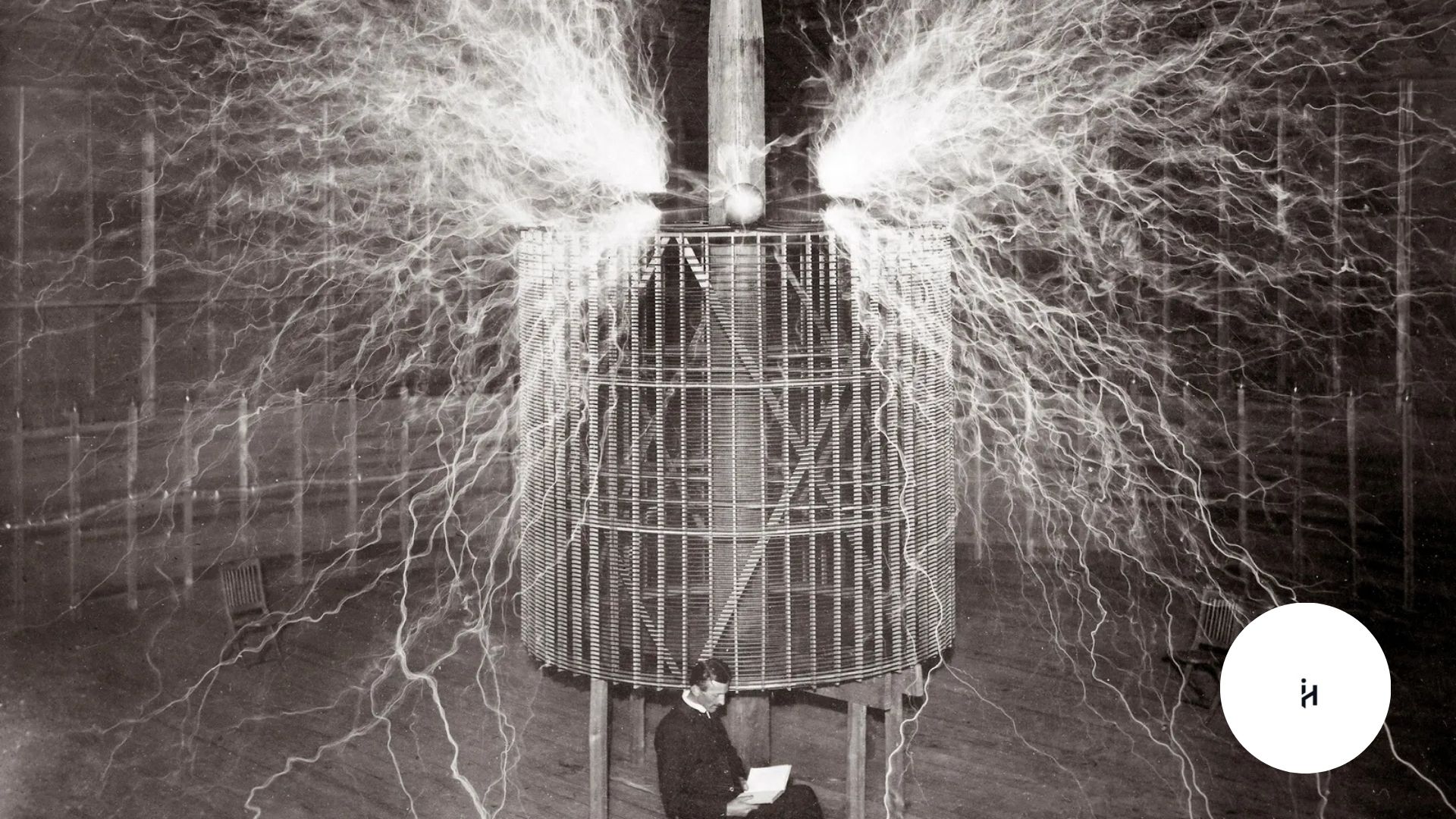
Tesla’s most notable achievements include the invention of alternating current (AC), the Tesla coil, and wireless energy transmission. His rivalry with Edison during the “War of Currents” further pushed him into the limelight, making him one of the most influential scientists of his time.
How Did Nikola Tesla Die

Tesla’s Groundbreaking Discoveries and Achievements

Tesla’s contributions to technology were unparalleled. He developed the Tesla coil, experimented with radio waves, and laid the foundation for modern wireless communication. His ideas on free energy, although never fully realized, were decades ahead of his time.

Despite his brilliance, Tesla struggled financially as many of his projects were underfunded or stolen. His grandest visions, such as wireless electricity through the Wardenclyffe Tower, failed due to lack of financial support.

Tesla’s Financial Downfall and Isolation

Despite his incredible intellect, Tesla was never able to capitalize on his inventions. Unlike Edison, who was a shrewd businessman, Tesla focused purely on science. He rejected patents for many of his ideas and often lacked financial backing.

Over time, he became increasingly isolated. His once-glorious reputation faded as he fell into obscurity, struggling to make ends meet. He lived in a series of hotels in New York, unable to pay rent, and relied on small grants from friends and admirers.

The Tragic Final Years of Nikola Tesla

In his later years, Tesla became obsessed with pigeons, particularly a white pigeon he claimed to love as if she were a human. He withdrew from public life and spent his days feeding pigeons in parks. His eccentric behavior led many to consider him mentally unstable.

Living in the New Yorker Hotel, he spent his final years alone, surviving on a meager diet and battling various illnesses. His financial troubles deepened, and he was frequently forced to move from one location to another due to unpaid bills.

Tesla’s Health Deterioration and Medical Conditions

Tesla’s health declined rapidly in his final years. He suffered from chronic digestive issues, insomnia, and extreme sensitivity to light and sound. His obsessive-compulsive tendencies worsened, and he developed a severe phobia of germs.

His physical condition weakened, and he eventually stopped taking care of himself. By the early 1940s, Tesla was frail and sickly, suffering from malnutrition and heart problems.

The Night of Tesla’s Death – What Really Happened?

On January 7, 1943, Tesla was found dead in his room at the New Yorker Hotel. The official cause of death was coronary thrombosis (a blood clot in the heart).

He had been living in room 3327, and his body was discovered by a maid who entered after he failed to respond. Tesla had refused medical care and preferred to live in isolation, which contributed to his deteriorating health.

Conspiracies and Theories About Tesla’s Death

Tesla’s death sparked numerous conspiracy theories. Some believed he was murdered because of his advanced research into wireless energy and weapon technology. Others suspected the FBI had an interest in his work on directed-energy weapons, often referred to as Tesla’s “Death Ray.”

Following his death, the U.S. government seized many of his documents, further fueling speculation about whether he had made a groundbreaking discovery that was covered up.

The Role of the FBI and Seized Documents

How Did Nikola Tesla Die

After Tesla’s death, the FBI took possession of his research papers, fearing they contained sensitive information related to national security. These documents were later examined by Dr. John G. Trump, an MIT professor and the uncle of former U.S. President Donald Trump.

According to official reports, Tesla’s notes contained nothing of immediate military value, but rumors persisted that some of his ideas were classified and hidden from the public.

How Did Nikola Tesla Die in Poverty Despite His Genius?

Tesla’s financial struggles were due to a combination of factors, including his refusal to profit from patents, his trust in unreliable investors, and his inability to commercialize his inventions.

While others, like Edison and Westinghouse, built business empires, Tesla lived on the fringes of society, relying on small donations from admirers. He died alone, penniless, and largely forgotten by the mainstream scientific community at the time.

Tesla’s Legacy and Posthumous Recognition

Although he died in poverty, Tesla’s contributions to science and technology were later recognized. Today, he is considered a pioneer in electricity, wireless communication, and renewable energy.

His name lives on through Tesla, Inc., the electric vehicle company founded by Elon Musk. Numerous museums, statues, and tributes around the world honor his legacy. In 1960, the unit for measuring magnetic flux density, the “tesla,” was named in his honor.

Conclusion – How Did Nikola Tesla Die, and What Can We Learn from His Life?

So, how did Nikola Tesla die? He passed away alone in a hotel room, suffering from heart disease, poverty, and neglect. Despite being one of the greatest minds of all time, he was forgotten by society at the time of his death.

Tesla’s story serves as a cautionary tale about the challenges faced by visionary thinkers. While his ideas were revolutionary, his lack of financial awareness and business acumen left him struggling throughout his life. Today, his work is celebrated worldwide, proving that genius is not always recognized in its own time.

Q&A Section

1. How did Nikola Tesla die?

Nikola Tesla died on January 7, 1943, in his room at the New Yorker Hotel. The official cause of death was coronary thrombosis (a blood clot in the heart).

2. Where did Nikola Tesla die?

Tesla passed away in room 3327 of the New Yorker Hotel in New York City, where he had been living in isolation for years.

3. What were Nikola Tesla’s last years like?

His final years were marked by financial struggles, deteriorating health, and increasing isolation. He spent much of his time feeding pigeons and living on a minimal diet.

How Did Nikola Tesla Die

4. Why was Nikola Tesla poor when he died?

Despite his numerous inventions, Tesla struggled financially because he failed to patent many of his ideas, was not business-savvy, and was often taken advantage of by investors.

5. What happened to Tesla’s research after his death?

After his death, the FBI seized many of Tesla’s documents, fearing they contained sensitive scientific discoveries. Some of these documents were later released, but theories persist that crucial research remains classified.

6. Did Nikola Tesla invent free energy?

Tesla envisioned wireless energy transmission, but his most ambitious project, the Wardenclyffe Tower, was never completed due to a lack of funding. His dream of free energy remained unrealized.

7. What was Tesla’s cause of death?

The official cause of Tesla’s death was coronary thrombosis, a condition caused by a blood clot in the arteries of the heart.

8. Was Nikola Tesla murdered?

There is no evidence to suggest Tesla was murdered, but conspiracy theories claim that his work on advanced technologies may have led to foul play.

9. How old was Nikola Tesla when he died?

Tesla was 86 years old at the time of his death in 1943.

10. What is Nikola Tesla’s legacy today?

Tesla’s contributions to electricity, wireless communication, and renewable energy are widely recognized today. His name is honored in various ways, including the unit of measurement “tesla” and Tesla, Inc., the electric vehicle company founded by Elon Musk.

Final Thoughts

Nikola Tesla’s death was a tragic end to a brilliant life. However, his legacy continues to inspire scientists, engineers, and dreamers around the world. His vision for a future of wireless energy, free electricity, and groundbreaking inventions remains relevant even today.

By understanding how did Nikola Tesla die, we gain insight into the struggles of inventors and the importance of supporting innovation. Tesla’s contributions changed the world, and though he died in obscurity, his ideas live on, shaping the future of technology.

For Amazing Updates Keep Visiting ImaginaryHistory.

Hidden Messages in Historical Texts: Secrets of the Past

0
Hidden Messages in Historical Texts

Throughout history, authors, scholars, and rulers have embedded hidden messages in historical texts for various reasons—secrecy, protection of knowledge, or even entertainment. These concealed messages have been uncovered using various methods, revealing fascinating insights about past civilizations, political conspiracies, and even religious beliefs.

In this blog, we will explore different ways hidden messages have been incorporated into historical texts, the techniques used to decipher them, and famous examples of cryptic communication.

The Art of Concealing Messages in Ancient Manuscripts

Hidden Messages in Historical Texts

Hidden messages in historical texts date back thousands of years, with civilizations using cryptography, acrostics, and invisible ink to conceal secrets. Ancient scribes often encoded messages within religious or governmental documents to protect sensitive information.

For example, Egyptian priests used hieroglyphics with double meanings, while Greek scholars such as Herodotus wrote messages between lines of ordinary text. The Romans, too, employed hidden messages in historical texts, utilizing substitution ciphers and hidden patterns to keep military secrets safe from enemies.

Cryptography in Historical Texts: Codes and Ciphers

Cryptography played a significant role in embedding hidden messages in historical texts. From the Caesar cipher used by Julius Caesar to the complex codes of the Enigma machine in World War II, encryption has been a valuable tool for secret communication.

One of the most famous cases of cryptographic messages in history is the Voynich manuscript, an undeciphered text filled with unknown symbols and diagrams. Historians and cryptographers have attempted to decode it, but its true meaning remains a mystery.

Acrostics and Hidden Meanings in Poetry and Literature

Acrostics have been a popular method for embedding hidden messages in historical texts. Writers and poets arranged the first letters of each line to spell out a secret word or phrase.

A notable example is the Psalms in the Hebrew Bible, where acrostic patterns were used to encode spiritual meanings. Similarly, medieval scholars used acrostics in manuscripts to convey secret messages about religious or political matters without attracting suspicion.

Biblical Codes and Religious Hidden Messages

Religious texts are among the most analyzed sources of hidden messages in historical texts. The Bible, the Quran, and other sacred scriptures have been studied for centuries to uncover hidden meanings.

The “Bible Code” theory suggests that the Hebrew Bible contains encrypted messages predicting future events. Using mathematical algorithms, researchers have claimed to find names, dates, and significant historical occurrences embedded in the ancient texts.

Political Secrets Hidden in Historical Documents

Governments and rulers have often used hidden messages in historical texts to communicate sensitive information. During times of war and espionage, cryptic messages were embedded in diplomatic correspondence to prevent enemies from intercepting crucial information.

One famous example is the coded letters between Mary, Queen of Scots, and her supporters during her imprisonment. Her secret messages were eventually deciphered, leading to her execution for treason against Queen Elizabeth I.

Hidden Messages in Medieval Manuscripts

Medieval manuscripts contain numerous examples of hidden messages, often embedded in illuminated texts and marginalia. Scribes used their creativity to include secret warnings, political opinions, or humorous comments hidden within the elaborate decorations of the books.

One intriguing case is the Voynich manuscript, a mysterious book written in an unknown script with strange illustrations. To this day, experts are still trying to decode its meaning, making it one of the greatest unsolved mysteries in historical texts.

Hidden Messages in Historical Texts

Invisible Ink and Secret Writing Techniques

Invisible ink has been used for centuries to conceal hidden messages in historical texts. Agents, spies, and revolutionaries wrote messages using lemon juice, milk, or special chemicals that could only be revealed under heat or ultraviolet light.

During the American Revolution, George Washington’s spies used invisible ink to communicate secretly. Similarly, Renaissance scholars and medieval alchemists often wrote hidden messages about their discoveries to avoid persecution.

Freemasonry and Secret Symbols in Historical Texts

The Freemasons, a secretive fraternal organization, have long been associated with hidden messages in historical texts. Their writings are filled with symbolic language, cryptic phrases, and concealed meanings meant to be understood only by initiated members.

Masonic documents and architecture contain encrypted symbols representing philosophical, religious, and scientific knowledge. Some believe that historical figures such as Sir Isaac Newton and Benjamin Franklin incorporated Masonic codes in their works.

Shakespeare’s Hidden Messages and Literary Secrets

William Shakespeare’s plays and sonnets are rumored to contain hidden messages in historical texts. Some scholars suggest that Shakespeare used cryptographic techniques to encode secret messages, possibly revealing his true identity.

One popular theory is the Baconian theory, which claims that Sir Francis Bacon wrote Shakespeare’s works and embedded cryptographic clues in them. Supporters of this theory analyze Shakespearean texts for hidden patterns and numerical ciphers.

The Da Vinci Code and Renaissance Hidden Messages

Leonardo da Vinci, the Renaissance polymath, was known for incorporating hidden messages in historical texts and artworks. His notebooks contain mirror writing, secret symbols, and complex diagrams that have intrigued researchers for centuries.

Dan Brown’s novel The Da Vinci Code popularized the idea that Renaissance artists and scholars embedded secret messages in their works. The book sparked a renewed interest in historical cryptography, with people re-examining famous paintings and manuscripts for hidden meanings.

Modern Discoveries and the Future of Hidden Messages in Historical Texts

With advances in technology, scholars are now uncovering more hidden messages in historical texts than ever before. Computer algorithms, AI, and advanced imaging techniques have allowed historians to decode previously invisible writings.

For example, scientists have recently used multispectral imaging to reveal lost texts in ancient manuscripts, such as those found in the Archimedes Palimpsest. As technology progresses, more secrets hidden in historical texts will continue to be uncovered, shedding new light on the past.

Hidden Messages in Historical Texts

Conclusion

Hidden messages in historical texts have fascinated scholars and historians for centuries. Whether through cryptography, acrostics, invisible ink, or symbolic language, these secret messages reveal the ingenuity of past civilizations. As modern technology continues to evolve, we can expect to discover even more astonishing hidden messages in historical texts, unlocking the mysteries of history one secret at a time.

For Amazing Updates Keep Visiting ImaginaryHistory.

The History of Bitcoin: The Evolution of Digital Currency

0
History of Bitcoin

Bitcoin, the world’s first decentralized digital currency, has revolutionized the financial landscape since its inception. From a mysterious whitepaper to a global financial phenomenon, Bitcoin’s journey is a story of innovation, resistance, and transformation. Let’s explore the detailed history of Bitcoin through 11 key stages.

The Birth of Bitcoin: A Revolutionary Idea

The concept of Bitcoin emerged in 2008, during the global financial crisis. A person or group under the pseudonym Satoshi Nakamoto published a whitepaper titled “Bitcoin: A Peer-to-Peer Electronic Cash System.” The paper outlined a decentralized digital currency that would eliminate the need for intermediaries like banks.

The primary goal was to create a transparent and secure payment system that operated independently of central authorities. Bitcoin’s foundation was built on blockchain technology, ensuring transparency and immutability of transactions. The decentralized nature of Bitcoin was an answer to the financial instability caused by centralized banking systems, offering a new way of handling digital transactions.

History of Bitcoin

The Genesis Block: Bitcoin Comes to Life

On January 3, 2009, Satoshi Nakamoto mined the first-ever Bitcoin block, known as the Genesis Block or Block 0. Embedded in the block was the message: “The Times 03/Jan/2009 Chancellor on brink of second bailout for banks.” This served as a political statement, hinting at the failures of traditional financial institutions.

The mining of this first block marked the beginning of Bitcoin’s journey. Unlike traditional currencies, Bitcoin had no physical form; it existed solely in the digital realm, secured by cryptographic principles. The Genesis Block was hardcoded into Bitcoin’s blockchain and could never be altered, symbolizing the birth of a decentralized financial revolution.

The Early Transactions: Proving Bitcoin’s Use Case

Bitcoin’s first recorded transaction took place on January 12, 2009, when Satoshi Nakamoto sent 10 BTC to developer Hal Finney. This transaction was a proof of concept that demonstrated how Bitcoin worked. However, it wasn’t until May 22, 2010, that Bitcoin was first used to purchase a tangible good.

A programmer named Laszlo Hanyecz bought two pizzas for 10,000 BTC from another user, marking the first commercial transaction using Bitcoin. Today, this event is celebrated as Bitcoin Pizza Day, as those 10,000 BTC would later be worth millions of dollars. This moment showed the potential of Bitcoin as a medium of exchange, even though its adoption was still in its infancy.

Bitcoin’s First Exchange and Price Discovery

In the early days, Bitcoin had no fixed price. It was traded on forums, where users agreed on prices based on demand and supply. The first Bitcoin exchange, BitcoinMarket.com, was established in March 2010, setting an initial exchange rate of $0.003 per BTC. By 2011, Bitcoin had reached parity with the US dollar for the first time, meaning 1 BTC was worth $1. As more exchanges emerged, Bitcoin’s price became more volatile, reflecting the growing interest in cryptocurrency. The introduction of exchanges provided Bitcoin with liquidity, allowing more people to buy and sell the digital currency, marking a significant step toward mainstream adoption.

Silk Road and Bitcoin’s Association with Dark Markets

One of Bitcoin’s early use cases was on Silk Road, an online black market that operated on the dark web. Silk Road allowed users to buy illegal goods and services using Bitcoin, which was perceived as an anonymous currency. This association with criminal activities gave Bitcoin a controversial reputation.

In 2013, the FBI shut down Silk Road and seized 144,000 BTC from its founder, Ross Ulbricht. While this event tarnished Bitcoin’s image, it also proved that Bitcoin transactions were not entirely anonymous but rather pseudonymous. Blockchain analysis tools later demonstrated that transactions could be traced, countering the notion that Bitcoin was an untraceable currency.

The Rise of Bitcoin: Media Attention and Adoption

Between 2013 and 2015, Bitcoin started gaining attention from mainstream media and investors. Companies like Microsoft, Dell, and Overstock began accepting Bitcoin as payment. The rise of Bitcoin ATMs, payment processors, and institutional interest helped boost its credibility.

Bitcoin’s decentralized nature also attracted those seeking financial freedom from government-controlled currencies. Despite regulatory challenges, Bitcoin continued to grow, with more businesses and individuals adopting it for transactions and investment purposes. The growing interest laid the foundation for what would later become a multi-trillion-dollar cryptocurrency market.

The Mt. Gox Collapse: Bitcoin Faces a Major Setback

In 2014, the biggest Bitcoin exchange at the time, Mt. Gox, collapsed after being hacked. The exchange, which handled over 70% of Bitcoin transactions, lost 850,000 BTC, worth approximately $450 million at the time.

History of Bitcoin

The incident caused a significant loss of trust in Bitcoin exchanges, leading to a price crash. Despite this setback, Bitcoin survived and eventually recovered. The Mt. Gox collapse highlighted the need for better security measures and helped pave the way for more regulated and secure cryptocurrency exchanges in the future.

Bitcoin’s Scaling Debate: Forks and Upgrades

As Bitcoin’s popularity grew, scalability became an issue. The Bitcoin network struggled with slow transaction speeds and high fees. This led to a debate on whether Bitcoin should increase its block size or adopt other scaling solutions.

The disagreement resulted in a hard fork in 2017, creating Bitcoin Cash (BCH), which had larger block sizes to enable faster transactions. Meanwhile, Bitcoin implemented the Segregated Witness (SegWit) upgrade, improving efficiency. These developments demonstrated the adaptability of Bitcoin’s ecosystem and the ongoing discussions on how to improve its scalability.

Bitcoin’s Institutional Adoption: A Game Changer

By 2020, Bitcoin had entered a new phase of adoption. Major companies like Tesla, MicroStrategy, and Square invested billions into Bitcoin as a hedge against inflation. Institutional investors, including hedge funds and pension funds, began integrating Bitcoin into their portfolios.

The approval of Bitcoin ETFs in some countries further legitimized it as a financial asset. Bitcoin was no longer just a speculative digital currency but a recognized store of value, often referred to as “digital gold.”

Bitcoin’s Role in Global Finance and El Salvador’s Adoption

In 2021, El Salvador became the first country to adopt Bitcoin as legal tender, allowing its citizens to use it for everyday transactions. This historic decision sparked debates on whether Bitcoin could replace traditional fiat currencies.

Other countries, especially those with unstable economies, began considering similar moves. Bitcoin’s decentralized nature made it appealing to nations looking for financial independence from international monetary systems. However, challenges such as volatility and regulatory concerns remained key obstacles to full-scale adoption.

The Future of Bitcoin: What Lies Ahead?

History of Bitcoin

Bitcoin’s future remains a topic of speculation and excitement. As blockchain technology continues to evolve, new innovations like the Lightning Network aim to make Bitcoin transactions faster and cheaper. Governments worldwide are exploring regulations to integrate Bitcoin into the financial system while maintaining control.

While some predict Bitcoin will replace traditional money, others see it as a hedge against inflation and economic crises. Regardless of the future, Bitcoin has undoubtedly reshaped the financial world, proving that decentralized currencies are here to stay.

Bitcoin’s journey from an obscure digital experiment to a trillion-dollar asset has been remarkable. Whether it continues to dominate the financial landscape or paves the way for new innovations, its impact on global finance is undeniable.

For Amazing Updates Keep Visiting ImaginaryHistory.

The History of Weapons and Military Technology

0
The History of Weapons and Military Technology

Weapons and military technology have played a crucial role in shaping human civilization. From primitive tools to sophisticated modern warfare systems, advancements in weaponry have influenced conflicts, strategies, and global power dynamics. This blog explores the evolution of military technology through history, highlighting key developments and their impact.

The Dawn of Warfare: Early Weapons and Tools

The earliest weapons were rudimentary tools made from stone, wood, and bone. Early humans used sharpened sticks and rocks for hunting and self-defense. As societies evolved, so did their weaponry. The invention of the spear and bow and arrow allowed for ranged attacks, giving early humans a strategic advantage in hunting and warfare.

The transition to metal weapons marked a significant shift in warfare. The Bronze Age (c. 3300–1200 BCE) introduced stronger, more durable weapons such as swords, daggers, and shields. Metallurgy revolutionized combat, allowing for superior weapons that defined early civilizations like the Egyptians, Sumerians, and Hittites.

The History of Weapons and Military Technology

Ancient Warfare: The Rise of Organized Armies

As civilizations expanded, organized military forces became necessary to defend territories and conquer new lands. The armies of Mesopotamia, Egypt, Greece, and Rome developed disciplined strategies, hierarchical command structures, and advanced weapons.

The chariot, one of the first major military innovations, gave armies greater mobility and battlefield dominance. Ancient Greek hoplites wielded long spears (sarissas) and used the phalanx formation, while the Romans perfected siege warfare, developing catapults and ballistae to breach enemy fortifications.

The Middle Ages: Knights, Castles, and Siege Warfare

Medieval warfare was characterized by the dominance of heavily armored knights and fortified castles. The sword and lance were the primary weapons of mounted knights, while foot soldiers used crossbows and longbows for ranged combat.

Siege warfare became more sophisticated with the development of battering rams, trebuchets, and siege towers. The introduction of gunpowder in the late Middle Ages changed the battlefield forever, making castles and traditional armor less effective against explosive weapons.

The Gunpowder Revolution: Firearms and Cannons

The introduction of gunpowder in the 14th century led to the development of early firearms, drastically changing military tactics. Hand cannons and matchlock muskets replaced traditional bows and arrows, giving armies greater firepower.

Cannons revolutionized siege warfare, allowing attackers to breach fortifications more efficiently. European colonial empires used gunpowder weaponry to dominate indigenous populations, leading to significant global power shifts during the Age of Exploration.

The Napoleonic Era: Military Strategy and Mass Warfare

The late 18th and early 19th centuries saw the rise of Napoleon Bonaparte, who transformed military strategy with large, well-coordinated armies. Muskets with bayonets became standard infantry weapons, while artillery played a crucial role in battles.

Napoleon’s tactics emphasized mobility, speed, and decisive engagements, influencing military doctrines for generations. The use of conscription allowed for massive armies, setting the stage for modern warfare.

The Industrial Revolution: Rifles, Machine Guns, and Railroads

The 19th century brought rapid technological advancements that reshaped warfare. Breech-loading rifles replaced muskets, offering greater accuracy and faster reloading. The invention of the Gatling gun in 1861 marked the beginning of automatic firepower.

Railroads revolutionized troop movement and logistics, enabling armies to mobilize faster. The American Civil War (1861–1865) demonstrated the devastating potential of industrial warfare, foreshadowing the conflicts of the 20th century.

World War I: Trench Warfare and Chemical Weapons

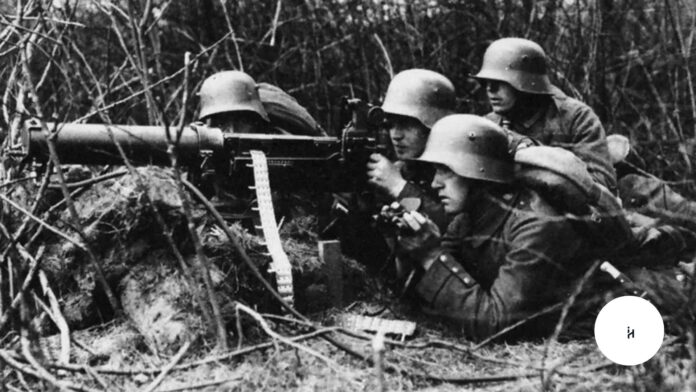
World War I (1914–1918) introduced new and terrifying weapons, including machine guns, poison gas, and tanks. Trench warfare became the dominant strategy, leading to prolonged battles and high casualty rates.

The war saw the first widespread use of aircraft for reconnaissance and bombing. Chemical weapons, such as mustard gas, inflicted horrific injuries, leading to international bans on their use in later conflicts.

World War II: Tanks, Aircraft, and Nuclear Weapons

The History of Weapons and Military Technology

World War II (1939–1945) was the most technologically advanced war of its time, featuring innovations such as radar, jet engines, and improved tanks. Aircraft carriers revolutionized naval warfare, while strategic bombing campaigns devastated cities.

The most significant development was the atomic bomb, which was dropped on Hiroshima and Nagasaki in 1945. The introduction of nuclear weapons ushered in the Cold War era, where military strategy centered around deterrence and the threat of mutually assured destruction.

The Cold War: Missiles, Submarines, and Space Warfare

The Cold War (1947–1991) saw an arms race between the United States and the Soviet Union, leading to the development of intercontinental ballistic missiles (ICBMs) and nuclear submarines.

Spy satellites and early missile defense systems transformed military strategy. The Space Race also had military implications, as both superpowers sought dominance in space technology for surveillance and potential weaponization.

Modern Warfare: Drones, Cyberwarfare, and AI

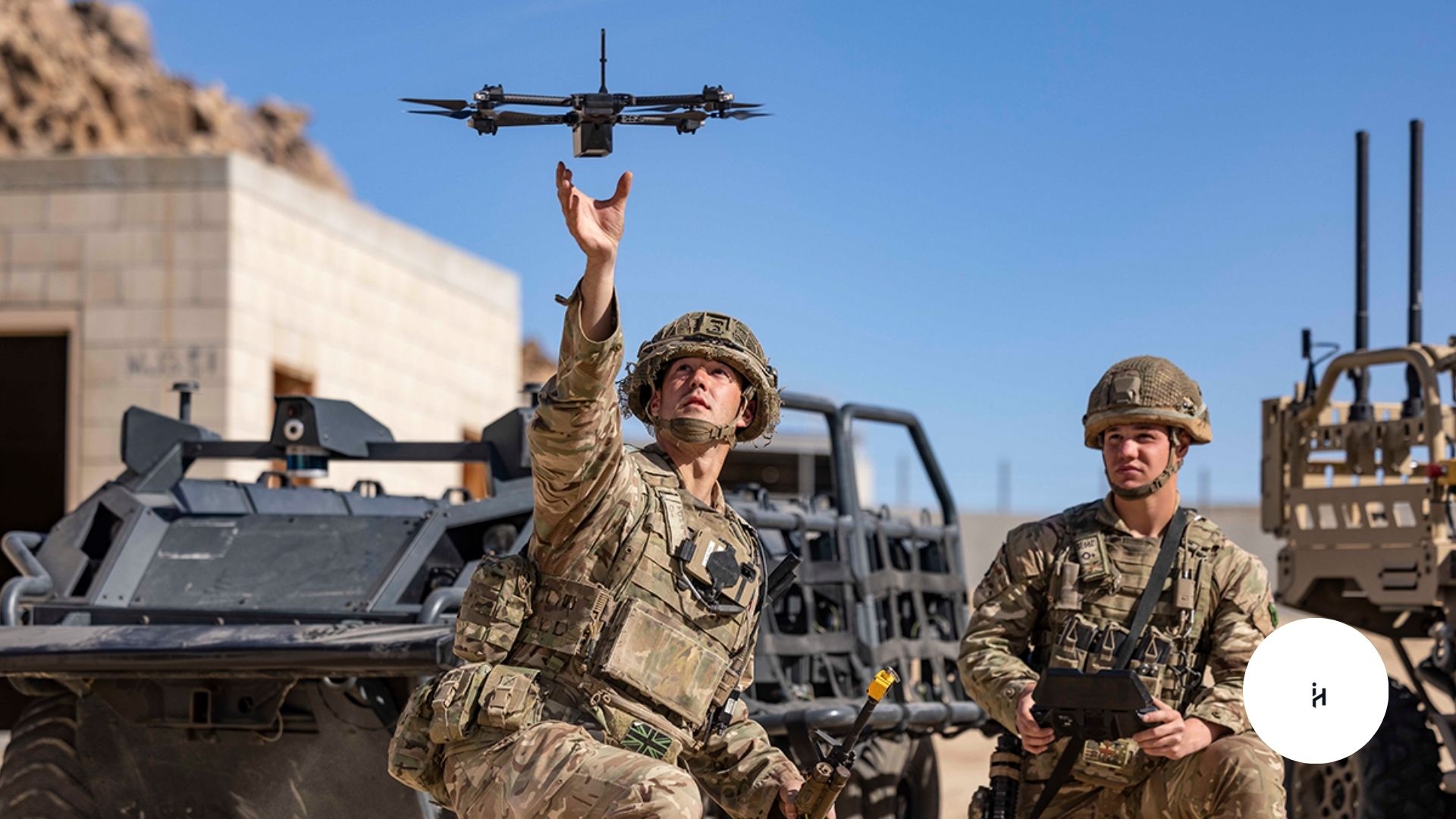
Today’s military technology is dominated by drones, cyber warfare, and artificial intelligence. Unmanned aerial vehicles (UAVs) provide reconnaissance and precision strikes with minimal risk to human soldiers.

Cyberwarfare has become a critical battlefield, with nations engaging in hacking, disinformation campaigns, and attacks on infrastructure. AI-driven autonomous weapons raise ethical concerns, as they can make real-time decisions without human intervention.

The Future of Warfare: Hypersonic Weapons and Space Militarization

The future of military technology is rapidly evolving. Hypersonic missiles, capable of traveling at speeds over Mach 5, are being developed by major world powers. These weapons can bypass traditional defense systems, making them highly effective.

The History of Weapons and Military Technology

Space is becoming a new frontier for military dominance. Countries are developing anti-satellite weapons and space-based defense systems. The rise of quantum computing and biotechnology could further change warfare, making it more precise and potentially more devastating.

Conclusion

The history of weapons and military technology reflects humanity’s continuous quest for dominance and security. Each technological advancement has reshaped the way wars are fought, often with profound consequences for civilization. As we enter an era of AI-driven warfare and space militarization, the ethical and strategic challenges of modern weaponry will continue to shape global security in the years to come.

For Amazing Updates Keep Visiting ImaginaryHistory.