Home Blog Page 452

Is Lady Gaga French? A Detailed Exploration

0
Is Lady Gaga French

One of the most common questions about Lady Gaga that fans often wonder is, “Is Lady Gaga French?” In this blog, we will explore the various aspects of her life, career, and heritage to provide a comprehensive answer to this question. Lady Gaga is an iconic figure in the music, fashion, and entertainment industries. With her eclectic style and boundary-pushing performances, she’s garnered a global following.

The Origins of Lady Gaga’s Name and Heritage

Lady Gaga, born Stefani Joanne Angelina Germanotta, was born in New York City to Italian-American parents. Despite the fame and international appeal of her name, Lady Gaga is not French.

Her family’s roots trace back to Italy, and she grew up in an Italian-American household. The name “Lady Gaga” was inspired by the Queen song “Radio Ga Ga,” and has no French connection. This piece of her history is an important factor in answering the question: is Lady Gaga French?

Is Lady Gaga French

Lady Gaga’s Cultural Background: Italian-American Heritage

Lady Gaga’s cultural heritage is an integral part of who she is. Growing up in New York, Lady Gaga’s Italian-American upbringing shaped her identity and musical career. Her parents, who were both of Italian descent, made sure to pass down the cultural traditions, values, and customs of Italy.

From her love of pasta to her appreciation of family values, Lady Gaga’s heritage is more closely tied to Italy than to France. Therefore, it would be incorrect to say, “Is Lady Gaga French?” when examining her background.

The International Appeal of Lady Gaga’s Music

Though Lady Gaga is not French, her music has certainly resonated with fans across the globe, including in France. Her work, especially her bold and dynamic pop hits, has a universal appeal.

The fact that her music transcends language barriers and speaks to people worldwide is a testament to her artistry. In France, Lady Gaga enjoys a massive fan base and her performances in the country have been nothing short of spectacular. However, this does not mean that Lady Gaga is French by nationality or heritage.

Is Lady Gaga French by Language?

Lady Gaga is known for her multilingual abilities. Although she primarily sings in English, she has demonstrated a proficiency in other languages, including some French. In her early career, Lady Gaga included a few French phrases in her songs and interviews, which led some to believe that she might have French origins. While she has often expressed her admiration for French culture and language, this does not make Lady Gaga French. She is a New York-born, Italian-American singer, with no French roots.

Lady Gaga’s Connection to France Through Her Fans

One of the most fascinating aspects of Lady Gaga’s career is the widespread admiration she receives from her global fan base. France, being one of the most influential cultural hubs in the world, has played a significant role in her international success.

French fans adore her for her avant-garde style and powerful performances. Lady Gaga’s relationship with France is one of love and respect, but the question “Is Lady Gaga French?” remains unequivocally unanswered. While her influence is undeniable in France, she is not French.

Lady Gaga’s French Cultural Influences in Fashion

Another area where French culture intertwines with Lady Gaga’s career is fashion. France is home to some of the world’s most prestigious fashion houses, and Lady Gaga has often worked with French designers.

Her collaborations with iconic French brands such as Givenchy have solidified her status as a global style icon. While these associations may evoke a French flair in her wardrobe, they do not imply that Lady Gaga is French. Her unique and diverse fashion sense reflects global influences, not just French ones.

The Impact of French Cinema on Lady Gaga’s Career

Lady Gaga has also been influenced by French cinema throughout her career. Her interest in acting, especially in films like A Star is Born, shares many traits with classic French cinema.

The emotional depth and artistic style that Lady Gaga brings to her acting roles are often reminiscent of the French Nouvelle Vague movement. However, despite these artistic similarities, Lady Gaga’s work is rooted in a variety of cinematic traditions, and she is not French in her artistic origin.

Is Lady Gaga French

Lady Gaga’s International Fan Base: A Global Icon

Lady Gaga’s fame spans across continents, from the United States to Europe and beyond. Although she enjoys immense popularity in France, Lady Gaga is an international icon, not limited to any one country.

Fans in France, the United States, Asia, and other parts of the world have embraced her unique persona and artistry. Her ability to connect with people from different cultures is part of what makes Lady Gaga so beloved, but again, this does not make Lady Gaga French.

Is Lady Gaga French or American? The Answer Lies in Her Birthplace

Lady Gaga’s birthplace is one of the most significant pieces of evidence when addressing the question, “Is Lady Gaga French?” Born in New York City on March 28, 1986, she is an American by birth.

Her parents, both of Italian descent, were born and raised in the United States. Lady Gaga’s American identity is a crucial aspect of her persona, and although her music and style have global appeal, she remains firmly rooted in her American origins.

Lady Gaga’s Performances in France: A Celebration of Global Talent

While Lady Gaga is not French, she has always received an overwhelmingly positive response in France. Her performances in French cities like Paris have sold out, with fans flocking to see her live shows.

Her concerts in France have often been a celebration of global talent and unity, where people from all walks of life come together to appreciate her artistry. This international support, particularly from the French, highlights her appeal and influence, but it doesn’t answer the question of whether or not Lady Gaga is French.

Q&A:

Q1: Is Lady Gaga French?

No, Lady Gaga is not French. She was born in New York City to Italian-American parents, and her cultural heritage is Italian-American, not French. While she has connections to France through her fanbase and collaborations with French designers, her nationality is American.

Q2: Does Lady Gaga speak French?

Lady Gaga is known for her multilingual abilities, and she has incorporated French phrases in some of her music and interviews. However, she is not a native French speaker, and her primary language is English.

Q3: What is Lady Gaga’s heritage?

Lady Gaga’s heritage is Italian-American. Her parents are both of Italian descent, and she grew up in New York City, surrounded by Italian-American traditions and culture.

Q4: Does Lady Gaga have any French influences in her career?

While Lady Gaga is not French, she has been influenced by French culture in several ways, particularly in her fashion and music. She has worked with renowned French designers like Givenchy and has expressed admiration for French cinema.

Q5: Why do people think Lady Gaga might be French?

People might assume Lady Gaga is French due to her collaborations with French fashion houses, her artistic style that aligns with European trends, and her popularity in France. However, these factors do not change her Italian-American heritage and American nationality.

Is Lady Gaga French

Conclusion: Is Lady Gaga French?

To sum up the question “Is Lady Gaga French?” we can confidently say that Lady Gaga is not French. She is an American-born artist with Italian-American heritage. Although she has had significant cultural and professional connections with France, and her work resonates with French audiences, Lady Gaga’s roots are American, and her identity is shaped by her Italian heritage. Her global appeal transcends national boundaries, and her success in France only underscores the universal power of her art.

For Amazing Updates Keep Visiting ImaginaryHistory.

Was Albert Einstein Jewish? Exploring His Identity and Beliefs

0
Was Albert Einstein Jewish

Albert Einstein, one of the most brilliant minds in history, is renowned for his contributions to physics and mathematics. However, a fascinating question that often arises in discussions about him is whether Albert Einstein was Jewish. In this blog, we will explore the complex aspects of Einstein’s religious identity, cultural background, and personal beliefs, providing insights into his Jewish roots and the role they played in his life.

Albert Einstein’s Jewish Heritage: A Glimpse into His Family Background

Was Albert Einstein Jewish

Albert Einstein was born on March 14, 1879, in Ulm, Germany, into a Jewish family. His father, Hermann Einstein, was a secular Jew, while his mother, Pauline Koch, came from a non-religious Jewish background. Despite this, Einstein’s roots were firmly tied to Jewish heritage, and his family practiced customs typical of Jews in Germany during that time.

Einstein’s paternal side of the family had a strong connection to Jewish traditions, even though they were not deeply religious. His father was a businessman who had an interest in secular education and modern science, and his mother was well-educated and provided a nurturing environment for him as a child. However, Albert Einstein was not raised with a strictly religious upbringing. The family did not attend synagogue regularly, and Einstein himself showed little interest in formal religious practices as a young boy.

Despite his secular upbringing, the Jewish identity remained a significant part of Einstein’s cultural heritage. His Jewish roots would later influence his views and actions, particularly when he became involved in political and social causes later in life. This personal journey, though not always rooted in religious devotion, would underscore Einstein’s deep connection to his Jewish background and heritage.

Einstein’s Relationship with Religion: A Complex View

While Einstein was born into a Jewish family, his views on religion were much more complex. He was not religious in the conventional sense, especially in his later years, when he openly expressed his agnosticism. He rejected the idea of a personal God and dismissed traditional religious practices, instead embracing a belief in the “cosmic religion” of science.

In his famous quote, “Science without religion is lame, religion without science is blind,” Einstein revealed his nuanced stance on the relationship between science and religion. He believed that the mysteries of the universe could be understood through scientific inquiry, but he also acknowledged that human beings often turn to religion for a sense of meaning and moral guidance. For Einstein, religion and science were not inherently opposed but operated in different realms of understanding.

However, Einstein’s secularism did not mean that he denied his Jewish identity. He was proud of his Jewish heritage and spoke out against anti-Semitism throughout his life. His cultural and social connection to Judaism remained strong, even as he distanced himself from organized religion. This duality in his identity—being Jewish by heritage but secular in his beliefs—was a defining feature of Einstein’s personal philosophy.

Einstein’s Views on Anti-Semitism: Standing Up for His Jewish Identity

As Albert Einstein rose to fame in the early 20th century, he became a prominent figure not only in the scientific community but also in political and social circles. One of the key issues that shaped his later life was his outspoken opposition to anti-Semitism. Despite his secular beliefs, Einstein never shied away from his Jewish identity, particularly in the face of growing anti-Semitic sentiment in Europe.

In 1933, when the Nazis came to power in Germany, Einstein was forced to flee the country due to the increasing persecution of Jews. He moved to the United States, where he would spend the rest of his life. In his new home, Einstein continued to speak out against the rise of Nazism, using his platform to advocate for Jewish rights and to denounce the horrors of anti-Semitism.

Was Albert Einstein Jewish

Einstein’s commitment to fighting anti-Semitism was not limited to his personal experiences. He was an ardent supporter of Zionism, the movement for the establishment of a Jewish homeland in Palestine. While he was not a religious Zionist, Einstein believed in the cultural and political importance of a Jewish state. He viewed Zionism as a way to secure a safe haven for Jews who faced discrimination and violence in Europe.

In his later years, Einstein was heavily involved in Jewish causes, including his support for the Hebrew University of Jerusalem and his advocacy for Jewish refugees. Despite his secular beliefs, his unwavering commitment to combating anti-Semitism and defending Jewish people highlighted his deep attachment to his heritage and his identity as a Jew.

Einstein’s Relationship with Judaism: Secularism and Cultural Identity

Though Albert Einstein was not religious in the traditional sense, he maintained a connection to Judaism that was cultural rather than strictly religious. For Einstein, being Jewish was not about religious rituals or beliefs, but rather about being part of a community with a shared history and culture. His Jewish identity, in many ways, was intertwined with his sense of social responsibility and commitment to justice.

Einstein once said, “I am a Jew, and my mother was Jewish. I was raised in a Jewish environment, and I have always been a strong supporter of the Jewish people.” This quote reflects the complex relationship Einstein had with Judaism, where his cultural identity as a Jew was integral to his understanding of the world, even if he did not adhere to religious teachings.

Throughout his life, Einstein maintained a deep appreciation for Jewish intellectual and cultural traditions. He was influenced by the works of Jewish philosophers, writers, and scientists, and he admired the resilience of the Jewish people in the face of adversity. While he was critical of organized religion, he found inspiration in Jewish values, including the emphasis on education, social justice, and the pursuit of knowledge.

Einstein’s involvement in the Jewish community was also evident in his support for the establishment of the Hebrew University in Jerusalem. He saw the university as a symbol of Jewish intellectual achievement and an important institution for the development of the Jewish people. In 1921, Einstein visited Palestine to promote the university and later became a member of its Board of Governors. This cultural and intellectual connection to Judaism was a significant aspect of Einstein’s identity.

Einstein’s Legacy: A Jewish Icon in the Modern World

Albert Einstein’s legacy as one of the greatest scientific minds of the 20th century is well-known, but his contributions to Jewish culture and identity are equally significant. Although he was not a religious Jew, Einstein became a symbol of Jewish pride and resilience, particularly during a time when Jews faced widespread persecution in Europe.

Einstein’s life and work transcended the boundaries of religion, politics, and culture. His intellectual achievements in physics, such as the theory of relativity, reshaped our understanding of the universe. But his commitment to social justice, his advocacy for peace, and his support for Jewish causes also left an indelible mark on the world.

Was Albert Einstein Jewish

In the years following his death in 1955, Einstein’s image became synonymous with the Jewish intellectual tradition. His achievements inspired generations of Jewish scientists, thinkers, and leaders, and his support for the Jewish people helped shape the modern Jewish identity. In Israel, Einstein is celebrated not only for his scientific genius but also for his contributions to the cultural and political development of the Jewish state.

Today, Albert Einstein is remembered as a Jewish icon whose life and work continue to inspire individuals around the world. Whether as a scientist, a social activist, or a symbol of Jewish pride, Einstein’s legacy lives on in the hearts and minds of millions. His story is a testament to the power of intellectual curiosity, the importance of cultural heritage, and the enduring strength of the Jewish spirit.

Conclusion

Albert Einstein’s identity as a Jew is multifaceted and complex. Born into a Jewish family, Einstein’s connection to his heritage was cultural rather than religious. Though he rejected traditional religious beliefs and embraced a secular worldview, Einstein maintained a deep appreciation for the Jewish people and their history. His opposition to anti-Semitism, his support for the Zionist movement, and his involvement in Jewish causes highlight the important role that his Jewish identity played in his life. Through his scientific achievements and social activism, Einstein became a symbol of Jewish pride and resilience, leaving an enduring legacy for future generations.

For Amazing Updates Keep Visiting ImaginaryHistory.

How Long Did It Take to Build the Great Wall of China?

0
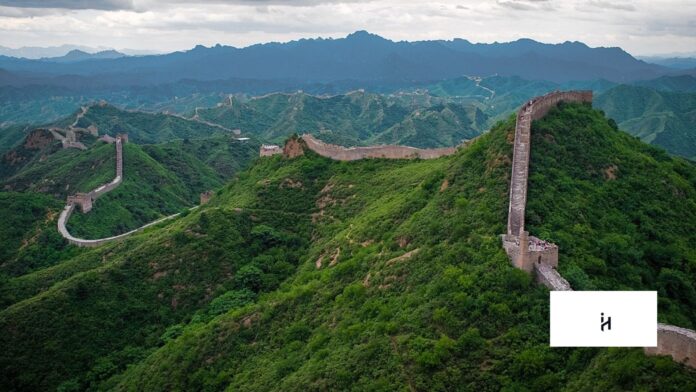
Great Wall of China

The Great Wall of China is one of the most iconic landmarks in the world, with its impressive structure stretching across thousands of miles. However, one common question that many people ask is: “How long did it take to build the Great Wall of China?”

The answer to this question is not straightforward, as the construction of the wall spanned several centuries, with different dynasties contributing to its growth and expansion. This blog will explore the history of the Great Wall’s construction, the various stages involved, and how long it took to build it.

The Early Foundations: The Beginning of the Great Wall

The origins of the Great Wall of China can be traced back to the 7th century BC, during the Warring States period. During this time, various Chinese states built fortifications to defend their territories against invasions from nomadic tribes in the north, particularly the Xiongnu. These early walls were not the monumental structure that we recognize today but were small, simple fortifications made from earth, wood, and stone.

Great Wall of China

The first major effort to create a unified defensive wall began under the Qin Dynasty (221–206 BC), after the unification of China by Emperor Qin Shi Huang. He ordered the connection of existing walls and the construction of new ones to protect against invasions from northern tribes. This was an early precursor to what would later become the Great Wall.

The Qin Dynasty: The First Major Phase of Construction

The most significant early phase of the Great Wall’s construction occurred during the reign of Emperor Qin Shi Huang. After uniting China, Qin Shi Huang ordered the construction of a more formidable wall to protect the newly formed empire.

The work started around 221 BC and continued until his death in 210 BC. It was during this period that the wall began to take on a more recognizable form, stretching over 5,000 kilometers.

The wall constructed during the Qin Dynasty was not as grand as the later versions but was an essential foundation for the wall’s eventual expansion. The Qin version of the wall was primarily built using rammed earth, which is compacted soil that was hardened to form a solid structure. This section of the wall was not continuous but consisted of several walls built to protect specific regions and military outposts.

While the wall was being constructed, a massive labor force was employed, consisting of soldiers, peasants, and prisoners. It is estimated that hundreds of thousands of workers were involved in the project, and many of them died due to the harsh working conditions. This tragic loss of life highlights the scale and intensity of the construction effort.

The Han Dynasty: Expansion and Strengthening the Wall

After the fall of the Qin Dynasty, the Great Wall’s construction was put on hold for a period during the Han Dynasty (206 BC – 220 AD). However, during the Han Dynasty, the wall was extended and reinforced to protect the empire’s northern borders against the Xiongnu and other nomadic tribes. The Han emperor, Emperor Wu, played a significant role in expanding the wall, adding more fortifications and watchtowers, and linking existing walls together.

This phase of construction saw the use of new materials and techniques, such as bricks and stone, which made the wall stronger and more durable. The Han Dynasty wall was a considerable improvement on the earlier versions built during the Qin Dynasty, and it was further extended to reach as far as the Gobi Desert in modern-day Mongolia. The work took several decades, and the Han Dynasty’s contribution to the Great Wall helped solidify its reputation as a massive defensive structure.

The Ming Dynasty: The Final Great Expansion

The most well-known and iconic version of the Great Wall was built during the Ming Dynasty (1368–1644), over a period of about 200 years. After the fall of the Yuan Dynasty and the invasion of northern Mongol tribes, the Ming emperors saw the need to fortify their borders against potential invasions. During the Ming Dynasty, the Great Wall was expanded, rebuilt, and reinforced with advanced engineering techniques.

Great Wall of China

The Ming Wall is the version that many people associate with the Great Wall of China today. This section is characterized by its massive stone walls, watchtowers, and fortifications.

The work began in earnest around 1368, and over the course of the next two centuries, the wall was continuously expanded and repaired. This effort involved not only soldiers but also local workers and peasants, who were conscripted to work on the project.

The Ming Dynasty’s contribution to the Great Wall involved significant technological advancements, including the use of brick and stone rather than earth and wood. This made the wall much stronger and more durable, allowing it to withstand the tests of time. By the time the Ming Dynasty finished its construction, the wall spanned approximately 21,000 kilometers.

The Total Duration: Over 2,000 Years of Construction

While the initial construction of the Great Wall began during the Warring States period around the 7th century BC, it was not until the Qin, Han, and Ming Dynasties that the wall took its present form.

The wall’s construction spanned over 2,000 years, with significant contributions from different dynasties and rulers. The entire project was not completed at once but rather evolved over many centuries, with each dynasty adding its own layer of fortifications, improvements, and extensions.

The total time it took to build the Great Wall is difficult to determine precisely, as the wall was continuously expanded and maintained throughout the centuries. However, it is clear that the Great Wall of China was the result of a continuous effort over several millennia. From the earliest walls built to the final, most iconic version of the wall, it is safe to say that the Great Wall was constructed over a period of approximately 2,000 years.

The Labor Force Behind the Great Wall’s Construction

One of the most remarkable aspects of the Great Wall of China is the sheer number of workers who contributed to its construction. The labor force consisted of soldiers, peasants, prisoners, and even volunteers, all working under harsh conditions. The construction of the wall was physically demanding and dangerous, with many workers losing their lives due to accidents, exhaustion, and harsh weather.

It is estimated that during the construction phases, hundreds of thousands of workers were employed. For example, during the Qin Dynasty, over 300,000 workers were conscripted to work on the wall, and many of them died from the brutal conditions. These workers were tasked with digging trenches, hauling materials, and building the wall itself, often with primitive tools and little protection.

The labor force was also subject to extreme control, as many of them were either prisoners or conscripts who had no choice but to work on the wall. Some workers were punished for failing to meet their quotas or for attempting to escape. The scale of human suffering involved in the construction of the Great Wall is an important, though tragic, part of its history.

The Great Wall’s Legacy: How It Endured Over Time

Great Wall of China

The construction of the Great Wall of China is not only an impressive feat of engineering but also a testament to the perseverance and determination of the Chinese people throughout history. The wall’s legacy goes beyond its defensive purpose; it is a symbol of the strength and unity of China.

Despite the immense challenges and hardships faced by those who built it, the Great Wall endures as one of the most famous landmarks in the world. Today, sections of the wall have been preserved, and it is a popular tourist destination. The Great Wall continues to capture the imagination of people worldwide, representing the power and history of ancient China.

In conclusion, the construction of the Great Wall of China took over two millennia, involving multiple dynasties, countless workers, and millions of hours of labor. While the question of how long it took to build the Great Wall is complex, its enduring legacy is a testament to the hard work and determination of those who contributed to its creation.

For Amazing Updates Keep Visiting ImaginaryHistory.

Can You Go Inside the Pyramids of Giza?

0
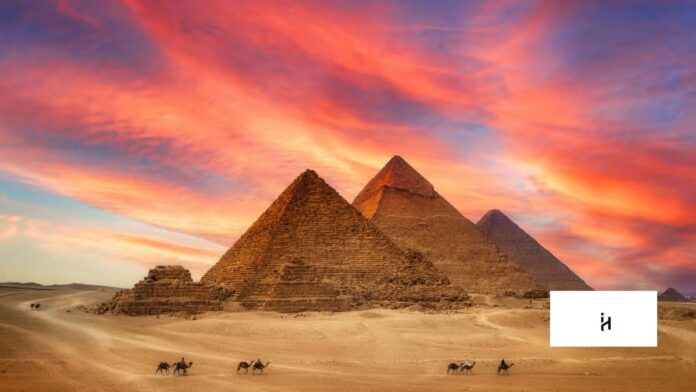
Pyramids of Giza

The Pyramids of Giza are among the most iconic structures in the world, drawing millions of tourists every year. Located on the outskirts of Cairo, Egypt, these ancient wonders have fascinated historians, archaeologists, and travelers for centuries.

One of the most common questions visitors ask is, “Can you go inside the Pyramids of Giza?” In this blog, we will explore the accessibility of the pyramids, the experience of going inside, the rules and restrictions, and what to expect on your visit.

Understanding the Pyramids of Giza and Their Historical Significance

Pyramids of Giza

The Pyramids of Giza, including the Great Pyramid of Khufu, the Pyramid of Khafre, and the Pyramid of Menkaure, are some of the oldest and most remarkable structures ever built by human hands. These tombs were constructed during the Fourth Dynasty of Egypt’s Old Kingdom, around 4,500 years ago. They were intended to serve as monumental burial sites for the pharaohs, ensuring their safe passage to the afterlife.

The Great Pyramid of Khufu is the largest and most famous of the three, originally standing at 481 feet tall. Over the centuries, much of the outer casing of the pyramids has eroded, but the grandeur of these ancient wonders still captivates anyone who sees them in person.

Despite their grandeur, the pyramids’ primary purpose was practical: to house the bodies of deceased rulers and their treasures for eternity. They were designed to reflect the divine status of pharaohs, who were considered gods. Understanding this historical context gives visitors a deeper appreciation for the pyramids’ significance.

The Accessibility of the Pyramids of Giza: Can You Actually Go Inside?

Yes, visitors can go inside some of the Pyramids of Giza, but not all areas are accessible. The most popular pyramid for tourists to enter is the Great Pyramid of Khufu. However, access is limited to specific chambers within the structure. The interior is made up of narrow passageways and small, cramped chambers, with no air conditioning or lighting, so entering is not for the faint-hearted.

The Pyramid of Khafre and the Pyramid of Menkaure, on the other hand, have much stricter restrictions, with limited access for tourists. While the Pyramid of Khufu is the most commonly visited, you cannot enter the burial chamber or any further beyond the inner passageway unless you are with a guide or a special permit.

It’s important to note that the access to the pyramids can change due to maintenance, preservation efforts, or changes in local tourism policies. Thus, it’s always recommended to check the latest updates before planning a visit.

Rules and Regulations for Entering the Pyramids of Giza

Although the pyramids of Giza are a major tourist attraction, there are strict rules and regulations in place to protect these ancient monuments from damage and preserve them for future generations. Before heading inside, you should be aware of the following:

  • Restricted Hours: The pyramids can only be visited during certain hours. Typically, the pyramids are open to tourists during the day, from 8:00 AM to 5:00 PM, with some variations depending on the season.

  • Entrance Fees: Visitors must pay an entrance fee to access the pyramid complex. The cost to enter the Great Pyramid is higher than other attractions, with additional fees for special access to restricted areas.

  • Guided Tours: While it’s possible to visit the pyramids without a guide, many people opt for guided tours to better understand the history and architecture of these monuments. Having an experienced guide can also help ensure that you stay within the allowed areas of the pyramids.

  • No Photography Inside: To protect the integrity of the ancient structure, photography inside the pyramids is often prohibited. Flash photography can also damage the ancient surfaces, so it is best to inquire about the specific photography rules before your visit.

The Experience of Going Inside the Pyramids of Giza

If you’re lucky enough to gain access to the interior of the Great Pyramid of Khufu, you are in for a unique experience. The interior is dark, damp, and airless, which makes the journey more challenging. Visitors will navigate through narrow corridors that are steep and require a bit of climbing.

One of the most striking features of the Great Pyramid’s interior is the King’s Chamber, where it is believed that the pharaoh’s sarcophagus was once placed. Although the sarcophagus is still inside the chamber, it is now empty. The chamber itself is relatively simple, devoid of decoration, as the pyramids were intended to focus on the afterlife rather than the living.

As you walk through the interior, you can marvel at the construction and the engineering techniques that allowed these pyramids to stand the test of time. It’s truly a humbling experience to imagine the thousands of workers who spent decades constructing such a monumental tomb.

Pyramids of Giza

Why Some Areas of the Pyramids Are Closed to the Public

While some areas of the pyramids are accessible, many parts remain closed to the public. This is primarily due to concerns about preservation and safety. Over the centuries, the pyramids have faced weathering, erosion, and natural disasters. To mitigate further damage, Egypt’s Ministry of Antiquities has placed certain restrictions on the areas that can be visited by tourists.

Another reason for restricted access is the preservation of the tombs and artifacts that remain inside the pyramids. The ancient treasures, such as inscriptions, paintings, and the sarcophagus, need to be protected from exposure to light, heat, and human interference.

Additionally, the sheer volume of visitors can lead to wear and tear on the pyramid’s structure. To ensure the safety of tourists, especially considering the narrow passageways, some parts of the pyramids are simply deemed too dangerous to explore.

Safety and Health Considerations for Entering the Pyramids

Entering the Pyramids of Giza, especially the Great Pyramid of Khufu, is not for everyone. The narrow corridors, steep inclines, and lack of ventilation can make the climb physically demanding. Those with respiratory conditions, claustrophobia, or mobility issues may find it difficult or unsafe to enter the pyramids.

While guides are available to assist visitors, there are no elevators or escalators inside the pyramids, meaning the climb to the upper chambers can be strenuous. You should be prepared for hot and humid conditions, especially during summer, when temperatures inside the pyramids can soar.

If you plan on visiting the interior of the pyramids, make sure you bring plenty of water, wear comfortable shoes, and be mindful of your physical limits. It’s always best to listen to your guide’s instructions and take breaks if needed.

Alternative Experiences at the Giza Pyramid Complex

For those who prefer not to venture inside the pyramids, there are plenty of other ways to experience the grandeur of the Giza Pyramid Complex. The surrounding plateau offers several viewing platforms that allow visitors to admire the pyramids from a distance.

You can also visit the nearby Sphinx, one of the most iconic statues in the world, which is located right next to the pyramids. The Solar Boat Museum, located near the Great Pyramid, offers a fascinating look at the ancient boat found buried near the pyramid, believed to be used to transport the pharaoh’s body across the Nile River in the afterlife.

In addition, there are several other tombs and smaller pyramids on the Giza plateau that visitors can explore. These offer a more peaceful and less crowded experience than the main pyramids, and provide insight into the lives of the individuals buried there.

Planning Your Visit: Tips for Exploring the Pyramids of Giza

Pyramids of Giza

To ensure a smooth and enjoyable visit to the Pyramids of Giza, here are some helpful tips:

  • Arrive Early: The pyramids can get crowded, especially in peak tourist seasons, so it’s advisable to arrive early in the day to avoid the largest crowds.

  • Dress Appropriately: The weather in Egypt can be extremely hot, so dress in light, breathable clothing. Comfortable shoes are essential, as there will be plenty of walking.

  • Hydrate and Stay Cool: Be sure to bring plenty of water to stay hydrated, especially if you plan to enter the pyramids. The interior is hot and stuffy, and there are no places to buy water once inside.

  • Respect the Site: The pyramids are ancient monuments that need to be treated with respect. Avoid touching the walls, and adhere to all the rules set by the Egyptian authorities.

Visiting the Pyramids of Giza is a once-in-a-lifetime experience, and understanding the rules, regulations, and history surrounding these ancient structures will make your visit all the more enriching. Whether you venture inside the pyramids or admire them from the outside, the experience will undoubtedly leave you in awe of one of the greatest achievements in human history.

Q&A for “Can You Go Inside the Pyramids of Giza?”

Q1: Can you go inside the Pyramids of Giza?

Yes, you can go inside the Great Pyramid of Khufu, but access is limited to specific chambers. Visitors can explore the interior, but areas such as the burial chamber are off-limits for preservation and safety reasons. The smaller pyramids, such as those of Khafre and Menkaure, generally have more restrictions.

Q2: Is it safe to enter the Pyramids of Giza?

While entering the pyramids is generally safe, it is physically demanding. The narrow passageways, steep inclines, and lack of ventilation make it challenging, especially during the hot months. Visitors should be prepared for the strenuous climb and should ensure they are in good health before entering.

Q3: Do you need a guide to visit the pyramids?

It is not mandatory, but hiring a guide is highly recommended. A guide can help you navigate the site, understand the history, and ensure you stay within the designated areas, especially inside the pyramids.

Q4: How much does it cost to enter the Pyramids of Giza?

The entrance fee to the Giza pyramid complex varies. For the Great Pyramid, the fee is typically higher than for other smaller pyramids and attractions within the complex. Additional fees may apply for special access or guided tours.

Q5: Are photography and filming allowed inside the pyramids?

Photography is generally prohibited inside the pyramids to protect the ancient structure from damage caused by light and flash. However, photography is allowed in the open areas surrounding the pyramids and at the Sphinx.

For Amazing Updates Keep Visiting ImaginaryHistory.