Home Blog Page 443

Dorothy Hunt: The Mysterious Life and Tragic Death of a Key Watergate Figure

0
Dorothy Hunt

Dorothy Hunt was an influential yet enigmatic figure in American history, particularly known for her connections to the infamous Watergate scandal. She was the wife of E. Howard Hunt, a former CIA operative and one of the key players in the scandal that led to the resignation of President Richard Nixon. Dorothy Hunt’s life was shrouded in mystery, and her tragic death in a plane crash raised numerous conspiracy theories that continue to intrigue historians and political analysts today.

Early Life and Background

Dorothy Hunt

Dorothy Hunt was born Dorothy Wetzel in Ohio in 1920. She grew up in a modest environment and later pursued higher education at a time when opportunities for women were limited. Dorothy was known for her intelligence, charm, and determination, qualities that would later define her role in the political sphere. She eventually joined the U.S. government, where she met her future husband, E. Howard Hunt, a high-ranking CIA officer. Their union marked the beginning of her deep involvement in covert intelligence operations.

Marriage to E. Howard Hunt and CIA Connections

Dorothy Hunt and E. Howard Hunt shared a life filled with secrecy and espionage. As a CIA agent herself, Dorothy worked on classified missions, further solidifying her role in the intelligence community. The couple traveled extensively due to their work, and Dorothy played an essential role in supporting her husband’s clandestine activities. Her deep understanding of covert operations and political maneuvering made her a key player in some of the most significant intelligence activities of her time.

Dorothy Hunt’s Role in Watergate

Dorothy Hunt became entangled in the Watergate scandal when her husband was implicated in the break-in at the Democratic National Committee headquarters in 1972. E. Howard Hunt was part of a group known as the “White House Plumbers,” a secret team created to prevent information leaks. Dorothy took on the role of managing hush money payments to Watergate conspirators and their families. Her actions suggested that she had significant knowledge about the scandal, which put her in a dangerous position.

The Plane Crash: A Tragic and Mysterious Death

On December 8, 1972, Dorothy Hunt was aboard United Airlines Flight 553 when it crashed while attempting to land at Chicago Midway Airport. The crash killed Dorothy and 43 others, including several government officials and executives. Investigators ruled the crash as an accident caused by pilot error. However, given Dorothy’s involvement in Watergate and the money she was allegedly carrying, many believe her death was not accidental but rather an orchestrated effort to silence her.

Conspiracy Theories Surrounding Her Death

Dorothy Hunt’s sudden and tragic death sparked numerous conspiracy theories. Some believe that she was assassinated because she knew too much about Watergate and the Nixon administration’s illegal activities. Reports suggest that Dorothy was carrying $10,000 in cash at the time of her death, potentially meant for hush money payments. Suspiciously, several passengers with government connections were also on board, fueling speculation that the crash was not a mere accident.

The Impact on the Watergate Scandal

Dorothy Hunt

Dorothy Hunt’s death had significant implications for the Watergate scandal. Her husband, E. Howard Hunt, later pleaded guilty to conspiracy charges, and her demise intensified suspicions about the Nixon administration’s involvement in cover-ups.

Some argue that had she lived, she might have exposed more damaging information that could have accelerated Nixon’s downfall even sooner. Her passing remains one of the most suspicious deaths linked to political scandals in U.S. history.

Dorothy Hunt’s Legacy in American History

Despite her controversial role, Dorothy Hunt remains an important figure in U.S. history. She was a woman deeply embedded in the world of espionage, politics, and power struggles. Though often overshadowed by her husband’s notoriety, Dorothy’s intelligence, courage, and influence were instrumental in shaping critical events. Her story is a testament to the hidden players behind major political events and the risks they faced.

The Hunt Family’s Life After Dorothy’s Death

After Dorothy Hunt’s tragic passing, her family faced immense struggles. E. Howard Hunt was sentenced to prison, and their children had to navigate life without both parents’ guidance.

The Hunt family name remains associated with Watergate, and their experiences serve as a grim reminder of the costs of political intrigue. The surviving Hunt children have spoken about their mother’s mysterious death, further fueling speculation about the true nature of the events surrounding her demise.

Dorothy Hunt in Popular Culture

Over the years, Dorothy Hunt has been depicted in books, documentaries, and television programs exploring Watergate. Authors and filmmakers have examined her role in the scandal and her suspicious death, contributing to her lasting presence in American political folklore. Some portray her as a dedicated wife and mother caught in a web of deceit, while others suggest she was a key orchestrator of financial dealings within Watergate.

Dorothy Hunt

Conclusion: The Enduring Mystery of Dorothy Hunt

Dorothy Hunt’s life and death remain subjects of intrigue and debate. Her deep connections to espionage, Watergate, and high-level political secrets make her one of the most enigmatic figures of her time. While official reports classify her death as an accident, many continue to question whether she was silenced to protect powerful individuals. Regardless of the truth, her legacy lives on as a symbol of the dangers faced by those involved in covert political operations.

Dorothy Hunt’s story is a gripping chapter in American history, blending espionage, scandal, and tragedy. Her life serves as a reminder that behind every major political event, there are hidden figures whose contributions and sacrifices shape the course of history.
For Amazing Updates Keep Visiting ImaginaryHistory.

Who Painted the First Picture of Jesus Christ? The Mystery Behind the Iconic Image

0
Who Painted the First Picture of Jesus Christ?

The image of Jesus Christ is one of the most recognized and revered depictions in the history of art. But who painted the first picture of Jesus Christ? This question has intrigued historians, theologians, and art enthusiasts for centuries.

While no definitive answer exists, various historical records and religious traditions provide fascinating insights into the origins of Jesus’ first portrait. This article delves deep into the mystery, exploring ancient accounts, legendary painters, and the evolution of Christ’s image in art.

The Absence of a Contemporary Portrait of Jesus

Who Painted the First Picture of Jesus Christ?

Surprisingly, no confirmed portrait of Jesus Christ was painted during his lifetime. Unlike Roman emperors or Jewish leaders, Jesus did not commission artists to create his image. The earliest Christian communities focused on spreading his teachings rather than portraying his physical appearance. The lack of contemporary artwork raises an important question: who painted the first picture of Jesus Christ?

Some argue that Jewish religious traditions forbade graven images, making it unlikely that Jesus’ disciples or early followers would have created a portrait. However, as Christianity spread beyond Jewish communities, artistic depictions of Christ began to emerge, leading to speculation about the first-ever image.

The Veil of Veronica: A Miraculous Image of Christ

One of the most famous legends regarding the first depiction of Jesus is the Veil of Veronica. According to tradition, Veronica was a woman who wiped Jesus’ face with a cloth while he carried the cross. Miraculously, his face was imprinted on the fabric.

This sacred relic, known as the Holy Face of Jesus, is considered by some to be the earliest depiction of Christ. Though not a painting, it raises the possibility that an image of Jesus existed before artists began creating formal portraits. But does this answer the question: who painted the first picture of Jesus Christ? Many historians believe that painted images emerged later.

The Legend of Saint Luke: The First Christian Artist?

Another famous tradition credits Saint Luke, the Gospel writer, with painting the first picture of Jesus Christ. According to historical records, Luke was not only a physician but also an artist. It is said that he painted a portrait of Jesus and the Virgin Mary on a wooden panel. This painting, known as the Hodegetria, is believed to have influenced early Christian iconography.

While there is no concrete proof that Luke painted Jesus, his association with religious art remains strong. Many early Christian artists used his supposed work as a reference for later depictions.

The Edessa Image: Christ’s First Miraculous Portrait?

One of the earliest known images of Jesus is the Image of Edessa, also called the Mandylion. This artifact was said to be a cloth that miraculously bore the face of Christ. According to legend, King Abgar of Edessa was suffering from an illness and sent a messenger to Jesus, requesting healing. Jesus reportedly pressed his face onto a cloth, leaving an imprint, and sent it to the king.

This relic was highly revered and spread throughout the Byzantine world. Though not a painting in the traditional sense, it strongly influenced later artistic depictions of Jesus.

Byzantine Icons: The Standardization of Jesus’ Image

Who Painted the First Picture of Jesus Christ?

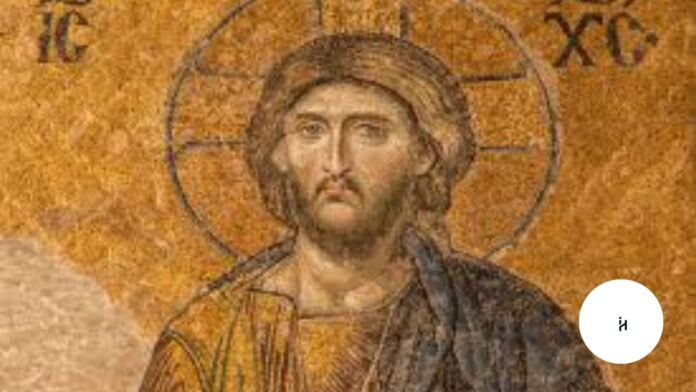
By the 4th century, Christian artists in the Byzantine Empire began creating images of Christ based on existing relics like the Veil of Veronica and the Mandylion. These icons often depicted Jesus with long hair, a beard, and a solemn expression—features that became standard in Christian art.

While these depictions became widespread, the question remains: who painted the first picture of Jesus Christ? Some scholars argue that the Byzantine artists were merely following earlier traditions rather than creating the very first image.

The Shroud of Turin: A Possible Ancient Representation of Jesus

The Shroud of Turin is one of the most mysterious religious relics in history. It is a linen cloth that bears a faint image of a crucified man, which many believe to be Jesus Christ. The origins of the shroud remain unclear, but some historians speculate that it could be one of the earliest depictions of Christ.

If the image was formed miraculously, as some believe, then it would answer the question of who painted the first picture of Jesus Christ—in this case, the image would not have been painted at all, but rather divinely imprinted.

The Catacombs of Rome: Early Christian Art Depictions

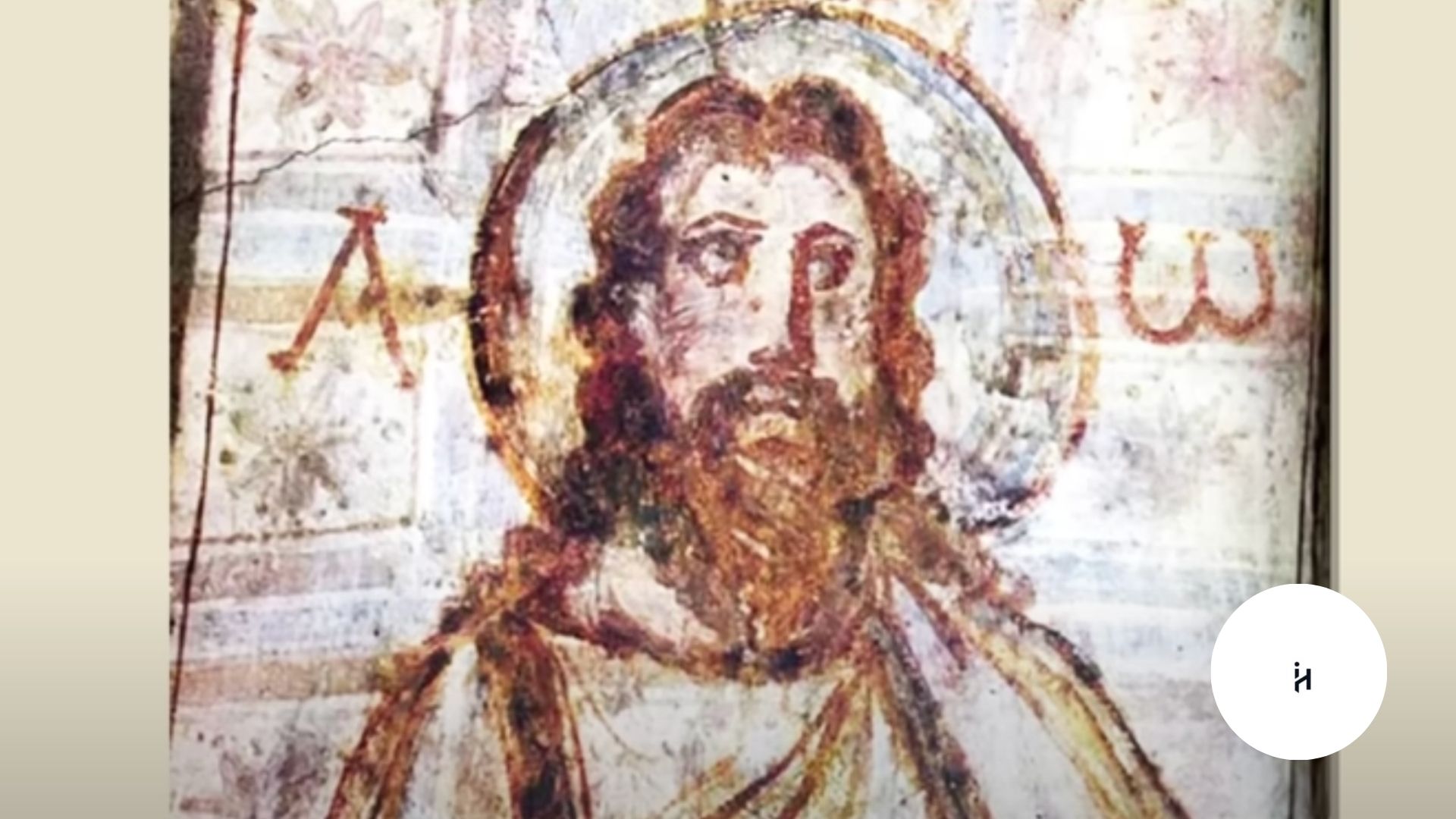
The Roman catacombs, underground burial sites used by early Christians, contain some of the earliest artistic representations of Jesus. These frescoes, dating back to the 2nd and 3rd centuries, often depict Christ as a young shepherd or a teacher.

These images predate the traditional long-haired, bearded Jesus that later became standard. However, none of them can be definitively identified as the first painting of Jesus Christ.

The Influence of Renaissance Artists on Jesus’ Image

During the Renaissance, artists such as Leonardo da Vinci, Michelangelo, and Raphael created some of the most famous depictions of Jesus Christ. Though they were not the first to paint Jesus, their works significantly shaped how modern society visualizes him.

By this time, the question of who painted the first picture of Jesus Christ was largely overshadowed by artistic interpretations that emphasized realism, emotion, and divine beauty.

The Impact of Different Cultures on Jesus’ Appearance

Throughout history, different cultures have portrayed Jesus in ways that reflect their own ethnic and artistic traditions. In Ethiopia, Jesus is often depicted with African features. In China, Christian paintings show Jesus with East Asian characteristics.

This cultural variation shows that while who painted the first picture of Jesus Christ remains a mystery, his image has continuously evolved based on the beliefs and aesthetics of various regions.

Modern Depictions and the Search for Historical Accuracy

Who Painted the First Picture of Jesus Christ?

Today, researchers use historical and forensic methods to reconstruct what Jesus might have actually looked like. Some scientists suggest that Jesus, as a Middle Eastern Jewish man, likely had shorter hair, darker skin, and a robust build—quite different from traditional Western portrayals.

Despite these efforts, the mystery of who painted the first picture of Jesus Christ persists, with no definitive answer in sight.

Conclusion: The Enduring Mystery of Jesus’ First Portrait

The question who painted the first picture of Jesus Christ remains unanswered, lost in history and legend. Whether it was Saint Luke, an unknown Byzantine artist, or a miraculous event like the Veil of Veronica, the first depiction of Christ continues to be a topic of debate.

Regardless of its origins, the image of Jesus Christ has played a crucial role in religious and artistic traditions, inspiring countless believers and artists for over two millennia. The search for the first painting of Jesus may never reach a final answer, but its significance in Christian history remains undeniable.

Etemenanki: The Legendary Tower of Babylon

0
Etemenanki

Etemenanki is a name that resonates deeply in history and mythology. It refers to a towering ziggurat believed to have stood in the ancient city of Babylon, near present-day Iraq. The structure, which means “Temple of the Foundation of Heaven and Earth” in Sumerian, is often associated with the biblical Tower of Babel. Although only remnants of Etemenanki survive today, its historical and cultural significance continues to captivate scholars, historians, and enthusiasts of ancient civilizations.

The Origins of Etemenanki

Etemenanki

The origins of Etemenanki date back to the second millennium BCE, during the reign of Hammurabi or even earlier. However, the ziggurat reached its peak during the Neo-Babylonian period under King Nebuchadnezzar II in the 6th century BCE.

The Babylonians built Etemenanki as a temple dedicated to Marduk, their chief deity. The structure was meant to symbolize the connection between heaven and earth, embodying the religious devotion of the people.

Ancient texts, including the Babylonian Chronicles and the writings of the Greek historian Herodotus, describe Etemenanki as a grand and awe-inspiring construction. However, the exact date of its initial construction remains uncertain due to the lack of definitive archaeological evidence.

Architectural Marvel: The Design of Etemenanki

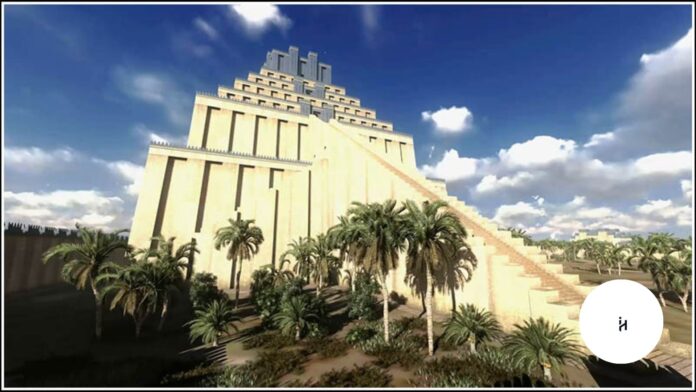
Etemenanki was a ziggurat, a stepped pyramid-like structure common in Mesopotamian architecture. According to historical records, it stood approximately 91 meters (300 feet) tall and had seven levels, each smaller than the one beneath it. A grand staircase allowed priests and officials to ascend the structure, where they conducted religious ceremonies.

The core of Etemenanki was made of sun-dried bricks, while the outer layers consisted of kiln-fired bricks. The use of bitumen as mortar provided additional strength to the construction. The temple at the top of the ziggurat housed a shrine dedicated to Marduk, making it a center for worship and religious practices.

The Religious Significance of Etemenanki

For the Babylonians, Etemenanki was not just a structure; it was a sacred site that bridged the mortal world with the divine. The temple was the focal point of the Akitu festival, an important New Year celebration in Babylonian culture. Priests performed elaborate rituals in the shrine at the top, believed to maintain cosmic order and the favor of the gods.

The ziggurat’s height and grandeur symbolized the aspiration of humanity to reach the heavens, reinforcing the belief that Etemenanki was a divine link between Marduk and his people.

Etemenanki and the Tower of Babel

Many historians and scholars believe that Etemenanki was the inspiration for the biblical story of the Tower of Babel, mentioned in Genesis 11:1-9. According to the Bible, humanity attempted to build a tower that reached the heavens, but God confounded their language and scattered them across the earth to prevent them from completing it.

The similarities between Etemenanki and the Tower of Babel are striking. Both structures were massive, associated with linguistic diversity, and symbolized human ambition. Some scholars suggest that the biblical narrative was a later interpretation of Babylonian architectural achievements.

Etemenanki

The Destruction and Decline of Etemenanki

Etemenanki faced numerous challenges over the centuries, including natural decay, wars, and invasions. Alexander the Great reportedly saw the ruins of the ziggurat in 331 BCE and attempted to restore it, but his untimely death halted the reconstruction efforts.

By the time of the Seleucid Empire, Etemenanki had fallen into complete ruin. Subsequent civilizations used its materials for other constructions, further erasing its physical presence. Today, only scattered remnants of the structure remain, with archaeological excavations uncovering parts of its foundation.

Archaeological Discoveries and Research on Etemenanki

Despite its destruction, archaeologists and historians have pieced together information about Etemenanki through ancient texts, excavations, and modern reconstructions. In the early 20th century, German archaeologist Robert Koldewey led excavations in Babylon, uncovering the foundations of what was believed to be Etemenanki.

Tablets and inscriptions discovered in Mesopotamia provide additional insights into the ziggurat’s dimensions, purpose, and significance. These discoveries help historians understand the grandeur and influence of the structure in the ancient world.

Etemenanki’s Influence on Later Civilizations

Etemenanki’s architectural style and religious importance influenced subsequent cultures and their structures. The concept of stepped pyramidal temples can be seen in later civilizations, such as the Mayan and Aztec pyramids in Mesoamerica. The notion of a towering structure reaching the heavens also influenced Islamic, Christian, and Jewish interpretations of sacred architecture.

Even today, the legacy of Etemenanki continues to inspire researchers and architects who study ancient civilizations.

Etemenanki in Modern Culture and Literature

Etemenanki remains a subject of fascination in modern culture, appearing in literature, video games, and films. Many historical fiction novels and academic discussions explore its significance, while its connection to the Tower of Babel adds a mythical dimension to its legacy.

In the gaming world, ‘Etemenanki’ has been used as a title or reference point, signifying a grand, mysterious, and historical setting. The ziggurat’s legendary status ensures that it continues to captivate audiences worldwide.

The Symbolism of Etemenanki in Human History

Etemenanki represents more than just an ancient structure; it embodies humanity’s pursuit of knowledge, ambition, and connection to the divine. The tower’s history mirrors the rise and fall of civilizations, highlighting the impermanence of human achievements despite their grandeur.

The story of Etemenanki serves as a reminder of the cyclical nature of history and the importance of preserving cultural heritage.

Etemenanki

Conclusion: The Enduring Legacy of Etemenanki

Though Etemenanki no longer stands in its full glory, its impact on history, architecture, and culture remains profound. The ruins and records of this magnificent ziggurat continue to offer invaluable insights into the ancient world and its achievements.

From its construction in ancient Babylon to its symbolic presence in modern narratives, Etemenanki remains a testament to human ingenuity and the desire to bridge the earthly with the divine. Its story, whether historical or mythical, ensures that it will never be forgotten.

For Amazing Updates Keep Visiting ImaginaryHistory.

Apadana: The Majestic Hall of the Ancient Persian Empire

0
Apadana

The Apadana is one of the most fascinating architectural wonders of the ancient Persian Empire. It was a grand audience hall, primarily found in Persepolis and Susa, the ceremonial capitals of the Achaemenid dynasty. Constructed during the reign of Darius the Great (522–486 BCE) and later completed by his successor Xerxes I, the Apadana served as a symbol of Persian grandeur and authority.

With its colossal columns, intricate reliefs, and vast open spaces, the Apadana exemplified the wealth and power of the Achaemenid rulers. This monumental structure was designed to host grand receptions, where the king met representatives from various parts of the empire.

The Architectural Marvel of the Apadana

Apadana

The Apadana was an architectural masterpiece that showcased the ingenuity and craftsmanship of Persian builders. The hall featured 36 massive columns, each towering over 20 meters high. These columns supported a wooden roof and were adorned with intricately carved capitals, often depicting animals such as bulls and lions.

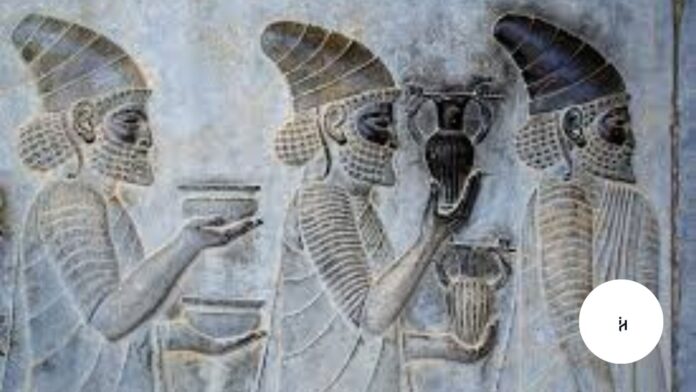
The walls of the Apadana were decorated with elaborate bas-reliefs, illustrating scenes of tribute-bearing delegations from across the empire. The vast hall, capable of accommodating thousands of people, was a testament to the Achaemenid Empire’s wealth and engineering prowess.

The Significance of the Apadana in Persian Culture

The Apadana was more than just an architectural wonder; it was a political and cultural center of the Persian Empire. It was the place where kings received emissaries, celebrated victories, and conducted important ceremonies.

The reliefs on its walls depicted a vision of unity, showcasing representatives from different regions bringing gifts to the Persian king. This demonstrated the empire’s vast reach and its policy of cultural assimilation. The Apadana symbolized the power and inclusiveness of Persian rule, reinforcing the idea of a harmonious empire under the leadership of a just and mighty king.

The Apadana in Persepolis: The Jewel of the Achaemenid Empire

Persepolis, the ceremonial capital of the Achaemenid Empire, housed the most famous Apadana. Built by Darius the Great, this structure was the focal point of the grand palace complex. It was here that the Persian king hosted delegates from across the empire, conducting important state affairs.

The Apadana in Persepolis stood on a massive terrace, elevating its grandeur. The artistic and architectural details of this hall reflect the empire’s commitment to grandeur and diplomacy, making it one of the most remarkable structures in ancient history.

The Apadana in Susa: An Ancient Wonder of the World

Another significant Apadana was located in Susa, one of the empire’s administrative capitals. This version of the hall, built by Darius I, was slightly different in design but equally grand. It featured a similar columned hall with elaborate decorations.

The Apadana in Susa played a crucial role in the governance of the empire, serving as a meeting place for state officials and foreign dignitaries. This structure, like its counterpart in Persepolis, reflected the artistic and political sophistication of the Achaemenid dynasty.

The Fall of the Apadana: Destruction by Alexander the Great

Despite its magnificence, the Apadana met a tragic fate when Alexander the Great invaded Persia in 330 BCE. During his conquest, Persepolis was set ablaze, leading to the destruction of its Apadana and other structures. Historians believe this act was either a deliberate strategy to weaken Persian morale or a drunken act of vengeance. Regardless of the reason, the burning of Persepolis marked the end of the Achaemenid Empire’s golden age. The ruins of the Apadana, however, continue to tell the story of its former glory.

Apadana

The Artistic Legacy of the Apadana

The Apadana is renowned for its exquisite artistic elements. The bas-reliefs on its walls, which depicted scenes of tribute processions and royal ceremonies, are considered some of the finest examples of ancient Persian art.

These reliefs provide valuable insights into Persian culture, fashion, and diplomatic relations. The detailed carvings of Persian guards, nobles, and foreign envoys highlight the empire’s diversity and political sophistication. The artistic legacy of the Apadana has influenced Persian art for centuries and continues to inspire historians and archaeologists.

The Role of the Apadana in Modern Archaeology

The Apadana has been a key site for archaeological exploration since the early 20th century. Excavations at Persepolis and Susa have uncovered significant artifacts, including fragments of columns, reliefs, and inscriptions.

These discoveries have provided invaluable information about Achaemenid architecture, governance, and culture. Scholars have meticulously studied the Apadana to understand its construction techniques and its role in the Persian Empire. Today, the ruins of the Apadana remain a UNESCO World Heritage site, drawing researchers and tourists from around the world.

The Influence of the Apadana on Persian and Islamic Architecture

The architectural principles of the Apadana have had a lasting impact on Persian and Islamic architecture. The grand columns, open halls, and intricate decorative elements of the Apadana influenced later Persian palaces, mosques, and government buildings.

Elements of Achaemenid design can be seen in structures such as the palaces of the Safavid dynasty and even in some modern Iranian architecture. The Apadana’s influence is a testament to the enduring legacy of Persian engineering and artistic expression.

The Apadana Today: A Symbol of Persian Heritage

Today, the Apadana stands as a symbol of Iran’s rich cultural heritage. The ruins of Persepolis and Susa attract thousands of visitors each year, eager to witness the remnants of this grand hall.

The Iranian government, along with international organizations, has taken steps to preserve and restore parts of the Apadana, ensuring that future generations can appreciate its historical significance. Efforts are also being made to promote Persian history through museums and educational programs, highlighting the Apadana as a key element of the country’s identity.

Apadana

Conclusion: The Timeless Legacy of the Apadana

The Apadana is more than just an ancient structure; it is a testament to the power, culture, and artistic brilliance of the Achaemenid Empire. Its grand architecture, intricate reliefs, and historical significance make it one of the most remarkable monuments of the ancient world. Although it was destroyed centuries ago, its legacy lives on through archaeological discoveries and scholarly research. The Apadana remains a powerful symbol of Persian civilization, reminding the world of the grandeur and sophistication of one of history’s greatest empires.

For Amazing Updates Keep Visiting ImaginaryHistory.