Home Blog Page 97

Ancient History Timeline: A Journey Through the Ages

0
Ancient History

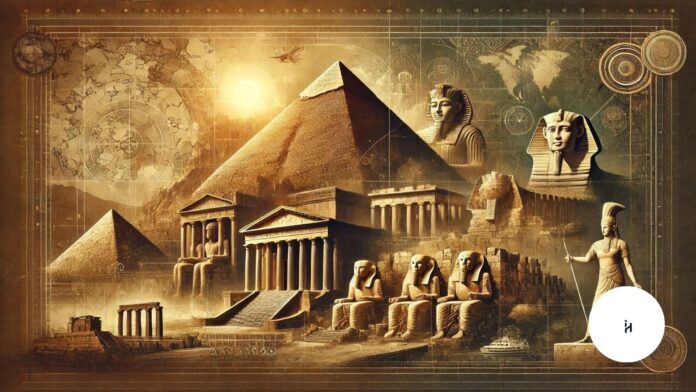
The ancient history timeline spans thousands of years, covering the rise and fall of great civilizations, groundbreaking innovations, and significant cultural transformations. From the first human settlements to the collapse of mighty empires, ancient history shapes our understanding of the modern world. In this blog, we will explore the ancient history timeline in detail, focusing on key events and their lasting impact.

The Dawn of Civilization: Early Human Societies

The ancient history timeline begins with early human societies, dating back to approximately 10,000 BCE. During this period, hunter-gatherers transitioned to settled life, marking the start of agriculture. The domestication of plants and animals led to the first permanent settlements, allowing communities to grow and thrive.

One of the earliest known settlements is Çatalhöyük, located in present-day Turkey, which existed around 7500 BCE. Similarly, the Fertile Crescent, encompassing Mesopotamia and parts of the Levant, became a hotspot for early human activity. Innovations like irrigation and pottery significantly advanced these societies, laying the groundwork for future civilizations.

As agriculture improved, humans developed new social structures, religious practices, and trade networks. This period marks the foundation of the ancient history timeline, as human societies started evolving into more complex communities.

Ancient History

Mesopotamia: The Cradle of Civilization

Mesopotamia, located between the Tigris and Euphrates rivers, is often called the “Cradle of Civilization.” By 3100 BCE, the Sumerians had established one of the first-known urban cultures. They invented cuneiform writing, which allowed them to keep records, create literature, and develop laws.

The Sumerians were followed by the Akkadian Empire, led by Sargon of Akkad around 2334 BCE. The Babylonians later rose to power, with Hammurabi’s Code (circa 1754 BCE) being one of the earliest recorded legal systems. Mesopotamia also saw advancements in mathematics, astronomy, and architecture, making it a key milestone in the ancient history timeline.

Ancient Egypt: The Age of Pharaohs

Ancient Egypt, emerging around 3100 BCE, was one of the most influential civilizations in the ancient history timeline. The unification of Upper and Lower Egypt under King Narmer led to a centralized government and the construction of monumental structures like the pyramids of Giza.

Egyptian civilization was defined by its religious beliefs, hieroglyphic writing, and advances in medicine and engineering. The rule of powerful pharaohs such as Ramses II and Cleopatra VII left a lasting legacy. The civilization flourished for thousands of years before falling to the Romans in 30 BCE.

The Indus Valley Civilization: A Forgotten Empire

The Indus Valley Civilization (3300–1300 BCE) was one of the largest early urban cultures in the world, thriving in what is now Pakistan and northwest India. Cities like Harappa and Mohenjo-Daro featured advanced urban planning, sewage systems, and impressive architecture.

Despite their achievements, much about this civilization remains unknown because its script has yet to be fully deciphered. However, its role in trade and early governance secures its place in the ancient history timeline. The decline of the civilization around 1300 BCE remains a mystery, with theories ranging from climate change to invasion.

Ancient China: The Birth of Dynastic Rule

China’s ancient history timeline dates back to the Xia Dynasty (c. 2070 BCE), followed by the Shang and Zhou Dynasties. The Shang Dynasty (1600–1046 BCE) introduced bronze casting, oracle bone script, and a centralized monarchy. The Zhou Dynasty (1046–256 BCE) later developed the concept of the Mandate of Heaven, which justified the rule of emperors.

Confucianism and Daoism emerged during this time, shaping Chinese philosophy and governance. The Great Wall of China began construction during the Qin Dynasty (221–206 BCE), marking one of the greatest engineering feats in the ancient history timeline.

The Greek Civilization: Foundations of Western Thought

Ancient History

Ancient Greece (c. 800 BCE–146 BCE) played a pivotal role in shaping philosophy, democracy, and art. The city-states of Athens and Sparta became dominant powers, with Athens pioneering democracy under leaders like Pericles.

Greek thinkers such as Socrates, Plato, and Aristotle laid the foundation for modern philosophy. The conquests of Alexander the Great (336–323 BCE) spread Greek culture across Asia and North Africa, significantly influencing the ancient history timeline.

The Roman Empire: The Rise and Fall of a Superpower

The Roman Empire (27 BCE–476 CE) marked one of the most powerful civilizations in history. Initially a republic, Rome expanded through military conquests and infrastructure advancements, such as aqueducts and roads.

Julius Caesar’s assassination in 44 BCE led to the rise of Augustus, the first emperor of Rome. The empire reached its peak under Trajan, covering vast territories across Europe, North Africa, and the Middle East. However, internal corruption, economic troubles, and invasions led to its decline, marking a major shift in the ancient history timeline.

The Persian Empire: A Legacy of Tolerance and Conquest

Founded by Cyrus the Great (c. 550 BCE), the Persian Empire became one of the largest empires in history. The empire’s governance system allowed for religious and cultural diversity, making it unique in the ancient history timeline.

The Royal Road, a vast network of highways, facilitated trade and communication. The Persian Wars against Greece (499–449 BCE) significantly shaped both Persian and Greek histories. The empire eventually fell to Alexander the Great in 330 BCE.

The Maurya and Gupta Empires: Ancient India’s Golden Age

The Maurya Empire (321–185 BCE), led by Chandragupta Maurya and later Ashoka the Great, unified most of the Indian subcontinent. Ashoka’s conversion to Buddhism promoted peace and cultural development.

The Gupta Empire (c. 320–550 CE) is considered India’s Golden Age, excelling in mathematics, science, and literature. The concept of zero and advances in astronomy emerged during this era, leaving a lasting impact on the ancient history timeline.

The Fall of Ancient Civilizations: A New Era Begins

Ancient History

By the 5th century CE, many ancient civilizations had fallen due to invasions, economic struggles, and political instability. The Western Roman Empire collapsed in 476 CE, marking the end of antiquity and the beginning of the Middle Ages.

Other civilizations, such as the Byzantine Empire and early Islamic Caliphates, carried forward knowledge from the ancient history timeline, influencing future generations.

The Legacy of the Ancient World in Modern Society

The ancient history timeline continues to shape modern culture, governance, and science. Concepts like democracy, law, engineering, and philosophy originated in ancient civilizations and remain relevant today.

By studying the ancient history timeline, we gain insight into human resilience, innovation, and cultural evolution. The past serves as a guide, helping us build a better future while remembering the lessons of history.

Q&A Section: Exploring the Ancient History Timeline

Q1: What is the ancient history timeline?

The ancient history timeline refers to the chronological record of human civilizations from the earliest settlements to the fall of great empires, covering periods like Mesopotamia, Egypt, Greece, Rome, and more.

Q2: Why is ancient history important?

Ancient history helps us understand the origins of modern societies, including governance, culture, technology, and philosophy. It also provides lessons from past civilizations that shape our present and future.

Q3: Which civilization is considered the oldest?

The Sumerians of Mesopotamia (c. 3100 BCE) are often considered the first known civilization due to their advancements in writing, agriculture, and governance.

Q4: What caused the fall of ancient civilizations?

Factors such as wars, economic collapse, climate change, and political corruption contributed to the decline of ancient civilizations like Rome, the Indus Valley, and Mesopotamia.

Q5: How did ancient civilizations influence modern society?

Many aspects of modern life, such as democracy (from Greece), legal systems (from Rome), mathematics (from India), and engineering (from Egypt and Rome), have roots in the ancient history timeline.

Conclusion: The Enduring Impact of the Ancient History Timeline

The ancient history timeline is a testament to human innovation, resilience, and cultural evolution. From the earliest settlements to the mighty empires of Rome and Persia, ancient civilizations have left an indelible mark on modern society. Their contributions in governance, science, literature, and architecture continue to shape our world today.

By understanding the ancient history timeline, we can appreciate the struggles and triumphs of our ancestors while learning valuable lessons for the future. The past is not just a record of events but a foundation upon which modern civilization stands.
For Amazing Updates Keep Visiting ImaginaryHistory.

The Lost City of Atlantis: Myth or Reality?

0
The Lost City of Atlantis

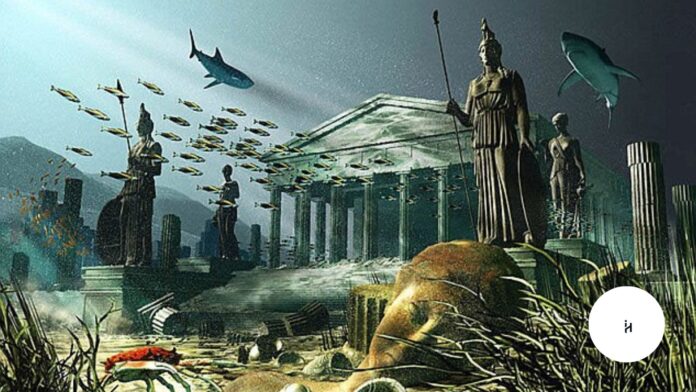
The story of Atlantis has captivated minds for centuries, igniting debates among historians, archaeologists, and conspiracy theorists. Is Atlantis a real lost civilization buried beneath the ocean, or is it merely a mythological tale crafted by the ancient Greek philosopher Plato? This blog will delve into every aspect of this intriguing legend, exploring its origins, theories, and possible evidence of its existence.

The Origin of Atlantis: Plato’s Mysterious Account

The legend of Atlantis originates from the works of the Greek philosopher Plato, who wrote about it in his dialogues Timaeus and Critias around 360 BCE. According to Plato, Atlantis was a powerful and technologically advanced civilization that existed about 9,000 years before his time. It was described as a utopian society with magnificent architecture, vast riches, and a highly sophisticated culture.

Plato claimed that Atlantis was located beyond the “Pillars of Hercules” (modern-day Strait of Gibraltar) and that it eventually sank into the ocean due to divine punishment for its moral corruption. While many believe that Plato’s account was purely allegorical, designed to warn against the dangers of arrogance and imperial ambition, others argue that there may be historical truths hidden within the myth.

The Lost City of Atlantis

The Description of Atlantis: A Utopian Paradise

Plato provided a highly detailed description of Atlantis, portraying it as a grand civilization far ahead of its time. He described the city as a circular island with concentric rings of land and water, featuring impressive canals, bridges, and an advanced irrigation system.

Atlantis was said to be a wealthy empire, abundant in natural resources such as gold, silver, and precious stones. Its people were supposedly blessed with great intelligence, strong moral values, and remarkable engineering skills. However, as the civilization grew more powerful, its leaders became greedy and corrupt, leading to its downfall.

Many researchers speculate that Plato’s description could have been influenced by real-life ancient civilizations like the Minoans or the Egyptians. Some even argue that Atlantis could have been a metaphor for Athens itself.

Theories on the Location of Atlantis

Numerous theories have emerged over the centuries regarding the possible location of Atlantis. Some researchers believe it may have been a real city that existed before being submerged due to natural disasters, while others argue that it is purely fictional.

Possible Locations:

  • Santorini (Thera): Some scholars suggest that the volcanic eruption on the Greek island of Santorini around 1600 BCE might have inspired Plato’s story.
  • The Caribbean: Some theories propose that Atlantis could be somewhere in the Bahamas or the Bermuda Triangle.
  • Antarctica: A controversial theory suggests that Atlantis lies beneath the ice of Antarctica, having been frozen over due to a sudden climate shift.
  • The Mediterranean: Others speculate that Atlantis could have been an ancient Mediterranean city, such as Troy or Tartessos.

While no definitive evidence has been found, these theories keep the debate alive.

The Scientific Approach: Could Atlantis Have Existed?

From a scientific standpoint, there is little concrete evidence to support the existence of Atlantis. While geological studies have uncovered ancient submerged cities, none fit Plato’s description precisely.

Modern oceanography and satellite imaging have mapped much of the ocean floor, yet no remnants of Atlantis have been discovered. However, some scientists argue that ancient civilizations could have been lost due to rising sea levels, earthquakes, or tsunamis.

Although Atlantis remains elusive, advances in technology, such as underwater archaeology and sonar mapping, may one day provide new insights.

Atlantis in Popular Culture: A Lasting Influence

The lost city of Atlantis: Myth or reality? has inspired countless books, movies, and television shows. From Disney’s Atlantis: The Lost Empire to comic books like Aquaman, the legend has become a cornerstone of modern mythology.

Atlantis has also influenced New Age spirituality, with some believing that its people were highly evolved beings with access to advanced knowledge and psychic abilities. The idea of Atlantis as a lost utopia continues to spark fascination and speculation.

The Lost City of Atlantis

The Role of Ancient Civilizations in the Atlantis Debate

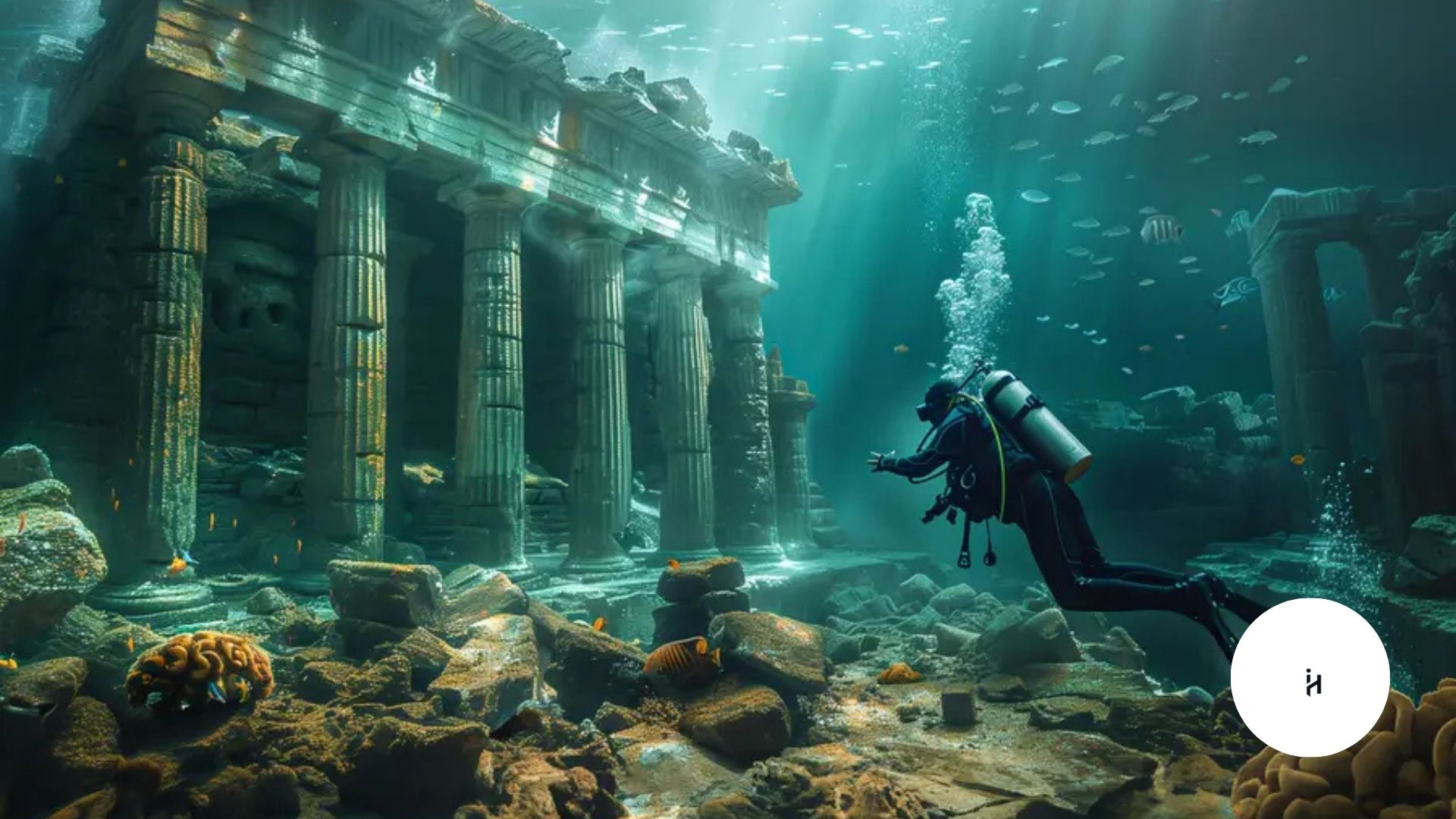
Some researchers believe that Atlantis may have been an advanced civilization that once thrived but was lost due to catastrophic events. The Minoan civilization on Crete, which was devastated by a volcanic eruption and tsunami, is often linked to Atlantis.

Similarly, the lost Egyptian city of Heracleion, which was submerged for over a thousand years, proves that ancient civilizations can disappear beneath the sea. Could Atlantis have suffered a similar fate?

Theories of Advanced Technology in Atlantis

One of the most intriguing aspects of the Atlantis legend is the claim that its people possessed advanced technology. Some theories suggest that Atlantis had flying machines, energy crystals, or even extraterrestrial connections.

While these ideas are highly speculative, they fuel the imagination and add to the mystery of whether Atlantis was real or just a philosophical metaphor.

The Connection Between Atlantis and the Bermuda Triangle

Some believe that the Bermuda Triangle may hold the key to Atlantis. Mysterious disappearances of ships and planes in this region have led to speculation that remnants of Atlantis’ technology could be interfering with modern navigation systems.

While there is no scientific proof to support this claim, it remains a popular theory in alternative history circles.

Atlantis and the Great Flood Myth

Many ancient cultures, including the Sumerians, Hebrews, and Native Americans, have myths of a great flood that wiped out entire civilizations. Some researchers believe that these stories could be linked to Atlantis, suggesting that a massive flood may have caused its destruction.

The search for historical evidence of a global catastrophe that could have submerged Atlantis continues to be a topic of interest for archaeologists.

The Search for Atlantis: Ongoing Expeditions and Discoveries

The Lost City of Atlantis

Despite the lack of definitive proof, expeditions continue in search of the lost city of Atlantis: Myth or reality? Some recent discoveries of submerged structures off the coasts of Cuba and Japan have sparked renewed interest.

Modern explorers, equipped with advanced technology, are determined to uncover whether Atlantis was ever real. While the mystery remains unsolved, the search itself keeps the legend alive.

Conclusion: Will We Ever Know the Truth?

The lost city of Atlantis: Myth or reality? remains one of history’s greatest enigmas. Whether it was a real civilization swallowed by the sea or simply a moral lesson created by Plato, its legacy endures.

As technology advances and new discoveries emerge, perhaps one day we will uncover the truth about Atlantis. Until then, the mystery continues to inspire and fascinate, leaving us to wonder—was Atlantis real, or is it destined to remain a legend forever?

For Amazing Updates Keep Visiting ImaginaryHistory.

The Most Famous Unsolved Crimes in History

0
The Most Famous Unsolved Crimes in History

From gruesome murders to inexplicable disappearances, the most famous unsolved crimes in history have left a lasting mark on society.  In this blog, we will explore eleven of these chilling cases, delving into the details, theories, and lingering mysteries surrounding them.

Throughout history, countless crimes have remained unsolved, leaving behind mysteries that continue to intrigue investigators, historians, and true crime enthusiasts. These cases, often shrouded in secrecy and speculation, have led to various theories but no definitive answers.

The Jack the Ripper Murders – A Killer Who Vanished into Thin Air

One of the most famous unsolved crimes in history is the case of Jack the Ripper, a serial killer who terrorized London in 1888. The murderer brutally killed at least five women in the Whitechapel district, earning a reputation for his gruesome methods. The victims, mostly prostitutes, were found with their throats slit and their bodies mutilated.

Despite numerous investigations, the identity of Jack the Ripper remains a mystery. Many theories suggest he could have been a doctor, butcher, or even a member of the royal family. Over 130 years later, experts and amateur detectives continue to speculate about the true identity of this notorious killer.

The Most Famous Unsolved Crimes in History

The Zodiac Killer – A Murderer Who Taunted Authorities

Another of the most famous unsolved crimes in history is the case of the Zodiac Killer, who terrorized Northern California in the late 1960s and early 1970s. The killer sent cryptic letters and ciphers to newspapers, taunting police and the public. Some of his codes remain unsolved to this day.

The Zodiac Killer claimed to have murdered 37 people, though only five confirmed victims have been linked to him. Despite multiple suspects being investigated, including Arthur Leigh Allen, no arrests were made, and the case remains open. The killer’s identity continues to puzzle criminologists and true crime enthusiasts worldwide.

The Disappearance of Amelia Earhart – Vanished Without a Trace

One of the most famous unsolved crimes in history does not involve murder but a mysterious disappearance. Amelia Earhart, a pioneering aviator, vanished over the Pacific Ocean in 1937 while attempting to fly around the world. Her plane, a Lockheed Electra, was never recovered, and no conclusive evidence has explained her fate.

Several theories have emerged, including crash-and-sink, capture by the Japanese, or even living under a new identity. Despite extensive searches, the mystery of Earhart’s disappearance remains one of the most perplexing cases in aviation history.

The Black Dahlia Murder – A Hollywood Nightmare

Elizabeth Short, famously known as the Black Dahlia, was found brutally murdered in Los Angeles in 1947. Her body was cut in half and drained of blood, shocking the public and law enforcement. The crime scene’s gruesome nature made it one of the most famous unsolved crimes in history.

Despite a massive investigation and numerous suspects, the killer was never caught. Some believe the murderer was a doctor due to the precision of the cuts, while others suspect a serial killer was responsible. The Black Dahlia case remains a haunting and chilling enigma.

The Isdal Woman – A Mystery in Norway

In 1970, the charred remains of an unidentified woman were discovered in Norway’s Isdalen Valley. Known as the Isdal Woman, she had multiple passports, wigs, and coded notes, hinting at possible espionage activities. This case is one of the most famous unsolved crimes in history because of its strange and cryptic details.

Despite numerous investigations, her true identity and cause of death remain unknown. Many theories suggest she was a Cold War spy, while others believe she was involved in illicit activities. The case remains open, keeping the mystery alive for decades.

The Dyatlov Pass Incident – A Tragic and Bizarre Death

In 1959, nine experienced hikers mysteriously died in Russia’s Ural Mountains under bizarre circumstances. Their tent was found slashed from the inside, and their bodies showed signs of extreme trauma, including skull fractures and missing tongues. This eerie event is considered one of the most famous unsolved crimes in history.

Explanations range from an avalanche to secret military experiments, yet no definitive cause has been proven. The strange injuries and lack of clear evidence continue to baffle investigators and conspiracy theorists alike.

The Hinterkaifeck Murders – A Farmhouse Slaughter

In 1922, an entire family was brutally murdered on a remote farm in Germany. The killer lived in their house for days after the crime, eating their food and tending to the animals. No suspect was ever caught, making it one of the most famous unsolved crimes in history.

Some believe a vengeful neighbor was responsible, while others suspect a former family member. Despite police efforts, the mystery remains unsolved, and the case continues to fascinate crime enthusiasts.

The Vanishing of the Sodder Children – A Fire with No Answers

On Christmas Eve in 1945, a fire consumed the Sodder family’s home in West Virginia. Five children were believed to have perished, but no remains were ever found. This bizarre case is one of the most famous unsolved crimes in history because of the numerous strange clues, including a sighting of the children after the fire.

Many theories suggest the children were kidnapped, possibly due to an act of revenge. Despite investigations and sightings, the fate of the Sodder children remains unknown.

The Murder of JonBenét Ramsey – A Child Star’s Tragic End

In 1996, six-year-old beauty queen JonBenét Ramsey was found murdered in her family’s home. The crime scene was mishandled, and multiple theories emerged, including family involvement and intruder theories. The case remains one of the most famous unsolved crimes in history due to its disturbing nature and media attention.

Despite extensive investigations and advances in forensic technology, the killer has never been identified. Theories continue to circulate, and the case remains an open wound in American crime history.

The Villisca Axe Murders – A Family Massacre

In 1912, an unknown assailant murdered eight people in Villisca, Iowa, with an axe. The crime scene showed signs of ritualistic behavior, but no motive was ever established. This horrific event remains one of the most famous unsolved crimes in history.

Several suspects were investigated, including a state senator and a traveling preacher, but no one was convicted. The Villisca Axe Murders continue to haunt true crime investigators to this day.

The Mystery of the Mary Celeste – A Ghost Ship with No Crew

In 1872, the Mary Celeste was discovered adrift in the Atlantic Ocean with no sign of its crew. The ship was in perfect condition, with food and personal belongings intact. This maritime enigma is one of the most famous unsolved crimes in history because no trace of the crew was ever found.

Theories range from pirate attacks to supernatural occurrences, but none have been proven. The fate of the Mary Celeste’s crew remains one of the greatest maritime mysteries ever recorded.

The Most Famous Unsolved Crimes in History

Q&A Section

Q1: What is the most famous unsolved crime in history?

One of the most famous unsolved crimes in history is the case of Jack the Ripper, who terrorized London in 1888 by brutally murdering women. Despite numerous investigations and theories, his identity remains a mystery.

Q2: Why was the Zodiac Killer never caught?

The Zodiac Killer sent cryptic messages to law enforcement and taunted the police. Due to a lack of solid forensic evidence and the complexity of his codes, authorities were unable to identify him, making it one of the most famous unsolved crimes in history.

Q3: What happened to Amelia Earhart?

Amelia Earhart disappeared in 1937 while attempting to fly around the world. Despite extensive searches and various theories, including the possibility of her plane crashing into the ocean, her fate remains unknown.

Q4: What makes the Black Dahlia case so mysterious?

Elizabeth Short, known as the Black Dahlia, was found brutally murdered in Los Angeles in 1947. The precise nature of her injuries and the lack of clear suspects have made this case one of the most famous unsolved crimes in history.

Q5: What is the Dyatlov Pass Incident?

In 1959, nine hikers were found dead under mysterious circumstances in the Ural Mountains. Their bodies showed signs of extreme trauma, and their tent was slashed from the inside. Theories range from avalanches to secret military experiments, but the case remains unsolved.

Q6: Were the Sodder children really kidnapped?

In 1945, five Sodder children disappeared after a fire consumed their home. No remains were ever found, leading to theories that they were abducted. Decades later, their fate is still unknown.

Q7: What happened to the crew of the Mary Celeste?

The Mary Celeste was discovered adrift in the Atlantic Ocean in 1872 with no crew aboard. The ship was intact with food and belongings left behind, leading to speculation about pirate attacks, mutiny, or even supernatural causes.

Conclusion

From infamous serial killers to eerie disappearances, the most famous unsolved crimes in history continue to captivate and mystify the world. These cases serve as reminders that some crimes may never be solved, leaving behind only speculation and intrigue. Despite modern forensic advancements, the answers to these mysteries remain hidden in the shadows of history, waiting to be uncovered.

For Amazing Updates Keep Visiting ImaginaryHistory.

Isaac Newton’s Inventions: A Genius Who Changed the World

0
Isaac Newton's Inventions

Sir Isaac Newton was one of the greatest minds in history, known for his groundbreaking discoveries in physics, mathematics, and optics. While he is most famous for formulating the laws of motion and universal gravitation, Newton also invented various tools, theories, and techniques that revolutionized science. In this blog, we will explore 11 of his most remarkable inventions and contributions.

Reflecting Telescope

Before Newton’s time, telescopes used lenses, which caused distortions known as chromatic aberrations. In 1668, Newton invented the reflecting telescope, which used a curved mirror instead of lenses. This design eliminated distortions and produced clearer images. Today, Newton’s telescope design remains widely used in modern astronomy.

Calculus: A New Branch of Mathematics

Isaac Newton's Inventions

Newton independently developed calculus, a new mathematical system that allowed scientists to calculate rates of change and motion. His work laid the foundation for modern physics, engineering, and economics. Although there was a dispute between Newton and German mathematician Gottfried Wilhelm Leibniz over its invention, Newton’s contributions remain invaluable.

Laws of Motion and Universal Gravitation

One of Newton’s greatest achievements was his three laws of motion, which explained how objects move under different forces. He also formulated the law of universal gravitation, which described how all objects in the universe attract each other based on their masses and distance. These laws revolutionized physics and remain fundamental to modern science.

Newton’s Method for Finding Roots

In mathematics, Newton developed a numerical technique known as Newton’s Method, which helps solve complex equations by finding their roots. This method is still widely used in modern computational mathematics and engineering.

The Binomial Theorem

Newton expanded upon the binomial theorem, which describes the algebraic expansion of powers of a binomial expression. His work significantly advanced algebra and calculus, making calculations easier for mathematicians.

Newton’s Contribution to Optics and Light

Newton conducted extensive experiments on light and prisms, proving that white light is composed of different colors. He introduced the idea of the spectrum of light, which explained how light could be split into its constituent colors. His findings formed the basis of modern optics and color theory.

The Newtonian Fluid Concept

Newton introduced the concept of Newtonian fluids, which are substances that maintain a constant viscosity regardless of external forces. This idea is crucial in fluid dynamics and helps scientists and engineers understand how liquids and gases behave.

Newton’s Work on Sound and Acoustics

Newton made significant contributions to the science of acoustics, studying the speed of sound in air and how sound waves travel through different materials. His work helped shape the field of wave mechanics and influenced later research in physics.

Coinage Reforms and the Gold Standard

As the Master of the Royal Mint in England, Newton reformed the nation’s coinage system. He introduced precise standards for the weight and purity of coins, helping to stabilize the British economy. His work contributed to the development of the gold standard, which influenced global economic systems.

Cooling Laws and Thermodynamics

Isaac Newton's Inventions

Newton studied heat transfer and developed Newton’s Law of Cooling, which describes how objects lose heat over time. This law is still used in physics, engineering, and forensic science to estimate time of death in criminal investigations.

Alchemy and Chemical Studies

Although less known, Newton was deeply involved in alchemy, the study of transforming substances. While alchemy was later discredited as a science, Newton’s experiments with metals and chemical reactions contributed to early chemistry, influencing later discoveries.

Q&A Section on Isaac Newton’s Inventions

Q1: What was Isaac Newton’s most famous invention?
A: Newton’s most famous invention was the reflecting telescope, which used mirrors instead of lenses to produce clearer images and eliminate distortions in astronomical observations.

Q2: How did Newton contribute to mathematics?
A: Newton developed calculus, an essential branch of mathematics that helps scientists and engineers study motion, change, and rates of variation.

Q3: What is Newton’s most important contribution to physics?
A: His laws of motion and universal gravitation revolutionized physics by explaining how objects move and interact under the influence of forces.

Q4: What discovery did Newton make about light?
A: Newton discovered that white light is composed of different colors and demonstrated this through experiments with prisms.

Q5: Did Newton invent anything related to money?
A: Yes, as the Master of the Royal Mint, Newton introduced coinage reforms that stabilized the British economy and helped establish the gold standard.

Q6: What is Newton’s Law of Cooling?
A: Newton’s Law of Cooling states that the rate of heat loss from an object is proportional to the temperature difference between the object and its surroundings.

Q7: Did Newton work on chemistry?
A: Yes, Newton was deeply involved in alchemy and chemical studies, experimenting with metals and reactions, which later influenced early chemistry.

Conclusion

Isaac Newton’s contributions to science, mathematics, and engineering were revolutionary. His inventions and discoveries shaped modern physics, astronomy, and technology, leaving a lasting legacy that continues to influence the world today. From the laws of motion to calculus, optics, and even economics, Newton’s genius remains an inspiration for generations of scientists and inventors.

For Amazing Updates Keep Visiting ImaginaryHistory.