Home Blog Page 81

Sherlock Holmes and Cocaine: Unraveling the Mystery

0
Sherlock Holmes and Cocaine

Sherlock Holmes, the legendary detective created by Arthur Conan Doyle, is known for his sharp intellect, keen observation skills, and an unrelenting drive for solving the most complicated cases. However, there is another aspect of Holmes’ character that has sparked significant debate over the years: his use of cocaine.

In many of Doyle’s works, particularly in the early stories, Sherlock Holmes is depicted using cocaine to stimulate his mind, a practice that raises questions about the character’s psychological state, his methods, and even the societal context of the time.

This blog explores the connection between Sherlock Holmes and cocaine, delving into the reasons behind his use, the cultural attitudes of the time, and the impact it has on both the character and the readers’ perception of him.

Sherlock Holmes’ Cocaine Habit: A Deep Dive

Sherlock Holmes and Cocaine

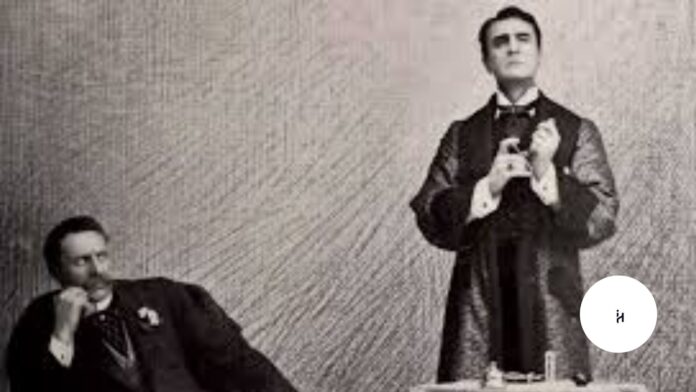
Sherlock Holmes’ cocaine use is an essential yet controversial element of his character in Arthur Conan Doyle’s stories. Holmes famously indulges in the drug to stimulate his mind when he is not engaged in a challenging case.

This use is most notably highlighted in the story “The Sign of the Four,” where Holmes injects himself with a 7% solution of cocaine to alleviate boredom. At the time, cocaine was not seen as dangerous but rather as a stimulant with medical uses, a fact that would later contribute to the controversy surrounding Holmes’ dependency.

Doyle’s portrayal of Holmes’ cocaine use provides a glimpse into the societal norms of the Victorian era, a time when drug use was not as heavily stigmatized as it would later become. The detective’s reliance on cocaine serves as a way for him to sharpen his mind and stave off the dullness of life without a case. However, as the stories progress, there are signs that Holmes’ drug use might be a reflection of his deeper struggles with loneliness, isolation, and the pressure of living up to the expectations of his intellectual prowess.

The Victorian Era and Drug Use

In the late 19th century, the use of substances like cocaine and opiates was not as heavily scrutinized as it is today. Drugs were often freely available in medicinal and recreational forms, and their potential for addiction or harm was not fully understood.

In fact, cocaine was marketed as a cure for a wide variety of ailments, including depression, fatigue, and even pain relief. For someone like Sherlock Holmes, who thrived on mental stimulation and intellectual challenges, cocaine likely seemed like a useful tool.

During the Victorian era, there was also an increasing awareness of the negative effects of drugs. However, this awareness was often overshadowed by the belief that substances like cocaine and morphine were beneficial when used in moderation. The portrayal of Holmes’ drug use reflects the complex attitudes toward substance consumption during this period.

Holmes’ Psychological Profile and Cocaine Use

Sherlock Holmes’ cocaine habit is often seen as a reflection of his complex psychological makeup. A brilliant but eccentric individual, Holmes relies on cocaine to maintain his intellectual sharpness, particularly when he finds himself without a stimulating case to occupy his mind. His addiction to the drug may be interpreted as a coping mechanism for boredom, and perhaps even a manifestation of his isolation from society.

Holmes is depicted as a man who finds human interaction tedious and often prefers the company of his mind. When not solving cases, he seeks out other ways to engage his intellect, and this often leads him to cocaine use. His drug habit suggests that he struggles with finding purpose outside of his work, and cocaine becomes a way to temporarily fill the void.

Sherlock Holmes’ Relationship with Dr. Watson

One of the most important relationships in the Sherlock Holmes stories is the one between Holmes and his faithful companion, Dr. John Watson. Watson, a doctor himself, is fully aware of Holmes’ cocaine habit and frequently expresses concern about its impact on his friend’s well-being.

However, Watson also understands Holmes’ need for intellectual stimulation and often tries to rationalize his behavior, especially when Holmes is not actively working on a case.

Sherlock Holmes and Cocaine

The dynamic between the two men reflects a balance between concern and acceptance. Watson’s role as a confidant and sounding board allows the reader to see how Holmes’ cocaine use is perceived by those closest to him. It is through Watson that we learn of Holmes’ vulnerability and his dependence on cocaine as a coping mechanism for his mental restlessness.

The Role of Cocaine in Holmes’ Cases

Sherlock Holmes’ cocaine habit is not merely a character quirk; it plays a role in how he approaches his cases. In the absence of a case to solve, Holmes becomes restless and turns to cocaine to stimulate his mind. This can be seen as a way for him to maintain his intellectual edge, as his mind is constantly racing and requires a constant source of stimulation.

However, the relationship between cocaine use and his cases is not always straightforward. Holmes’ drug use could be viewed as both a means of self-medication and a symbol of the pressures he faces as a detective. The challenge of solving complex cases can be mentally exhausting, and cocaine offers a temporary escape from this burden.

Yet, there are moments where his drug use seems to have a negative impact on his performance, raising the question of whether his addiction ultimately serves as a hindrance to his work.

Cultural Impact of Sherlock Holmes’ Cocaine Use

Sherlock Holmes’ use of cocaine has had a lasting cultural impact, influencing how drug use is depicted in literature and popular media. His dependency on cocaine has sparked discussions about the portrayal of addiction, mental health, and the complexity of genius. The character’s use of the drug challenges traditional notions of heroism, offering a more nuanced view of what it means to be a detective and a flawed human being.

Holmes’ addiction also reflects the tensions within Victorian society, where intellectualism and moral restraint were often at odds. His drug use, while seemingly a solution to his boredom, also exposes the darker side of his psyche. In many ways, this has made Holmes a more relatable character, as readers can understand the pressures that come with being constantly brilliant and engaged in the pursuit of justice.

The Moral Implications of Sherlock Holmes’ Cocaine Use

While many readers have accepted Sherlock Holmes’ cocaine use as a product of the times, others have questioned its moral implications. Holmes’ drug use is often seen as a form of self-destruction, a way for him to cope with his inability to connect with others or find meaning outside of his work. His cocaine habit suggests a level of moral ambiguity, as the detective, who is celebrated for his intellect and his pursuit of justice, is also struggling with his own demons.

This moral complexity is part of what makes Holmes such a compelling character. His genius is both a gift and a curse, and his reliance on cocaine highlights the ways in which even the most exceptional individuals can succumb to personal weaknesses.

Sherlock Holmes’ Cocaine Use in Popular Adaptations

Over the years, various adaptations of the Sherlock Holmes stories have explored the character’s cocaine use in different ways. Some portray it more explicitly, while others downplay or omit it altogether.

In many modern retellings of Holmes, the character’s drug use is either ignored or replaced with more contemporary vices, such as alcohol or excessive work habits. This shift reflects changing attitudes toward drug use and addiction in society.

However, the inclusion of cocaine in the original stories remains an important aspect of Holmes’ character. It provides a deeper understanding of his motivations and the pressures he faces, making it a significant element in the legacy of the Sherlock Holmes franchise.

The Scientific Context of Cocaine Use

Sherlock Holmes and Cocaine

In the late 19th and early 20th centuries, the scientific understanding of drugs like cocaine was vastly different from today. Cocaine was seen as a wonder drug with a range of potential medical uses, including as a local anesthetic and a treatment for various ailments. Holmes’ use of cocaine can be understood in this context, as it was not considered harmful at the time.

It was only later that the addictive properties and dangerous effects of cocaine became widely known, leading to its criminalization and stigma. In contrast, Doyle’s portrayal of cocaine use in the Sherlock Holmes stories reflects a time when the drug was not yet fully understood in terms of its long-term effects.

The Depiction of Drug Use in Literature: Sherlock Holmes’ Legacy

Sherlock Holmes’ cocaine use set a precedent for the depiction of drug use in literature, particularly in the detective genre. His habit challenges the typical portrayal of heroes and antiheroes, forcing readers to confront the complexities of addiction and genius. Over time, this theme has been explored in many works of fiction, with characters like Holmes serving as a foundation for more nuanced representations of substance abuse.

While the specific cultural context of Doyle’s time has changed, the legacy of Holmes’ drug use remains significant. It continues to shape how addiction and intellectualism are portrayed in fiction, making Holmes a timeless figure who invites both admiration and critical reflection.

Conclusion: The Enduring Mystery of Sherlock Holmes’ Cocaine Use

The connection between Sherlock Holmes and cocaine is an integral part of his character and legacy. It offers a complex view of genius, addiction, and the human condition. While modern readers may view his drug use through the lens of contemporary moral and scientific understanding, in Doyle’s time, cocaine was seen as a legitimate tool for intellectual stimulation.

Holmes’ cocaine habit adds depth to his persona, making him more than just a detective—it turns him into a multifaceted character who struggles with his own mental and emotional limitations. His use of cocaine serves as a reminder that even the greatest minds have their flaws, and it is this complexity that continues to make Sherlock Holmes one of the most fascinating literary figures of all time.
The Life and Legacy of Pope Leo 13: A Visionary Pontiff of Modern Catholicism

0
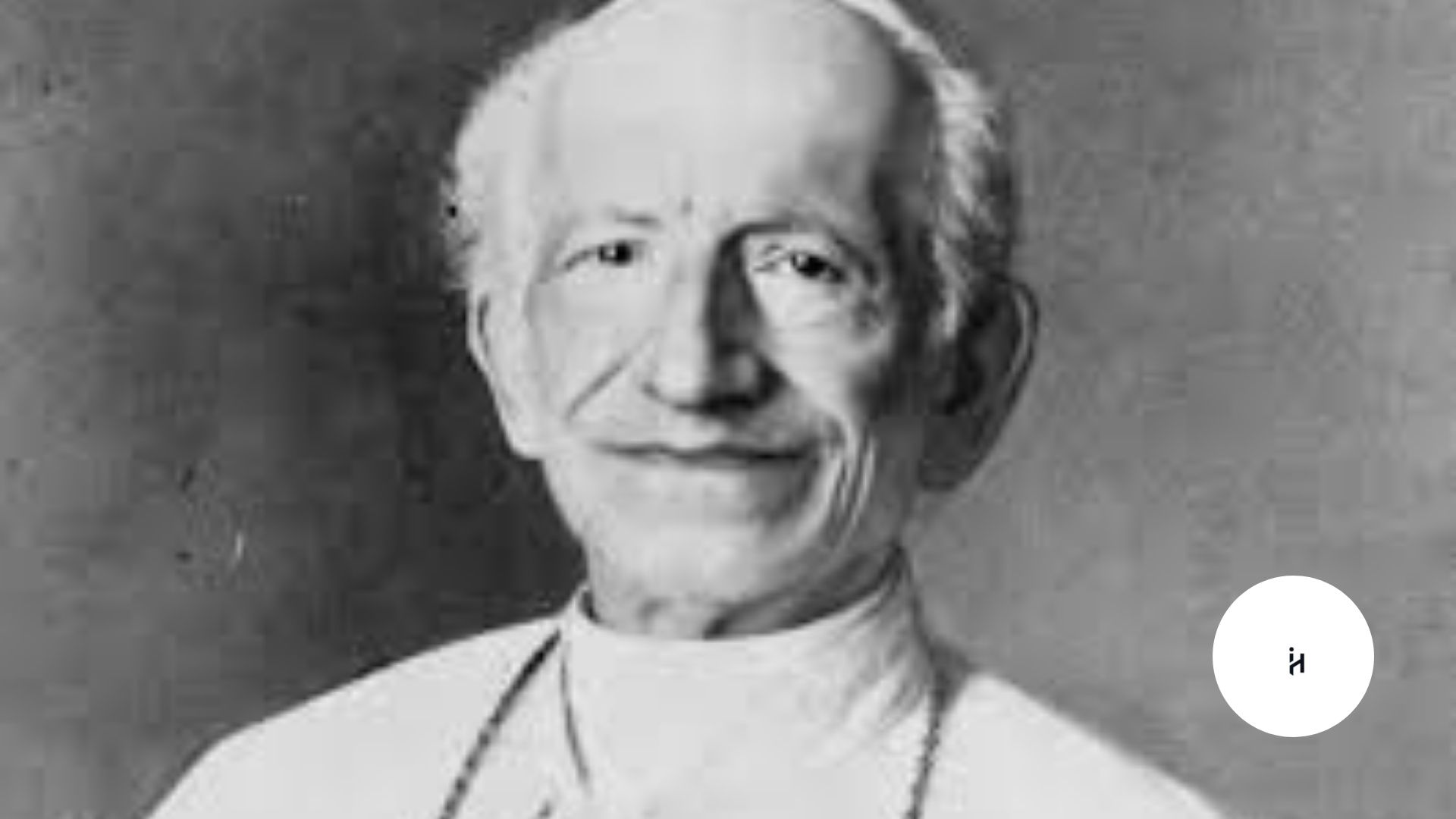
Pope Leo 13

Introduction: Who Was Pope Leo 13?

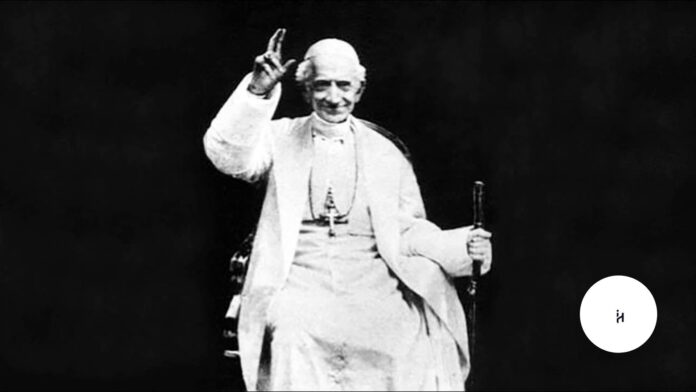
Pope Leo 13, born Vincenzo Gioacchino Raffaele Luigi Pecci in 1810, became one of the most influential popes in modern Catholic history. He led the Catholic Church from 1878 until his death in 1903. Known for his scholarly approach, diplomatic skill, and progressive outlook, Pope Leo 13 navigated the Church through an era of immense social and political change.

His papacy marked a significant shift in how the Church interacted with the modern world, particularly through his famous encyclical Rerum Novarum, which addressed the rights and conditions of workers. Throughout his papacy, Pope Leo 13 worked tirelessly to balance tradition with modernity, making his leadership a cornerstone of contemporary Catholic social teaching.

Pope Leo 13

Early Life and Education

Vincenzo Pecci, later known as Pope Leo 13, was born in Carpineto Romano, near Rome, into a noble Italian family. His upbringing was deeply rooted in Catholic tradition, and he was recognized early on for his academic brilliance. He attended the Jesuit College in Viterbo and later studied at the Collegium Romanum and the Academy of Noble Ecclesiastics.

His comprehensive education in theology, philosophy, and law prepared him for a life of service in the Church. From a young age, Pope Leo 13 displayed a profound sense of duty and a keen intellect, qualities that would define his papal leadership decades later.

Rise Through the Church Hierarchy

After his ordination in 1837, Pope Leo 13 quickly ascended through the ecclesiastical ranks. He served as the papal nuncio to Belgium, where he developed a reputation for diplomacy and intelligence.

His success there led to his appointment as Archbishop of Perugia, a position he held for over 30 years. During his tenure, he became known for his compassionate pastoral work and strong advocacy for education. These experiences laid the foundation for his future papacy, as Pope Leo 13 became deeply attuned to the needs of both clergy and laity.

Election as Pope in 1878

In 1878, following the death of Pope Pius IX, Vincenzo Pecci was elected as Pope Leo 13 at the age of 68. His election marked a turning point in Church history. The new pope was seen as a moderate reformer who could guide the Church through the challenges of a post-industrial world. Unlike his predecessor, Pope Leo 13 embraced dialogue with modern society, science, and political institutions. His goal was to re-establish the moral authority of the Church while maintaining its doctrinal integrity.

Encyclicals and Theological Contributions

One of the hallmarks of Pope Leo 13‘s papacy was his prolific writing. He issued 86 encyclicals, covering a broad spectrum of topics. Among these, Rerum Novarum (1891) stood out as a foundational document in Catholic social teaching.

In this encyclical, Pope Leo 13 addressed the conditions of the working class, the rights of laborers, and the responsibilities of employers. He condemned both socialism and unregulated capitalism, advocating for a balanced approach grounded in moral and spiritual values. His writings laid the groundwork for future papal teachings on social justice and economic ethics.

Rerum Novarum: A Landmark in Catholic Social Teaching

Rerum Novarum remains Pope Leo 13’s most enduring legacy. Released in 1891, it responded to the growing concerns of industrial workers and the rise of socialist ideologies. Pope Leo 13 emphasized the importance of private property, the dignity of labor, and the role of the state in ensuring justice and equity.

He urged the Church to become an advocate for the poor and oppressed. The encyclical became a cornerstone of Catholic social doctrine and has been referenced by nearly every pope since, including John Paul II and Francis.

Promotion of Thomism and Catholic Scholarship

Pope Leo 13 was a strong advocate for intellectual renewal within the Church. He promoted the study of St. Thomas Aquinas and made Thomism the philosophical foundation for Catholic education.

Through his 1879 encyclical Aeterni Patris, he encouraged seminaries and universities to return to scholastic methods rooted in reason and faith. Pope Leo 13 believed that by revitalizing Catholic philosophy, the Church could effectively engage with modern scientific and philosophical developments.

Pope Leo 13

Diplomatic Efforts and Global Influence

Despite the loss of the Papal States, Pope Leo 13 actively pursued diplomacy with various nations. He re-established relationships with Germany, France, and Russia, among others. His efforts helped position the Vatican as a spiritual leader with global influence. Pope Leo 13 also emphasized the Church’s neutrality in political conflicts, making the papacy a respected moral authority in international affairs. He extended the Church’s reach by appointing bishops and establishing missions in non-European regions, including Asia and Africa.

Reforms Within the Church

Internally, Pope Leo 13 initiated several reforms to modernize the Church. He improved the training of priests, encouraged biblical scholarship, and updated canon law. He also supported the formation of lay associations and promoted the active involvement of the laity in the Church’s mission.

His emphasis on education and morality aimed to strengthen the spiritual and intellectual foundation of Catholic communities. Under Pope Leo 13, the Church began to transition from a defensive posture to one of engagement with contemporary society.

Relationship with Science and Modern Thought

Unlike many of his predecessors, Pope Leo 13 embraced scientific discovery and modern intellectual currents. He supported the integration of scientific study with theological inquiry, believing that truth could not contradict truth.

He encouraged Catholic scientists and scholars to contribute to academic discourse. Pope Leo 13’s open-mindedness laid the groundwork for a more harmonious relationship between faith and reason, a stance that later influenced the Second Vatican Council.

Legacy and Influence on Future Popes

Pope Leo 13‘s papacy set a precedent for the modern papal office. His emphasis on social justice, intellectual engagement, and pastoral care became a model for future leaders of the Church. Popes such as Pius XI, John XXIII, and John Paul II all drew from the teachings and approach of Pope Leo 13. His writings continue to influence Catholic doctrine, particularly in areas of economics, politics, and human rights. His forward-thinking leadership helped the Church enter the 20th century with renewed purpose and vision.

Pope Leo 13

Death and Canonization Efforts

Pope Leo 13 passed away on July 20, 1903, at the age of 93. His 25-year papacy remains one of the longest in history. At the time of his death, he was revered as a wise and gentle shepherd who brought stability and vision to the Catholic Church.

While he has not been canonized, there have been calls for his beatification, recognizing his contributions to theology and social justice. Today, Pope Leo 13 is remembered not only as a pope but as a philosopher, reformer, and visionary whose influence transcends his era.

The Royal Legacy of the King of Bavaria

0
King of Bavaria

Introduction: The Rise of Bavarian Royalty

The title King of Bavaria carries with it centuries of history, power, and cultural legacy. Nestled in southern Germany, Bavaria transitioned from a duchy to a kingdom in the early 19th century, a transformation that marked the beginning of the Bavarian monarchy.

This blog delves deep into the historical narrative of each King of Bavaria, tracing their origins, reigns, reforms, and the eventual decline of their rule. Through this exploration, we not only understand political shifts but also gain insights into European royal traditions, Bavarian culture, and architectural wonders left behind by these monarchs.

The King of Bavaria was more than just a title—it symbolized leadership, unity, and identity for Bavarians during a transformative era in Europe. Let’s explore their world.

King of Bavaria

The Birth of the Bavarian Kingdom

The Kingdom of Bavaria was officially established in 1806 during the Napoleonic era. Before that, Bavaria was known as a duchy and electorate under the Holy Roman Empire. When Napoleon dissolved the empire, Bavaria seized the opportunity to elevate its status. Maximilian I Joseph became the first King of Bavaria, marking a major turning point in German and European history.

The coronation of Maximilian I was not just ceremonial; it brought administrative reforms, modernized institutions, and created a centralized government system. As the inaugural King of Bavaria, he redefined the region’s identity. His reign is often remembered for balancing modernization while maintaining cultural traditions.

This shift to monarchy was more than symbolic—it was strategic. Napoleon granted the title in return for Bavaria’s military and political alliance. From this point forward, the legacy of the King of Bavaria would be intertwined with the destiny of both Germany and Europe.

Maximilian I Joseph: The First King of Bavaria

Maximilian I Joseph reigned from 1806 to 1825. As the first King of Bavaria, his leadership was defined by diplomacy, reform, and education. He modernized the legal system, encouraged religious tolerance, and supported the arts and sciences.

One of his most significant reforms was the introduction of a constitution in 1808, which guaranteed basic civil liberties—an early move towards liberal governance. He also promoted the University of Munich, which became a prestigious institution during his time.

Maximilian’s vision for Bavaria combined Enlightenment ideals with traditional monarchy. He laid the foundation for future King of Bavaria rulers to follow a progressive path. His reign set a tone of responsibility and reform, emphasizing Bavaria’s independence while collaborating with other European powers.

Ludwig I: Patron of Arts and Architecture

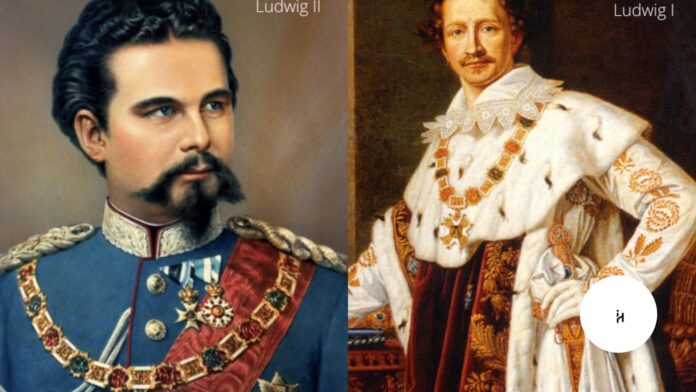
Ludwig I, the second King of Bavaria, is best remembered for transforming Munich into the “Athens on the Isar.” His passion for the arts led to the construction of architectural marvels such as the Glyptothek, the Alte Pinakothek, and the Walhalla memorial.

He ruled from 1825 to 1848, and during his time, Bavaria experienced a cultural renaissance. Ludwig supported poets, painters, and scholars, solidifying Munich’s reputation as a European cultural hub. He also expanded public education and promoted academic institutions.

Despite his achievements, Ludwig’s personal scandals and political missteps led to his abdication during the Revolutions of 1848. However, his cultural legacy as a King of Bavaria remains unmatched. His investments in the arts continue to define Bavarian identity.

Maximilian II: Balancing Tradition and Progress

Succeeding his father, Maximilian II ruled from 1848 to 1864. Known for his intellectual interests, he aimed to reconcile traditional monarchy with liberal reforms. He welcomed scientists and philosophers to his court, including figures like Richard Wagner and Johannes Brahms.

As King of Bavaria, Maximilian II was more reserved in foreign affairs but deeply engaged in internal development. He improved infrastructure, promoted tourism in the Alps, and funded educational reform. His reign was more focused on social development than political ambition.

Maximilian II played a critical role in calming the revolutionary fervor that swept Europe in 1848. His moderate stance kept Bavaria relatively stable, preserving the monarchy during turbulent times. His legacy as a thoughtful King of Bavaria lies in his vision for a balanced and enlightened society.

Ludwig II: The Dreamer King

King of Bavaria

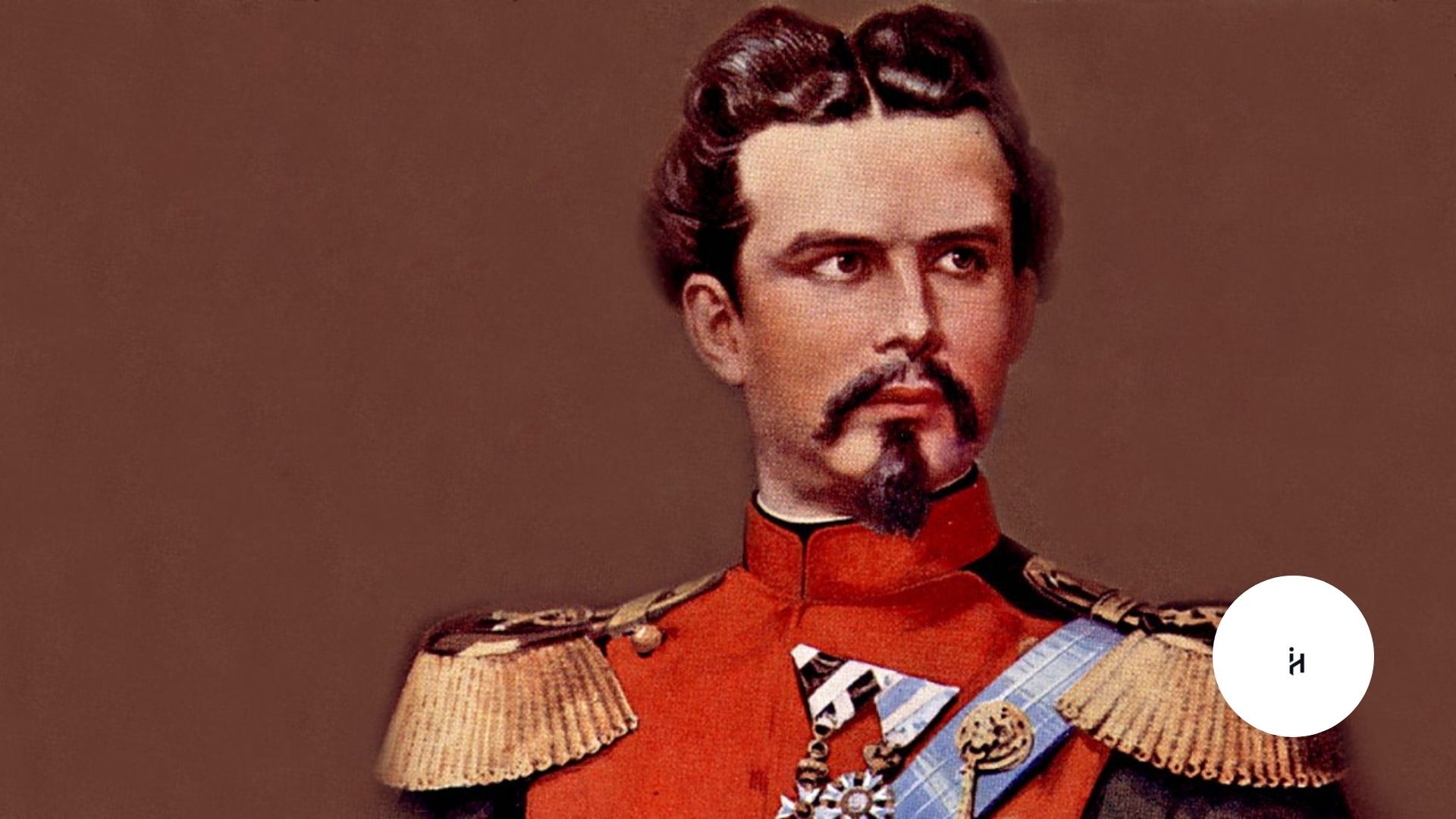
Perhaps the most famous King of Bavaria, Ludwig II (reigned 1864–1886) is a romantic icon. Known as the “Fairy Tale King,” he built the world-famous Neuschwanstein Castle. Obsessed with Wagnerian opera and medieval mythology, Ludwig lived in a world of fantasy and splendor.

However, his extravagant spending and reclusive behavior led to political friction. His mysterious death in 1886, shortly after being declared insane, remains a subject of intrigue. Despite his tragic end, Ludwig II is revered by Bavarians and tourists alike.

His architectural masterpieces have become symbols of Bavaria’s charm and mystery. As a King of Bavaria, he left behind a legacy of imagination, inspiring generations with his artistic vision and dedication to beauty over politics.

Otto I and the Decline of the Monarchy

Otto I was declared King of Bavaria after Ludwig II’s death, but due to mental illness, he never ruled in practice. His reign, from 1886 to 1913, was marked by regency under his uncle, Prince Luitpold, and later Prince Ludwig.

This period saw Bavaria gradually lose its royal influence, especially as Germany unified under Prussian dominance. While Otto held the title of King of Bavaria, political power had shifted elsewhere.

The regency system functioned efficiently, but the symbolic decline of the monarchy was clear. Otto’s reign is seen as the twilight of royal Bavaria—a time when kings existed more in name than in political authority.

The End of the Bavarian Monarchy in 1918

World War I was a turning point. Following Germany’s defeat, revolution swept across the empire. On November 7, 1918, King Ludwig III, the last King of Bavaria, was dethroned, marking the official end of the Bavarian monarchy.

The revolution was relatively peaceful in Bavaria. The monarchy was replaced by a democratic republic. Although many royalists hoped for restoration, the age of kings had passed.

The final King of Bavaria left behind a legacy tied to the fate of old Europe. His departure was the end of an era and the beginning of a modern Bavarian identity within the Weimar Republic.

Cultural Legacy of the Bavarian Kings

Despite the fall of the monarchy, the influence of the King of Bavaria lives on. Their architectural contributions, patronage of the arts, and societal reforms are still evident in modern Bavaria.

From castles to museums, universities to opera houses, the Bavarian kings left a rich cultural footprint. Munich, in particular, remains a center of culture largely due to their efforts.

Modern Bavarians view their royal past with pride. Though the monarchy is gone, its contributions to identity, tradition, and tourism are undeniable. The King of Bavaria is still a beloved symbol in Bavarian folklore and storytelling.

King of Bavaria

The Bavarian Royal Family Today

Though no longer reigning, the Wittelsbach family—descendants of the King of Bavaria—remains influential. They are respected figures involved in philanthropy, conservation, and cultural events.

Franz, Duke of Bavaria, is the current head of the house. Though he holds no political power, he is considered a moral and historical representative of the Bavarian monarchy.

The Wittelsbach Foundation also manages royal properties, supporting public exhibitions and preservation. Their ongoing role ensures that the legacy of the King of Bavaria is actively remembered and appreciated.

The King of Bavaria in Popular Culture

The romantic image of the King of Bavaria continues to inspire films, literature, and art. Ludwig II, especially, is portrayed in countless adaptations—from operas to Netflix-style historical dramas.

Neuschwanstein Castle, built by Ludwig II, even inspired the famous Disney castle. Bavarian kings are not just historical figures—they are part of a living narrative in global pop culture.

These portrayals, while often idealized, contribute to Bavaria’s strong tourism sector and global identity. The King of Bavaria has transcended time to become a symbol of romance, legacy, and tradition.

Why the King of Bavaria Still Matters Today

In an era dominated by democracies, monarchs may seem outdated. But the King of Bavaria symbolizes more than governance—it represents a rich heritage of visionaries, dreamers, reformers, and artists.

Their influence continues to shape Bavarian architecture, education, and identity. The castles they built, the laws they enacted, and the art they patronized still enrich the region.

To study the King of Bavaria is to understand a unique blend of tradition and modernity, power and culture. Their legacy remains a vital part of European history and Bavarian pride.

Bloody Sunday 1972: A Dark Day in Irish History

0
Bloody Sunday 1972

Introduction: The Tragedy of Bloody Sunday 1972 Ireland

The term Bloody Sunday 1972 Ireland evokes deep sorrow and trauma in Irish history. Occurring on January 30, 1972, in the Bogside area of Derry (also known as Londonderry), this day marked a turning point in the conflict known as The Troubles.

On that fateful Sunday, British soldiers from the Parachute Regiment opened fire on unarmed civil rights protesters, killing 14 civilians and injuring many others. What was meant to be a peaceful demonstration against internment without trial became a bloodbath that shocked the world and intensified the already fraught relationship between the Irish nationalist community and the British government.

This blog offers a comprehensive look into Bloody Sunday 1972 Ireland, examining its background, the events of the day, the immediate aftermath, the victims, inquiries, political consequences, and the lasting legacy that continues to resonate in both Ireland and the UK.

The Political Context Behind Bloody Sunday 1972 Ireland

Bloody Sunday 1972

To understand Bloody Sunday 1972 Ireland, one must first grasp the political tensions brewing at the time. Northern Ireland in the 1960s and early 1970s was a volatile region plagued by civil unrest, discrimination against the Catholic/nationalist population, and calls for civil rights. The British government had introduced a controversial policy called internment without trial in 1971, allowing authorities to detain suspected IRA members without evidence. This policy inflamed tensions, sparking protests across the region.

The march planned by the Northern Ireland Civil Rights Association (NICRA) on January 30, 1972, was meant to voice opposition to internment. However, with the British Army deployed and the IRA gaining influence, Northern Ireland had become a battleground. The British authorities feared civil disorder, and a decision was made to confront protesters with force if necessary.

The Civil Rights March in Derry

On Bloody Sunday 1972 Ireland, around 10,000 peaceful marchers gathered in Derry to protest internment. The atmosphere was largely peaceful as demonstrators, mostly from the Catholic community, walked through the streets of the Bogside. Despite being banned by the authorities, the march was intended to be non-violent.

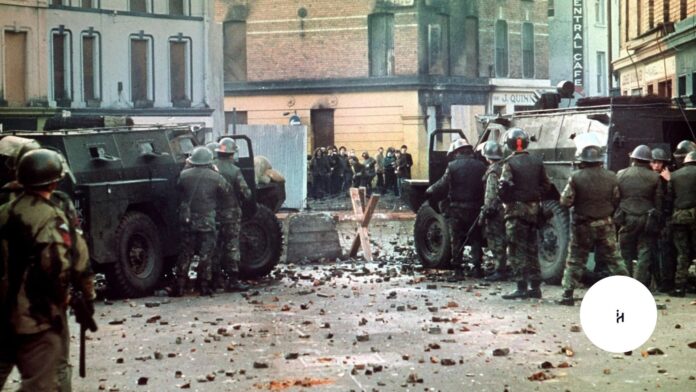
As the crowd moved through the city, British troops set up barricades, aiming to prevent the march from reaching the city center. This action led to confrontations. Tensions escalated rapidly, and without significant provocation, members of the 1st Battalion, Parachute Regiment opened fire. This marked the beginning of one of the darkest chapters in modern Irish history.

The Fatal Shooting: What Happened on Bloody Sunday

At the heart of Bloody Sunday 1972 Ireland lies the brutal killing of 14 civilians by British soldiers. Within a span of just 10 minutes, soldiers fired over 100 rounds, claiming they were responding to gunfire and nail bombs. However, multiple eyewitnesses and journalists present at the scene reported that no threats had been posed by the marchers.

The shooting occurred near Rossville Flats, where many demonstrators had gathered. Victims were shot while fleeing or attempting to help others. One man was shot while waving a white handkerchief in surrender. The cold efficiency with which the operation was conducted caused immediate outrage.

Victims of Bloody Sunday: Lives Lost and Shattered

The victims of Bloody Sunday 1972 Ireland ranged in age from 17 to 59, all unarmed civilians. Among them were teenagers like Jackie Duddy, who was shot in the back while running away, and Michael Kelly, who was struck in the abdomen. Fathers, sons, and community members were gunned down in what many now see as an unjustifiable use of force.

Families were left devastated. The pain of losing loved ones in such a horrific manner was compounded by the fact that the victims were initially labeled as rioters or terrorists by the British military. This added insult to injury, deepening the sense of injustice among the Irish Catholic population.

The British Government’s Initial Response

In the aftermath of Bloody Sunday 1972 Ireland, the British government issued statements defending the actions of the soldiers. Prime Minister Edward Heath and military officials claimed that the troops had returned fire from IRA gunmen. This narrative dominated the media in the UK, leading to a nationwide misunderstanding of the true nature of the event.

The government’s response only intensified tensions. Many in Ireland saw it as an attempt to cover up a massacre, leading to widespread protests and riots. The incident gave the Irish Republican Army (IRA) a significant propaganda victory and led to a surge in recruitment for the armed struggle against British rule.

The Widgery Tribunal: A Controversial Whitewash

Bloody Sunday 1972

In 1972, the British government launched the Widgery Tribunal to investigate the events of Bloody Sunday 1972 Ireland. The tribunal, led by Lord Widgery, concluded that the soldiers had fired in response to perceived threats and largely exonerated them of wrongdoing.

This report was immediately rejected by the families of the victims and many in Ireland. It was seen as a cover-up and a betrayal of justice. The findings fueled distrust of the British legal system and hardened nationalist opposition. For decades, this flawed inquiry stood as the official account of Bloody Sunday.

The Long Fight for Truth and Justice

Despite the disappointment of the Widgery Tribunal, the families of Bloody Sunday 1972 Ireland victims never gave up their fight for justice. Over the years, they organized campaigns, marches, and international outreach to bring attention to the truth. Their resilience and determination eventually paid off.

In 1998, as part of the Northern Ireland peace process, a new inquiry was commissioned by Prime Minister Tony Blair. Known as the Saville Inquiry, it aimed to finally uncover the truth and deliver justice to those who had suffered for decades.

The Saville Inquiry and Its Groundbreaking Findings

The Saville Inquiry, launched in 1998 and concluded in 2010, became the longest and most expensive inquiry in British legal history. It took 12 years to complete and produced a 5,000-page report. Unlike the Widgery Tribunal, the Saville Inquiry was comprehensive and meticulous.

It found that the killings on Bloody Sunday 1972 Ireland were “unjustified and unjustifiable.” None of the victims had posed a threat, and many were shot while fleeing or helping the wounded. Prime Minister David Cameron, in a historic moment, formally apologized in the British Parliament, calling the killings “wrong.”

Impact on the Irish-British Relationship

The aftermath of Bloody Sunday 1972 Ireland severely strained Irish-British relations. The massacre galvanized Irish nationalist sentiment and drew international condemnation. The Republic of Ireland responded by downgrading diplomatic ties with the UK.

The event also changed the trajectory of the Troubles. Violence escalated rapidly afterward, with the IRA gaining unprecedented support. Trust between communities, and between the Catholic population and the British state, eroded deeply. For many, Bloody Sunday symbolized the brutality of British rule in Northern Ireland.

Cultural and Media Depictions of Bloody Sunday

The tragedy of Bloody Sunday 1972 Ireland has been memorialized in songs, films, documentaries, and literature. The most notable example is U2’s song “Sunday Bloody Sunday,” which brought global attention to the incident. Films like “Bloody Sunday” (2002) directed by Paul Greengrass also dramatized the horror of the event with chilling realism.

These cultural representations played a critical role in shaping public perception and keeping the memory alive. They offered platforms for educating new generations about the tragedy, and ensuring the victims were never forgotten.

Bloody Sunday 1972

Legacy and Continued Relevance of Bloody Sunday 1972 Ireland

Even over 50 years later, Bloody Sunday 1972 Ireland remains a pivotal chapter in Irish history. The events of that day symbolize the struggle for civil rights, the pain of state oppression, and the resilience of a community that demanded justice. Commemorations are held annually, and the victims are honored as martyrs of peace and freedom.

The legacy of Bloody Sunday is also a reminder of the importance of truth, accountability, and reconciliation in post-conflict societies. It stands as a solemn lesson in the dangers of militarized policing, government denial, and unresolved grievances.