Home Blog Page 63

Brittia: The Mysterious Island of Ancient Legend

0
brittia

Throughout history, certain places have fascinated scholars and explorers due to their mysterious nature and elusive existence. One such place is Brittia, a legendary island referenced in early Byzantine literature.

Described by the historian Procopius in the 6th century, Brittia was believed to lie somewhere near the northwestern coast of Europe—separate from Britain yet eerily similar in name and lore. Though often confused with Britain or Brittany, Brittia stands apart in myth and mystery.

This blog delves deep into the story of Brittia, examining historical texts, analyzing possible locations, and discussing theories that surround this mythical island. From ancient geography to modern interpretations, the island of Brittia continues to puzzle and fascinate historians and enthusiasts alike.

Historical Origins of Brittia

brittia

The tale of Brittia primarily comes from Procopius, a Byzantine historian who wrote about the island in his work The Gothic War. According to him, Brittia was located beyond the Rhine River and was inhabited by Angiloi, Frisians, and Britons. Procopius claimed that the island played a key role in ferrying the souls of the dead, suggesting a strong mythological significance.

Brittia’s mention in ancient literature raises compelling questions about the extent of ancient geographical knowledge and how mythology often blends with real-world elements. While it may seem fictional today, many such islands once considered mythical—like Thule or Atlantis—are often rooted in historical misinterpretations or oral traditions passed through generations.

Procopius described the island as being separated by only a shallow waterway and accessible by boat. His account has led many to speculate that Brittia might be a distorted reference to parts of modern-day Britain, Brittany, or even Heligoland in Germany. Regardless, Brittia occupies a unique space in the intersection between myth and early medieval geography.

The Procopius Account: The Island of Souls

The most fascinating part of Brittia’s story is its supposed role as a passage for the dead. According to Procopius, fishermen and commoners living along the coast were chosen to ferry souls to Brittia. They claimed to see invisible passengers boarding their boats and disembarking in silence.

This eerie narrative has led to comparisons with the Greek myth of Charon, the ferryman of Hades. It also resonates with Celtic traditions surrounding Avalon, the mystical island associated with death and the afterlife. In all cases, Brittia is seen as a spiritual waystation—a liminal zone between the living world and the hereafter.

These descriptions make Brittia more than just a geographical mystery—it becomes a powerful symbol in ancient cosmology. Its story reflects how different cultures conceptualize death, the soul, and the journey beyond.

Brittia vs. Britain: Understanding the Difference

One major source of confusion is the similarity between Brittia and Britain. Procopius even noted the distinction, claiming that Brittia was not the Britain known to the Romans but an entirely separate island. This begs the question—why the similar name?

Some scholars argue that Brittia could have been a misinterpretation of oral tales passed through various tribes. Linguistic overlaps, especially in early medieval dialects, might have contributed to this confusion. It’s also possible that Roman or Gothic scribes misunderstood references to Britain or its surrounding regions, leading to the creation of Brittia as a separate entity.

Others theorize that Brittia might refer to a now-submerged landmass or an isolated region known by a local name. In this context, the myth could be rooted in real geography, later distorted by cultural transmission.

Possible Geographic Locations of Brittia

brittia

Over the years, many locations have been proposed as the real-world inspiration for Brittia. These include:

  • The Isle of Thanet in Kent, UK

  • The Island of Heligoland in the North Sea

  • Parts of Brittany, France

Each of these regions has characteristics that might fit Procopius’s description. For example, Heligoland lies close to the Frisian coast, aligning with his account of local fishermen. Meanwhile, the Isle of Thanet was once separated from mainland England by a waterway, fitting the idea of a narrow sea crossing.

Despite multiple theories, no location has definitively been identified as Brittia. However, its mythological context may be more important than its physical one. Like Atlantis or El Dorado, Brittia exists in a space where the real and imagined intertwine.

Cultural Significance in Ancient Europe

The legend of Brittia isn’t just a geographical curiosity—it reveals much about how ancient people viewed the world. The story speaks to common themes in European folklore, such as the existence of ‘soul islands’ or mystical lands across the sea.

In Celtic lore, Avalon served a similar purpose—a mystical realm of healing and the afterlife. In Norse mythology, there’s Valhalla. In all cases, water serves as a symbolic boundary between worlds. Brittia fits seamlessly into this mythological framework.

The persistence of these themes across different cultures suggests shared archetypes in European mythology. Brittia, therefore, may be less about physical location and more about universal storytelling elements embedded in human culture.

Brittia and the Afterlife Mythology

Brittia’s role as a destination for souls underscores its symbolic importance. Across various traditions, islands often represent the afterlife due to their isolation and the need for a journey to reach them.

This notion is prevalent in ancient Egyptian, Greek, and Celtic beliefs. The soul crossing water—whether a river or sea—is a recurring motif. Brittia represents a medieval European version of this spiritual geography.

Some modern interpretations link Brittia to pagan death rituals, wherein symbolic crossings were enacted during funerals. The fishermen ferrying souls might have been metaphorical rather than literal, part of a larger cultural script for understanding death.

Modern Scholarly Interpretations of Brittia

Today, historians and mythologists examine Brittia not as a literal island, but as a reflection of ancient worldviews. Scholars like Edward Gibbon, who studied Procopius, recognized the narrative as a blend of geography, politics, and myth.

Modern analysis often places Brittia in the context of cultural memory. The merging of British, Frisian, and Roman elements in Procopius’s account shows how myths evolve through the blending of different traditions.

Rather than trying to locate Brittia on a map, contemporary researchers focus on its symbolic function. It helps us understand how early societies processed death, geography, and the limits of the known world.

Brittia in Literature and Pop Culture

While not as famous as Atlantis or Lemuria, Brittia has captured the imagination of certain writers and fantasy enthusiasts. It appears in speculative fiction, where ancient myths are reimagined as alternate realities.

Some modern novels and games reference Brittia as a lost or magical land. Though these are fictional portrayals, they help keep the myth alive in contemporary culture.

The enduring mystery of Brittia makes it fertile ground for creative reinterpretation. Whether as a setting, symbol, or mythological reference, Brittia continues to inspire.

brittia

The Role of Oral Tradition in Brittia’s Survival

One reason Brittia persists in historical records is due to the strength of oral tradition. Long before written texts, stories were passed from one generation to the next through storytelling.

These oral accounts often changed with each retelling. Over time, factual details blended with legend, resulting in tales like Brittia. What started as a real location or tribal memory could have become something mythic through centuries of oral narration.

In this sense, Brittia is a testament to the power of storytelling. Its survival speaks volumes about human culture and the way we build meaning from shared narratives.

Comparisons with Other Mythical Islands

Brittia is far from alone in the annals of mythical geography. Other famous examples include:

  • Atlantis – A sunken civilization described by Plato.

  • Avalon – A Celtic paradise linked with King Arthur.

  • Hy-Brasil – A phantom island off the coast of Ireland.

Each of these shares characteristics with Brittia: isolation, spiritual significance, and elusive location. Comparing them reveals recurring motifs in human mythology—especially the concept of hidden knowledge or lost worlds just beyond reach.

These comparisons also place Brittia within a broader narrative tradition, adding depth and complexity to its story.

Why Brittia Still Fascinates Us Today

So why does the legend of Brittia still resonate in the 21st century? Perhaps because it touches something universal—our curiosity about the unknown, our fear of death, and our hope for meaning beyond life.

In a world mapped by satellites, mythical places like Brittia remind us of a time when the edges of the map held secrets. They appeal to our imagination, offering a portal into forgotten worlds.

Whether you believe Brittia was a real island, a metaphor, or a cultural amalgam, its legend endures. And in that endurance, Brittia continues to teach us about the past—and ourselves.


Rubio Cross on Forehead: Faith, Symbol, or Statement?

0
Rubio Cross on Forehead

Introduction: What is the Rubio Cross on Forehead?

The term “Rubio Cross on Forehead” has gained significant traction online due to its mysterious symbolism and connection to political, religious, and cultural interpretations. Whether seen in photos or discussed in forums, the cross on Senator Marco Rubio’s forehead has sparked curiosity. Some consider it a religious symbol, others view it as a political statement, while many speculate about its deeper personal or spiritual meanings.

In this detailed blog, we’ll explore every facet of this intriguing topic under 11 well-structured sections. From its possible religious origins to cultural impacts, let’s dive deep into understanding the Rubio Cross on Forehead.

Historical Origins of Forehead Cross Symbols

Rubio Cross on Forehead

The symbol of a cross on the forehead is not a new phenomenon. Historically, it is associated with Ash Wednesday in Christian traditions, where ashes are used to mark a cross on a believer’s forehead as a sign of repentance and humility. In ancient times, such markings were also used for identification in spiritual or tribal settings.

Understanding these backgrounds helps decode whether the Rubio Cross on Forehead stems from religious practices or something more symbolic and individual. Given Marco Rubio’s Catholic faith, the connection to Christian ritual is one of the most widely accepted explanations.

The Political Spotlight: Rubio and the Symbol

Marco Rubio is a well-known political figure, and any visible sign or symbol attached to him carries weight. The Rubio Cross on Forehead became a subject of media discussion when he appeared publicly with what seemed to be a visible cross-like marking. This led to widespread speculation about whether it was a deliberate act, a religious expression, or an attempt to resonate with a specific audience segment.

In politics, symbolism matters, and something as simple as a cross on the forehead can influence voter perception, especially among religious communities. Rubio’s public appearance with the mark was interpreted by some as a show of solidarity with Christian values.

Religious Interpretations of the Cross

Religious scholars often view the cross on the forehead as a deeply spiritual sign. In Christianity, it is a symbol of sacrifice, salvation, and redemption. Some sects even believe that such markings protect individuals from evil or signal devotion to Christ.

If the Rubio Cross on Forehead is intentional and religious, it reflects Rubio’s personal faith and his desire to express it visibly. For many voters, such a public display of faith might build trust and relatability.

Media Reactions and Public Debate

Once the Rubio Cross on Forehead started circulating in media, public debate followed. Some praised it as a bold expression of faith in a secular world. Others criticized it, questioning whether religion should play a visible role in politics. News outlets, especially those aligned with either liberal or conservative ideologies, covered the topic from contrasting angles.

Social media users also contributed to the debate, turning the cross into a meme, a symbol, and a talking point for broader discussions on religious freedom and political identity.

Social Media Buzz and Memes

Platforms like Twitter, Instagram, and TikTok exploded with hashtags like #RubioCross and #ForeheadFaith. The Rubio Cross on Forehead became not only a subject of discussion but also a cultural meme. Some posts joked about it, while others turned it into a badge of honor.

This digital wave shows how quickly symbols—whether intentional or not—can gain momentum in today’s hyper-connected world. It also reflects how politicians are often scrutinized for every visual detail.

Rubio Cross on Forehead

Rubio’s Personal Statements and Clarification

After speculation peaked, Rubio was asked about the cross. His response was measured—neither confirming nor denying its significance. He mentioned his strong Catholic roots and his belief in visible signs of faith, especially during key religious seasons like Lent.

While he didn’t delve into the specifics of the Rubio Cross on Forehead, his general support for religious expression added to the mystery, allowing multiple interpretations to coexist.

Cross on Forehead in Global Cultures

Outside Christianity, the cross or similar symbols on the forehead exist in various cultures. In Hinduism, the tilak or bindi serves as a spiritual mark. In tribal communities, forehead markings can denote status, protection, or ritual completion.

This cultural diversity adds layers to the Rubio Cross on Forehead. Even if rooted in Christianity, it opens up discussions about how different societies view forehead symbols.

Psychological Effects of Religious Symbols in Politics

Psychologists studying visual perception and belief systems have noted that symbols like crosses can elicit strong emotional responses. For some, it instills a sense of security, trust, and tradition. For others, it can be exclusionary.

In Rubio’s case, the cross might subconsciously strengthen his appeal among faith-based voters. The Rubio Cross on Forehead becomes more than a mark—it’s a psychological cue in the game of political persuasion.

The Line Between Faith and Governance

One of the key debates that emerged from the Rubio Cross on Forehead is whether personal faith should be so visibly displayed by elected officials. The U.S. Constitution guarantees the separation of church and state, yet America has always been deeply spiritual.

This heading explores whether such expressions help strengthen public trust or blur professional boundaries in a democratic society.

Public Reactions: Supporters vs Critics

Rubio Cross on Forehead

Supporters argue that Rubio’s expression of faith is genuine and should be respected. They cite freedom of religion and admire his courage to show his beliefs. Critics argue that such displays can alienate non-Christian citizens or those who believe religion should remain private.

The Rubio Cross on Forehead thus becomes a battlefield for wider ideological discussions that are far from over.

Final Thoughts: Symbolism, Identity, and Legacy

The Rubio Cross on Forehead may seem like a minor detail at first glance, but it reflects broader themes—identity, faith, symbolism, and political communication. Whether you see it as a personal act of devotion, a calculated political move, or a cultural statement, it has left a mark—both literally and metaphorically.

As society continues to evolve, the way we interpret such symbols will keep changing. For now, the Rubio Cross on Forehead remains a fascinating blend of spirituality and strategy.

Tristan da Cunha: Hidden Island in the South Atlantic

0
Tristan da Cunha

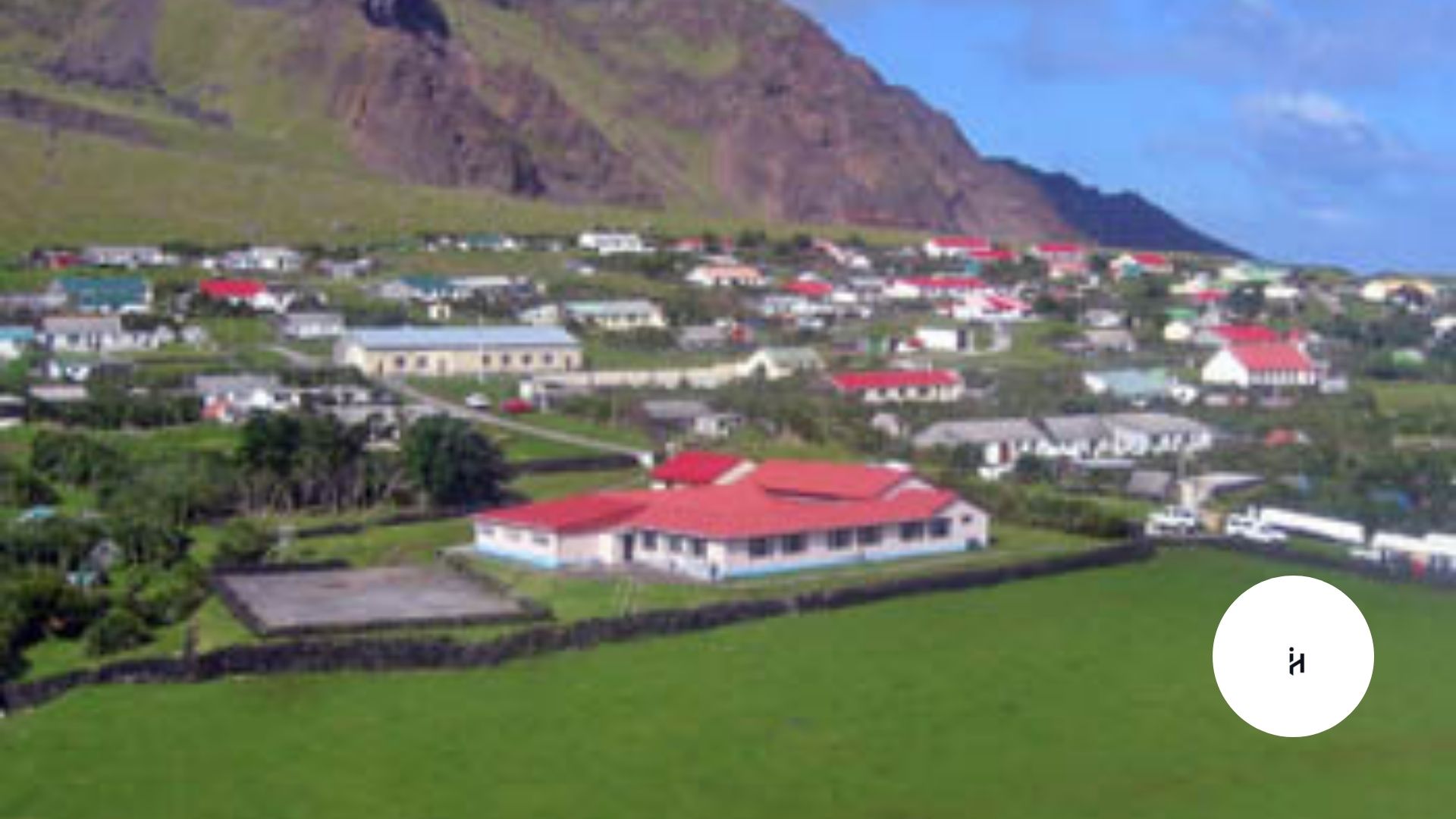
Nestled deep in the South Atlantic Ocean, Tristan da Cunha is the most remote inhabited island on Earth. Located over 2,400 km from the nearest inhabited land (Saint Helena), this volcanic island is part of a British Overseas Territory and home to just around 250 residents. Life here is completely unique—marked by self-sufficiency, communal living, and stunning natural landscapes. This blog will take you on a journey through the history, culture, geography, and current lifestyle of Tristan da Cunha, giving you an in-depth look at one of the world’s most isolated communities.

Geographical Location of Tristan da Cunha

Situated in the South Atlantic Ocean, Tristan da Cunha lies approximately halfway between South America and Africa. It is part of a volcanic archipelago that includes several smaller islands, such as Inaccessible Island and Nightingale Island.

The main island, Tristan da Cunha, spans about 98 square kilometers. Despite being located in such a remote part of the world, it remains under British governance. Its geographical remoteness has shaped every aspect of life here, from food sources to transportation.

Tristan da Cunha

Due to its volcanic origin, the island has a rugged and mountainous terrain, dominated by Queen Mary’s Peak, which rises to over 2,000 meters. The unique geography supports diverse birdlife and marine species, making it an ecological treasure.

A Brief History of Tristan da Cunha

The island was first sighted in 1506 by Portuguese explorer Tristão da Cunha, after whom it is named. Despite its early discovery, it remained uninhabited for centuries due to its hostile and remote environment. The first permanent settlement occurred in the early 1800s, when a few British settlers established homes on the island.

In 1816, the British formally annexed the island, partly to prevent it from being used as a base for any potential rescue of Napoleon Bonaparte, who was imprisoned on nearby Saint Helena. Over the years, the community grew slowly, mainly through intermarriage, resulting in a close-knit population with shared ancestry.

The island’s isolation was temporarily disrupted in 1961 when a volcanic eruption forced the entire population to evacuate to the UK. They returned in 1963, rebuilding their homes and way of life. This brief historical account of Tristan da Cunha provides insight into its resilient community.

Population and Culture

The population of Tristan da Cunha hovers around 250 people, most of whom are descendants of just a few original families. The primary language is English, and the cultural roots are deeply tied to British traditions. However, the isolated setting has led to the development of unique customs and dialects.

Residents often share resources and participate in communal farming and fishing. There’s a deep sense of cooperation, and property ownership is rare—land is communally managed. Religious practices also play a significant role, with the Anglican Church being the main institution.

Cultural events include traditional dance, storytelling, and locally produced crafts. Despite having satellite internet and limited phone access, modern influences are minimal. Life here revolves around community and sustainability, making Tristan da Cunha a model of cooperative living.

The Climate and Environment

Tristan da Cunha has a mild, wet oceanic climate. Summers are cool and winters are relatively mild, with temperatures rarely falling below freezing. Rainfall is common year-round, which supports lush greenery and agricultural activities.

The island is a haven for wildlife, including several species of seabirds and marine animals. Conservation is a key concern, with much of the surrounding area designated as nature reserves. The isolated location means invasive species have had little chance to disturb the natural ecosystem.

Climate change, however, poses threats in the form of rising sea levels and potential habitat loss. Yet, Tristan da Cunha remains committed to environmental protection through local and international collaborations.

Flora and Fauna of Tristan da Cunha

Tristan da Cunha

The island’s isolation has resulted in a unique ecosystem with many endemic species. One of the most notable is the Tristan Albatross, which nests only on this archipelago. The surrounding waters teem with seals, penguins, and a variety of fish species.

Flora includes native grasses, mosses, and lichens. Inaccessible Island, part of the archipelago, is a UNESCO World Heritage Site due to its pristine condition and biological significance.

Efforts to preserve this biodiversity are ongoing, with strict regulations on fishing and tourism. The rich natural life adds another layer of charm and importance to Tristan da Cunha.

Life on the Island Today

Daily life on Tristan da Cunha is centered around farming, fishing, and community engagement. The island has one settlement, Edinburgh of the Seven Seas, where all the residents live.

There are no airports—only a few ships make the journey each year from Cape Town, South Africa. Electricity is available via diesel generators, and homes are modest but functional. Residents grow potatoes, raise livestock, and fish for lobsters to support the local economy.

Medical care is limited but available, and education is provided up to secondary level. The island’s remoteness fosters a strong sense of community, and crime is virtually nonexistent. Tristan da Cunha offers a peaceful yet isolated lifestyle rarely found elsewhere.

Economy and Livelihoods

The economy of Tristan da Cunha relies heavily on fishing, especially the export of Tristan rock lobster. This export supports the island’s financial stability, along with some income from philatelic sales and limited tourism.

Government subsidies and support from the UK help fund public services, including education and healthcare. The people of Tristan da Cunha also engage in subsistence agriculture to maintain food security.

With no banks or commercial shops, trade and bartering are common practices. Despite economic limitations, the islanders have built a resilient system that thrives on cooperation.

Transportation and Connectivity

Getting to Tristan da Cunha is a challenge. The only way to reach it is by sea, typically on a seven-day voyage from Cape Town. There are no airstrips or helicopters.

On the island, transport consists of a few dirt roads and vehicles, primarily for farming and medical emergencies. Internet and phone connectivity exist but are slow and unreliable. Satellite communication is improving gradually, but residents remain largely offline.

This logistical difficulty contributes to the mystique and untouched charm of Tristan da Cunha, while also making modernization a complex issue.

Tourism on Tristan da Cunha

Tristan da Cunha

Tourism is limited but possible. Only a few hundred tourists visit annually, usually via cruise ships or research expeditions. Visitors must obtain special permission from the island’s government and plan months in advance.

Attractions include hiking Queen Mary’s Peak, birdwatching, and experiencing local culture. Accommodations are modest, and guided tours are often led by locals.

Tourism is carefully controlled to prevent environmental degradation and preserve the unique lifestyle of the island. For adventurous travelers, Tristan da Cunha offers a truly off-the-grid experience.

Challenges of Living on Tristan da Cunha

Living in isolation comes with its challenges—limited medical services, scarce supplies, and restricted access to education and jobs. Emergency evacuations require lengthy planning and coordination.

Weather conditions often delay shipments, and fresh food is a luxury. The community also faces the pressure of population decline, as younger generations consider moving away for education and employment.

Nonetheless, the residents of Tristan da Cunha continue to adapt, maintaining their traditions while slowly integrating necessary advancements.

Future of Tristan da Cunha

The future of Tristan da Cunha depends on its ability to balance tradition and sustainability with modern needs. Projects are underway to improve connectivity, education, and healthcare.

Conservation efforts are expanding, with support from global environmental organizations. The island aims to remain self-sufficient while protecting its biodiversity and unique culture.

As climate and global trends evolve, Tristan da Cunha serves as a living example of community resilience and harmony with nature—a place where time seems to stand still but survival demands innovation.

Is a Snozzberry Real or Just a Fictional Fruit?

0
Is a Snozzberry Real

The question, “Is a snozzberry real?” has puzzled readers, linguists, and pop culture enthusiasts for decades. First introduced in Roald Dahl’s whimsical world, the term “snozzberry” sounds like a fruit but feels like fantasy.

But is there any truth to it? Is a snozzberry real, or is it just a clever fabrication? This blog dives deep into the origins, interpretations, and real-life associations of the word to answer once and for all whether the snozzberry actually exists.

From childhood books to adult controversies, the snozzberry has taken on many meanings. Let’s explore where it comes from, what it might symbolize, and whether you can find one in the wild.

What Is a Snozzberry? Origin of the Word

Is a Snozzberry Real

The keyword “is a snozzberry real” finds its roots in literary fiction—specifically, Roald Dahl’s “Charlie and the Chocolate Factory.” Dahl introduced the term “snozzberry” as part of the whimsical landscape of Willy Wonka’s magical chocolate factory, where everything, including the wallpaper, was edible. Kids would lick the wallpaper and taste fruits, one of which was the “snozzberry.”

This peculiar name immediately caught attention due to its uniqueness. Unlike apples, bananas, or cherries, the snozzberry has no botanical origin or visual representation. It existed purely in the magical narrative of Dahl’s imagination. The question “Is a snozzberry real?” becomes more complicated when we realize that Dahl reused the term in a different book with a very different meaning. That’s where the controversy begins—but more on that later.

Roald Dahl’s Role: Literary Imagination or Hidden Meaning?

Roald Dahl was known for his creative use of language. He coined dozens of words like “Oompa Loompa,” “scrumdiddlyumptious,” and of course, “snozzberry.” These terms charmed children and amused adults. But was Dahl hiding a secret meaning in “snozzberry”?

Some claim that in Dahl’s later work, particularly “My Uncle Oswald,” the term “snozzberry” took on an adult connotation. There, it referred to male genitalia, adding a layer of adult humor that shocked many readers upon discovery. This has led some to believe that the snozzberry was never a real fruit but a joke for grown-ups hidden in plain sight.

So, is a snozzberry real? In the context of children’s literature, it’s a delightful fictional fruit. In adult fiction, it becomes a metaphor. Either way, Dahl’s use of the word adds to its intrigue.

Etymology and Word Construction: Could It Be Real?

Let’s dissect the word “snozzberry.” It appears to be a compound of “snozz” and “berry.” While “berry” clearly indicates a fruit, “snozz” doesn’t refer to anything concrete—unless you consider British slang, where “snozz” can mean “nose.” That would make a “snozzberry” a nose-berry, which doesn’t sound very appetizing.

Yet, people continue to ask: is a snozzberry real? Linguistically, it follows the pattern of real fruits like “blueberry” or “raspberry.” This is why some readers initially assume it’s a rare or exotic berry they’ve never encountered before.

The combination is whimsical and believable enough to pass as a fruit—at least in fiction. But no scientific classification or botanical record exists to support its reality.

Snozzberries in Pop Culture and Memes

Is a Snozzberry Real

Since its literary debut, the word “snozzberry” has made its way into pop culture. Memes, T-shirts, and movie references have kept the term alive. The most famous pop culture moment came when Johnny Depp’s Willy Wonka licks the snozzberry wallpaper in Tim Burton’s 2005 film adaptation.

Social media platforms often circulate jokes asking, “Is a snozzberry real?” in reference to the now-infamous double meaning. It has become a symbol for absurdity, childhood imagination, and hidden adult themes—all rolled into one word.

This wide cultural usage only deepens the mystery: is a snozzberry real, or are we all in on the joke?

Botanical Investigations: Any Fruit Like a Snozzberry?

To answer “Is a snozzberry real?” botanically, we look to nature. There is no documented fruit called a snozzberry in any known agricultural or scientific texts. However, nature does offer berries that sound fictional—like salmonberries, cloudberries, and boysenberries.

Could the snozzberry be a playful amalgam of such exotic fruits? Possibly. But without tangible evidence or specimens, it’s safe to say the snozzberry has no real-life equivalent. No botanist has ever found one, and no farmer has grown one.

It remains an imagined fruit—delightful, yes, but not edible in real life.

The Controversy from “My Uncle Oswald”

Roald Dahl’s book “My Uncle Oswald” changed everything. In this adult novel, Dahl reuses the term “snozzberry” but with an entirely different meaning—a euphemism for male genitalia.

This revelation caused waves of criticism and reinterpretation of his earlier works. Parents began to question whether the children licking “snozzberry” wallpaper was an inappropriate innuendo. Dahl fans were split—some called it literary genius, while others found it tasteless.

This dual usage complicates the question “Is a snozzberry real?” It’s both a fake fruit and a controversial metaphor.

Fan Theories and Internet Speculation

Online forums like Reddit and fan sites have explored the question: “Is a snozzberry real?” Some suggest it might represent a drug, a hidden message, or even be an allegory for consumerism and desire.

Is a Snozzberry Real

Others dismiss the adult meaning entirely and defend it as nothing more than creative nonsense. These debates fuel the term’s lasting appeal and keep it alive in internet lore.

The snozzberry continues to capture the imagination of conspiracy theorists and literary fans alike. Whether it’s real or not seems less important than what it symbolizes.

Willy Wonka’s World: Fantasy vs Reality

Willy Wonka’s world is filled with wonders: chocolate rivers, edible flowers, and yes, snozzberry wallpaper. In this context, asking “Is a snozzberry real?” is like asking whether a chocolate waterfall could exist.

It doesn’t matter if it’s real—what matters is how it makes you feel. The snozzberry symbolizes pure imagination, just like the rest of Wonka’s factory. It exists not in nature, but in our shared cultural consciousness.

Educational and Literary Impact

Despite the controversy, Roald Dahl’s use of language—including the snozzberry—has been praised in educational circles for expanding children’s vocabulary and imagination. Teachers often use his books to introduce students to literary creativity.

When children ask, “Is a snozzberry real?” educators have a golden opportunity to explain metaphor, satire, and fiction. This opens the door to a more nuanced understanding of literature.

Thus, the snozzberry, real or not, plays a vital role in literary education.

Can You Make a Snozzberry-Inspired Dish?

Interestingly, some chefs and food bloggers have created “snozzberry-inspired” dishes. These usually involve a mixture of berries like blueberries, raspberries, and strawberries to replicate what they imagine a snozzberry might taste like.

Smoothies, tarts, and jams have been labeled “snozzberry” for novelty. So while you can’t pick one from a bush, you can certainly create your own.

This adds a fun, creative twist to the question: “Is a snozzberry real?” No—but it can still taste delicious in your imagination and your kitchen.

Final Verdict: Is a Snozzberry Real?

After all the analysis, research, and exploration, here’s the verdict: No, a snozzberry is not real in the botanical sense. It is a fictional fruit invented by Roald Dahl, with both innocent and controversial meanings depending on the context.

Yet its cultural impact, culinary inspiration, and literary relevance make it “real” in a different way. The term has endured for generations and continues to provoke thought and laughter.

So while you won’t find a snozzberry at your local farmer’s market, you’ll definitely find it in the pages of imagination—and maybe on your dessert plate.